Deep Autumn: High-Contrast Warmth That Commands Attention
Short answer: Deep Autumn (Dark Autumn) is the darkest warm season: dark hair, dark eyes and a warm golden or olive undertone. Chocolate, burgundy and dark olive make you look lit from within; powder pink, icy blue and chalk white make you look faded. The seven signs below confirm it.
Rich, warm, and dark. Deep Autumn is the season for people who look stunning in burnt orange but inexplicably tired in pastel pink.
What's in this guide
- What is a Deep Autumn?
- The 7 tells
- A first look at your colors
- Colors that work against you
- Deep Autumn vs Warm Autumn vs Soft Autumn
- Deep Autumn vs Soft Autumn, the real difference
- Deep Autumn color combinations
- Celebrity Deep Autumns (and what they wear)
- Deep Autumn makeup
- Hair colors that keep you in season
- Building a Deep Autumn wardrobe
- What a Deep Autumn color analysis checks
- How to confirm your season
- FAQ
What is a Deep Autumn?
Deep Autumn is one of the 12 modern color seasons. The three traits that define it:
- Undertone: Warm (golden, with red or yellow undertones beneath the surface)
- Value: Deep (your overall coloring reads dark, eyes, hair, and often skin all sit on the deeper end of the spectrum)
- Chroma: Medium (saturated but earthy, never icy or pastel)
The "deep" in Deep Autumn means your coloring has substantial pigment across the board, dark hair, deep eyes, often medium-to-deep skin. The "autumn" means the temperature of all that pigment is warm. Put them together and you're a person who looks magnificent in colors that mimic October, burnt sienna, mustard, forest green, cognac, terracotta, and washed out in colors that read cold or pale (icy blue, dove gray, baby pink).
Deep Autumn is part of the Autumn family alongside Warm Autumn (medium value, more saturated) and Soft Autumn (medium value, very muted). Of the three, Deep Autumn carries the most depth.
The 7 tells of a Deep Autumn
1. Your hair is dark with warm undertones
Dark brown to black, with chocolate, chestnut, or auburn glints in sunlight. If your hair has any visible warm shimmer when light hits it, gold, copper, mahogany, that's the Autumn tell. If your dark hair has cool ash or blue-black undertones with no warmth, you're more likely a Deep Winter.
2. Your eyes are deep and warm
Brown, hazel, deep green, dark olive. The key tell: warmth around the iris, gold flecks, amber rings, or coppery streaks. Black-brown eyes can also be Deep Autumn if they have a warm cast in sunlight (look for them to glow brown, not black, in good light).
3. Your skin has a golden, peachy, or olive undertone
Not pink. Never blue. Surface skin can be light to deep, but the undertone is consistently warm. South Asian, Mediterranean, Latin American, and many African / African-American skin tones often fall here. Pale Northern European skin can also be Deep Autumn if the undertone is yellow rather than pink.
4. Your veins look green
Hold your wrist up in daylight. Green veins = warm undertone. Read more on how to find your skin undertone at home.
5. Gold jewelry makes you glow
Yellow gold, brass, copper, and rose gold all flatter you. Silver makes you look pale, washed out, or weirdly cold. Platinum makes you look ill. White gold passes, barely.
6. You look amazing in autumn colors and dull in pastels
Test it: hold up a baby-pink sweater next to your face. Then hold up a rust or terracotta sweater. The pastel will make you look gray. The rust will make you look like you slept twelve hours. That's the Deep Autumn proof.
7. Black is too harsh on you, but pure white is also too sharp
This is the most reliable tell. Both black AND pure-white wash out a Deep Autumn, they're too cold. Off-black (like espresso or dark brown) and warm cream (like ivory) flatter dramatically. If "black always seemed wrong on me but I wore it anyway" sounds familiar, you're probably here.
A first look at your colors
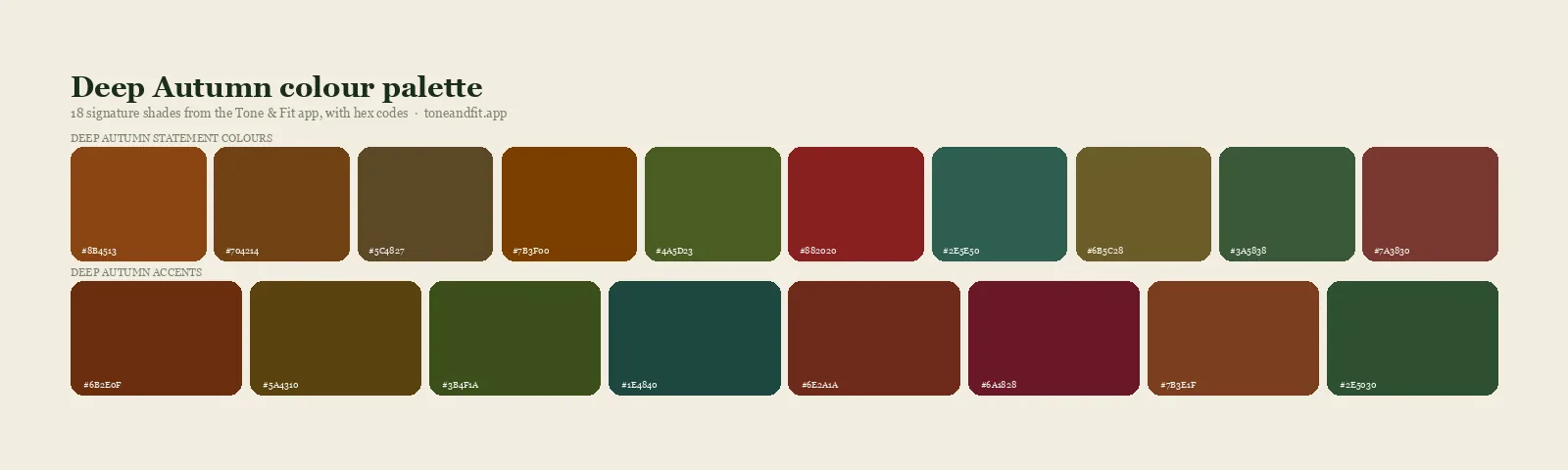
The Deep Autumn palette is rich, warm, and earthy. Think 1970s editorial fall fashion meets a forest at sunset. The unifying signal: every color carries warmth and depth.
A taste of the Deep Autumn palette: rust, sienna, mustard, olive, forest, saddle brown, copper.
In one line: spice tones near the face, warm browns as your neutrals, deep greens and teal for variety, and gold rather than silver at the wrist. That is enough to sanity-check a season. It is not enough to shop with.
The full set lives on its own page, because the shade-by-shade version runs long. The Deep Autumn color palette lays out all twelve core colors and eight neutrals with named shades and hex codes, the metals and denim washes that sit right with them, and how the palette turns into outfits. If you already know you are a Deep Autumn, start there.
Colors that work against you
If you're a Deep Autumn, these will fight your face:
- Pastel pink, baby blue, mint green, lavender, too cool, too light, too washed out
- Pure black, too harsh; reads as a separate object disconnected from your face
- Pure white, too sharp; ages you. Switch to ivory or cream
- Cool gray, silver gray, drains warmth from your skin
- Hot pink, fuchsia, magenta, too cool and too bright
- Icy blue, electric blue, clashes with your warmth
The acid test: any color that looks like it belongs in winter snow probably isn't yours. Any color that looks like it belongs in October leaves probably is. For the extended list with substitute shades for each one, see Deep Autumn colors to avoid.
Confirm your season in 60 seconds.
Tone & Fit's AI gives you your full Deep Autumn palette + colors to avoid + matching makeup & hair shades.
Try the App ↗Deep Autumn vs Warm Autumn vs Soft Autumn
The three Autumn sub-seasons share a warm undertone but differ on value and chroma:
| Value | Chroma | Signature | |
|---|---|---|---|
| Soft Autumn | Medium | Very muted | Dusty colors, muted earthy tones |
| Warm Autumn | Medium | Saturated | Pure rust, pumpkin, gold |
| Deep Autumn | Deep | Medium | Burgundy, espresso, forest, deep mustard |
If you're between Deep Autumn and Warm Autumn, the difference is depth. Deep Autumns can wear espresso brown and burgundy without looking severe. Warm Autumns look better in lighter, more saturated rust and clearer gold. If you're between Deep Autumn and Soft Autumn, the difference is muddiness. Soft Autumns thrive in colors with a slightly grayed quality. Deep Autumns thrive in clear, deep colors.
Deep Autumn vs Soft Autumn: the real difference
Soft Autumn vs Deep Autumn comes down to one thing: depth. Soft Autumn sits at medium value with very muted chroma, while Deep Autumn sits at deep value with medium chroma, so a Deep Autumn reads noticeably darker and clearer than a Soft Autumn even though both share the same warm undertone and the same family of colors.
| Trait | Soft Autumn | Deep Autumn |
|---|---|---|
| Value | Medium | Deep |
| Chroma | Very muted | Medium, clear |
| Best red | Muted brick | Garnet or burgundy |
| Best neutral | Taupe | Espresso |
| Best metal | Antique or rose gold | Rich yellow gold or copper |
The fastest way to tell them apart on yourself: hold a muted taupe and an espresso brown near your face in the same light. If the taupe looks like the stronger, clearer version of you, you likely lean Soft Autumn. If the espresso does, without looking harsh, you likely lean Deep Autumn.
Deep Autumn color combinations that work together
Colors for a Deep Autumn combine best by depth and warmth rather than by matching category, so pairing two or three shades from the same palette almost always reads intentional instead of random. A few combinations that hold up in real outfits:
- Rust, forest green, warm ivory: the classic autumn trio, works for a full outfit or just a scarf against neutral basics
- Espresso, mustard, camel: a workwear-friendly neutral base with one warm accent color
- Burgundy, olive, gold jewelry: an evening or statement combination with enough contrast to read as deliberate
- Terracotta, chocolate brown, oatmeal: a softer daywear version of the same palette
- Deep teal with rust or copper: teal is an accent rather than a base color for this season, so keep it to one piece
The rule that keeps any combination safe: stay warm, stay medium-to-deep, and save the one pastel-adjacent color you own (icy blue, baby pink) for someone else's closet. See more full looks in Deep Autumn outfit ideas.
Celebrity Deep Autumns (visual reference)
Looking at known Deep Autumns can help calibrate your eye. Some commonly classified Deep Autumns include Oprah Winfrey, Jennifer Lopez, Beyoncé, Eva Longoria, Penélope Cruz, Salma Hayek, Sofia Vergara, and Priyanka Chopra. The shared signal: deep hair, warm-undertoned skin, eyes with gold or amber depth.
What's instructive: when these celebrities wear their best colors (rust, copper, deep wine, forest green, gold), they look radiant. When they're styled in cool pastels for editorial shoots, they look subtly off, even though the styling is professionally done. The colors aren't wrong; they're just not theirs.
Deep Autumn makeup: the quick version
Your clothing palette and your makeup palette follow the same rules: warm, deep, and rich. The fastest upgrades for a Deep Autumn:
- Lipstick: brick red, terracotta, warm burgundy, and brown-based nudes. A classic blue-red will look borrowed; a tomato or garnet red will look born on you.
- Blush: terracotta, warm peach, and muted brick. Skip anything candy pink or cool mauve, which sits on top of warm skin instead of blending into it.
- Eyeshadow: copper, bronze, espresso, olive, and antique gold. These echo the warmth already in your eyes and make brown and hazel irises look lit from within.
- Foundation: match your golden or olive undertone, not just your surface depth. A foundation one shade too pink is the most common reason warm-toned makeup "doesn't work."
For shade names and product-style recommendations by category, the full Deep Autumn makeup guide goes deeper on all of this.
Hair colors that keep you in season
Deep Autumn hair should stay deep and stay warm. The most flattering directions are chocolate brown, chestnut, dark auburn, mahogany, and espresso with warm (never ash) reflects. Balayage works beautifully when the lightened pieces are caramel or copper rather than cool beige.
The two moves that pull a Deep Autumn out of season: going too light (platinum or cool blonde makes deep, warm coloring look severe and washes the face out) and going too cool (blue-black or ash brown removes the golden warmth your palette is built around). If you want change without leaving your season, shift the warmth up or down one notch rather than the depth. Our guide to the best hair color for your skin tone covers every season's ideal range, and the dedicated Deep Autumn hair color guide lists exact shade names and how to talk to your colorist about them.
Building a Deep Autumn wardrobe
Once you know your palette, the practical question is what to actually buy. A simple structure that works:
- Base neutrals (60%): espresso, chocolate, camel, warm ivory, olive, and deep navy. These replace black and gray as your foundation pieces: coats, trousers, knitwear, boots.
- Main colors (30%): rust, burgundy, forest green, mustard. These are your sweaters, dresses, and statement pieces, and they all combine with each other and with every base neutral.
- Accents (10%): warm teal, plum, and tomato red for scarves, lipstick, and jewelry moments. Gold hardware and yellow-gold jewelry finish the look.
Because every color in the Deep Autumn palette shares the same warm, deep quality, nearly everything in a season-based closet coordinates automatically. That is the real payoff: fewer items, more outfits, zero "nothing goes together" mornings. See the full capsule wardrobe by color season plan and the complete Deep Autumn color palette for the extended shopping list.
What a Deep Autumn color analysis checks
A Deep Autumn color analysis, whether it's a colorist holding fabric drapes under your chin or an AI tool reading a photo, is checking three specific traits: undertone (warm or cool), value (how light or deep your coloring reads) and chroma (how muted or clear it is). For a Deep Autumn verdict specifically, the analysis needs all three to land in the same place at once: warm undertone, deep value, medium chroma. Dark hair alone doesn't make someone a Deep Autumn, plenty of cool-toned people have dark hair too, which is why a real analysis checks skin undertone and eye warmth against the hair color rather than judging hair in isolation.
- Undertone check: does gold or silver jewelry flatter more, and do veins read green or blue
- Value check: how dark your hair, eyes and skin read together compared with the other 11 seasons
- Chroma check: whether your natural coloring looks clearer next to rust and mustard, or next to dustier, grayed versions of the same colors
A drape test walks through these by hand, one fabric at a time. Tone & Fit's step-by-step guide to finding your color season walks through the same three checks without fabric, using a single photo instead.
How to confirm you're a Deep Autumn
If you've read this far and most of the tells fit, you have three ways to confirm. First, the drape test: photograph yourself in identical lighting holding pure black, then espresso brown, then rust near your face, and compare which makes your skin look clearest. Second, work through the sister-season comparison in Deep Autumn vs Warm Autumn, since that boundary is where most people hesitate. Third, let AI remove the guesswork: Tone & Fit analyzes your undertone, value, and contrast from one selfie and tells you whether you land in Deep Autumn or one of its neighbors, along with your full palette.
Ready to find your season?
One selfie, your 12-season result, and the palette that goes with it. Free, no sign-up.
Find your season free ↗For the underlying reading, our skin tone analyzer explains what undertone, depth and contrast actually are.
Frequently Asked Questions
Deep Autumn vs Deep Winter - what is the difference?
Temperature. Both seasons are dark and high-contrast, but Deep Autumn is warm (golden-olive undertone, warm brown or auburn hair) while Deep Winter is cool (blue-pink undertone, cool black or ash-brown hair). Drape a warm olive green and a cool cobalt blue. If olive makes your skin glow, you are Deep Autumn. If cobalt does, you are Deep Winter.
Can a Deep Autumn wear black?
Better than most warm seasons, but it is still not your ideal dark. Pure black is a cool neutral, and Deep Autumn coloring is warm. Dark chocolate, espresso, or warm charcoal will harmonize with your undertone more naturally. If black is unavoidable, layer warm colors near your face: gold jewelry, a rust scarf, or a deep teal top.
What is the best hair color for a Deep Autumn?
Rich brunette, warm dark chocolate, deep auburn, mahogany, or dark copper. Avoid ash tones, cool black, or platinum. Your hair should have visible warmth. Even subtle copper or chestnut highlights can make a big difference compared to a flat cool-dark base.
How does Tone & Fit determine if I am a Deep Autumn?
Tone & Fit analyzes your selfie using AI color science to measure your skin's undertone, contrast level, and chroma. It compares these values against all 12 seasonal profiles and shows you your best-match season with a personalized palette in about 60 seconds, no draping required.
Can my color season change over time?
Your genetic undertone stays the same, but surface traits shift. Hair can lighten with graying, and skin may become more muted with age. A Deep Autumn might drift toward Warm Autumn or Soft Autumn as contrast naturally decreases. This is why professional analysis or an AI tool like Tone & Fit is more reliable than self-typing from old photos.
What is the difference between Deep Autumn and Soft Autumn?
Depth. Soft Autumn is medium value with very muted chroma. Deep Autumn is deep value with medium, clearer chroma, so a Deep Autumn wears espresso and burgundy comfortably while a Soft Autumn looks better in taupe and muted brick.
What colors combine well in a Deep Autumn wardrobe?
Rust with forest green and warm ivory, espresso with mustard and camel, and burgundy with olive and gold jewelry all work because every color shares the same warm, medium to deep quality.
What does a Deep Autumn color analysis measure?
Three traits: undertone (warm or cool), value (how light or deep your coloring reads) and chroma (how muted or clear it is). A Deep Autumn verdict needs a warm undertone, deep value and medium chroma all at once.