Build a Capsule Wardrobe Around Your Color Season
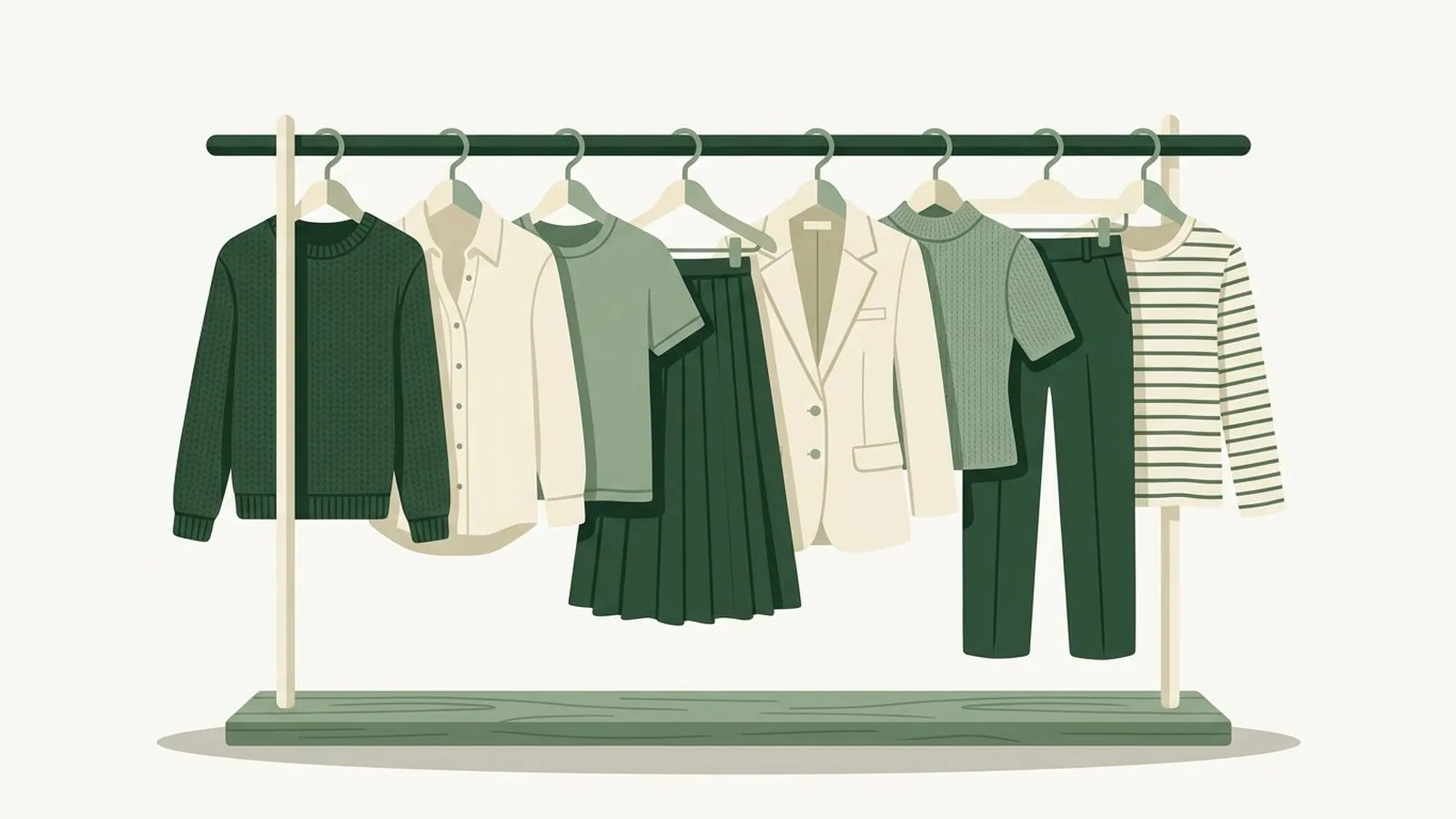
Thirty pieces. Everything mixes with everything. No more "I have nothing to wear" mornings. That's the promise of a capsule wardrobe, and knowing your color season is what makes it actually work.
What's in this guide
What is a capsule wardrobe (and why color season makes it easier)
A capsule wardrobe is a small, curated collection of versatile clothing, typically around 30 pieces, where every item works with almost every other item. The concept has been around since the 1970s, but the reason most people fail at building one comes down to color. They pick pieces they like individually, bring them home, and discover that the navy blazer clashes with the olive pants which fight with the burgundy sweater. The closet is full and nothing goes together.
Color season solves this problem at the root. When you know your color season, you know exactly which shades of every color look harmonious on you, and more importantly, which shades look harmonious with each other. A Spring's warm ivory, golden camel, and coral all share the same warm undertone, so they mix effortlessly. A Winter's crisp white, charcoal, and true red share the same cool clarity, so they do the same.
Instead of standing in a store wondering "does this go with anything I own?", you have a filter. If it's in your season's palette, it goes with everything else in your season's palette. That's the shortcut that turns capsule-wardrobe theory into something you can actually live in.
If your closet is already full, start with an edit rather than a shopping trip: our step-by-step guide to cleaning out your closet by color season shows how to sort what you own before you buy anything new.
The framework: 4 neutrals + 4 signature colors + accents
Every great capsule wardrobe follows a simple color architecture. Think of it as three tiers:
Tier 1: Four neutral base colors (roughly 60% of your wardrobe). These are your pants, skirts, blazers, coats, and basic tees. Neutrals do the heavy lifting. They're the pieces you reach for every day without thinking. The key: your neutrals need to match your season's temperature. A Summer wearing camel (a warm neutral) instead of taupe (a cool neutral) will never quite look pulled together, even if every other piece is perfect.
Tier 2: Four signature colors (roughly 30%). These are your tops, sweaters, dresses, and statement pieces, the items that bring energy and personality to an outfit. Your signature colors come straight from the most flattering shades in your seasonal palette. They're the colors people compliment you in.
Tier 3: One to two accent colors (roughly 10%). These are scarves, bags, jewelry, belts, and the occasional bold piece. Accents add interest without commitment. They're where you can experiment with bolder or trendier shades from your palette.
When your neutrals, signatures, and accents all come from the same seasonal palette, any combination works. You can get dressed in the dark and still look intentional. That's the power of the system. If you want the full method behind those tiers, including the fourth layer most people forget, our guide to building a personal color palette walks through the 60/30/10 structure and how to pull each layer from your season.
Season-by-season capsule breakdown
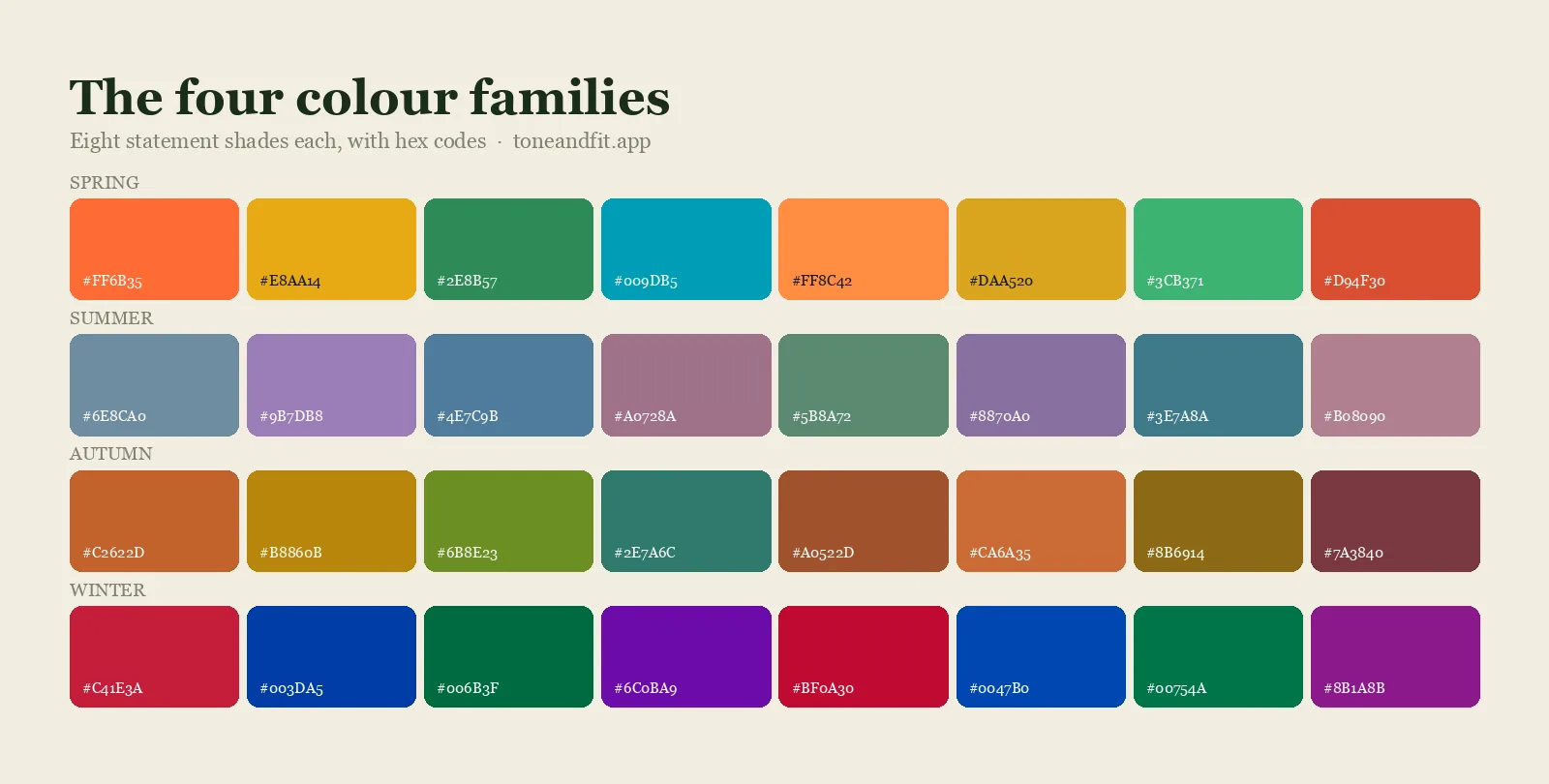
Here's where it gets specific. For each of the four season families, these are the colors that build the strongest capsule foundation. If you know your 12-season subtype, lean toward the lighter or deeper end of the ranges below accordingly.
Spring (warm, light, bright)
Spring's capsule should feel sunny, warm, and alive. Everything has a golden undertone. The overall vibe is approachable and fresh, like a farmers' market on a clear morning.
Neutral base colors:
- Warm ivory / cream: your white. Never blue-white or stark white; always a warm, buttery off-white.
- Camel / golden tan: your go-to trouser and coat color. Warm, rich, and endlessly versatile.
- Warm medium brown: think cognac leather, warm chocolate. Works for shoes, belts, bags, and pants.
- Warm navy: slightly warmer than a true navy, with a hint of teal. Your most "professional" neutral.
Signature colors for tops and sweaters:
- Coral: the Spring power color. Warm, bright, universally flattering on warm-light skin.
- Warm peach: softer than coral, perfect for blouses and lightweight knits.
- Golden yellow: cheerful and warm, not neon, not mustard, a clear sunny yellow.
- Warm turquoise / aqua: the one cool-leaning color that works because of its warmth and clarity.
Accent colors for scarves and accessories:
- Tomato red: a warm, clear red with orange undertones. Bold but harmonious.
- Bright apple green: lively and fresh, perfect in a scarf or bag.
Metals and jewelry: Gold, rose gold, warm brass. If you wear silver, choose a warm-toned or brushed finish. Pearls should be cream or golden, not blue-white.
Summer (cool, light, soft)
Summer's capsule should feel soft, elegant, and cool. There's a muted, powdery quality to the best Summer palettes, like a watercolor painting. Nothing harsh, nothing brassy.
Neutral base colors:
- Soft white / cool off-white: not stark, not warm. A gentle, slightly cool white that doesn't compete with your softness.
- Taupe / cool greige: the Summer equivalent of camel. Cool-toned, muted, sophisticated.
- Cool gray: medium-weight charcoal or dove gray. Your workhorse trouser and blazer color.
- Cool navy: a true, blue-based navy. Clean and classic without being harsh.
Signature colors for tops and sweaters:
- Dusty rose: the quintessential Summer shade. Soft, cool pink that flatters every Summer subtype.
- Lavender: cool, gentle purple that makes Summer skin glow.
- Powder blue: soft, muted, endlessly wearable. A Summer staple.
- Sage green: a muted, cool-leaning green that works across casual and dressy contexts.
Accent colors for scarves and accessories:
- Cool raspberry: a soft berry tone that adds depth without harshness.
- Periwinkle: a blue-violet that reads as both interesting and refined.
Metals and jewelry: Silver, white gold, platinum, rose gold (if it leans cool). Pearls should be white or soft pink. Avoid heavy yellow gold, it pulls too warm against Summer's cool tones.
Autumn (warm, deep, rich)
Autumn's capsule should feel earthy, grounded, and warm. Think spice markets, turning leaves, worn leather. These palettes have depth and richness, nothing washed out or icy.
Neutral base colors:
- Warm off-white / ecru: a rich, creamy tone with noticeable warmth. Never bright white.
- Dark chocolate brown: the Autumn alternative to black. Deep, warm, and elegant.
- Olive / dark khaki: a warm, earthy green-brown that Autumns own. Perfect for pants, jackets, and outerwear.
- Warm charcoal: not a cool, blue-based gray. A brownish, warm charcoal that works as a soft alternative to black.
Signature colors for tops and sweaters:
- Burnt orange / terracotta: the Autumn power color. Rich, warm, unmistakable.
- Mustard yellow: deep, warm gold. Where Spring gets clear sunny yellow, Autumn gets this richer, earthier version.
- Warm teal: a deep, warm blue-green that adds variety without leaving the warm family.
- Rust red: a warm, brick-toned red that pairs beautifully with every Autumn neutral.
Accent colors for scarves and accessories:
- Warm cranberry: deeper and warmer than a cool berry. Rich and luxurious in a silk scarf or handbag.
- Bronze / copper metallic: adds warmth and texture in accessories without looking flashy.
Metals and jewelry: Gold (especially antiqued or brushed), copper, bronze, brass. Tortoiseshell accessories are a natural fit. Avoid bright silver and platinum, they fight the warmth in your skin and wardrobe.
Winter (cool, deep, bright)
Winter's capsule should feel sharp, high-contrast, and bold. These are the people who look incredible in black and white. There's nothing muted or muddy here, every color is clear, saturated, and definitive.
Neutral base colors:
- Pure white: crisp, bright, blue-white. Winters are one of the few seasons that can wear true white without looking washed out.
- Black: the Winter signature neutral. Deep, definitive, and the foundation of most Winter capsules.
- Cool charcoal: a blue-based dark gray for days when you want something softer than black but equally sharp.
- True navy: deep, cool, classic. Your alternative "dark neutral" after black.
Signature colors for tops and sweaters:
- True red: a blue-based, pure red. No orange, no brick. The red that stops traffic.
- Emerald green: deep, jewel-toned, saturated. One of the most universally flattering Winter colors.
- Royal blue: bright, cool, and electric. Makes Winter skin look vibrant and alive.
- Deep magenta / fuchsia: a cool-toned pink with intensity. Where Summer gets dusty rose, Winter gets this.
Accent colors for scarves and accessories:
- Icy pink: a cool, frosted pink that works beautifully in scarves and lighter accessories.
- Deep purple / plum: rich, cool, and dramatic. Perfect for a bag, belt, or statement piece.
Metals and jewelry: Silver, platinum, white gold. High-shine finishes work better than matte. Diamonds and clear crystals echo Winter's clarity. If you wear gold, choose white gold or a very cool-toned yellow gold. Avoid antiqued, warm, or brushed metals.
Know your season before you shop.
Snap a selfie. Get your color season, best neutrals, and signature colors in 60 seconds.
Download Tone & Fit free ↗The 30-piece capsule checklist
Here's the actual shopping list. Fill in the specific shades from your season's palette above. This list works across genders and climates; adjust the specific garment types to your life (swap blazer for denim jacket, swap dress for jumpsuit, etc.). For a version written entirely in menswear terms, with suits, shirts, ties and denim instead, see how men build a wardrobe around their skin tone.
Bottoms (5 pieces), in your neutral base colors:
- Tailored trousers in your darkest neutral (black, chocolate, charcoal)
- Everyday pants or jeans in a mid-tone neutral (camel, taupe, olive, navy)
- Casual chinos or relaxed pants in a lighter neutral
- A skirt or shorts in a neutral that complements pieces 1-3
- Athletic or weekend pants in a dark neutral
Tops (10 pieces), mix of neutrals and signature colors:
- White or off-white tee (in your season's white)
- Neutral-tone tee in your second neutral
- Signature color tee #1
- Signature color tee #2
- Button-down shirt in a neutral
- Button-down or blouse in a signature color
- Casual knit sweater in a signature color
- Dressier knit in a neutral
- Lightweight long-sleeve in a signature color
- Tank or camisole in a neutral (layering piece)
Outerwear and layers (4 pieces), in neutral base colors:
- Blazer or structured jacket in your darkest neutral
- Casual jacket (denim, utility, bomber) in a mid-tone neutral
- Coat in your most versatile neutral
- Cardigan or light layer in a signature or neutral color
Dresses and one-pieces (2 pieces):
- Day dress in a signature color
- Versatile dress in a dark neutral (works for evening or office)
Shoes (4 pairs), in neutral base colors:
- Everyday sneakers or flats in your lightest neutral
- Ankle boots or loafers in your darkest neutral
- Sandals or warm-weather shoes in a mid-tone neutral
- Dressier shoes in a dark neutral or metallic from your accent palette
Accessories (5 pieces), where your accent colors shine:
- Scarf in an accent color (instant outfit upgrade)
- Everyday bag in a neutral
- Belt in your shoe-leather neutral
- Watch or bracelet in your season's metal
- Statement earrings or necklace in your season's metal or accent color
Quick math: 5 bottoms x 10 tops = 50 outfit combinations before you even add layers, dresses, or accessories. When every piece shares the same color logic, the combinations multiply without clashing.
Shopping tips: audit, prioritize, maintain
Start with a closet audit
Before you buy a single new piece, pull everything out of your closet and sort it into three piles: in my season (keep), close enough (keep for now, replace over time), and wrong temperature (donate or sell). Most people find that 40-60% of their wardrobe is already in the right ballpark. You're not starting from zero. Packing for a trip is the same idea in miniature, and our walkthrough on how to pack a travel capsule wardrobe by color season shows how to apply it to a suitcase.
Pay special attention to your neutrals. If you're a warm season wearing cool gray and blue-black, those pieces are probably the reason your outfits feel "off" even when the top is a great color. Swapping your neutral base to the right temperature is the single highest-impact change you can make.
Buy your neutrals first
Neutrals are the foundation. If you can only invest in five new pieces this month, make them the trouser, blazer, tee, shoe, and bag in your correct neutral palette. Once those are in place, even your existing tops and sweaters will look better because they're sitting on the right base.
One in, one out
The capsule only works if you keep the count tight. Every time something new comes in, something old goes out. This isn't about deprivation; it's about maintaining the system. When every piece earns its slot, you stop accumulating clothes you never wear. Your cost-per-wear drops and your daily outfit quality goes up.
Use your phone as a filter
When you're shopping, hold the garment up to your face in natural light and take a quick selfie. If the color makes your skin look clear and even, it's in your season. If your face looks dull, yellow, or blotchy, put it back. Better yet, use Tone & Fit to confirm your season before you shop so you have a specific palette reference on your phone the entire time. If you want the full routine, including what to buy first and how to judge a color under shop lighting, we wrote it up in shopping your color palette without losing your mind. Outerwear is the one capsule piece worth extra thought, since it frames your face all winter, and the right coat color for your skin tone covers that choice on its own.
Ready to find your season?
One selfie, your 12-season result, and the palette that goes with it. Free, no sign-up.
Find your season free ↗If you are comparing options, see which color analysis apps are worth it before you install anything.
FAQ
Can I wear black if I'm not a Winter?
You can wear anything you want, but from a color-harmony standpoint, pure black is a Winter neutral. On Springs and Autumns it can drain warmth from the face; on Summers it can feel too harsh. The solution isn't to ban black entirely. Instead, try your season's darkest neutral near the face (chocolate brown for Autumn, charcoal for Summer, warm navy for Spring) and save black for pieces further from your face like pants, shoes, and bags where it has less impact on your complexion.
How long does it take to build a full capsule wardrobe?
Most people take two to three seasons (six to nine months) to transition fully. Start by auditing what you already own, buy your neutral base pieces first, and then replace signature-color items one at a time as old ones wear out or you find the right shades. Trying to overhaul everything at once is expensive and overwhelming. A gradual swap means each purchase is deliberate and you learn what works as you go.
What if my partner or family member is a different season?
This is common and totally fine. Each person's capsule follows their own season. Where it gets fun is shared accessories like throw blankets, scarves, or bags, those tend to default to the most neutral-friendly colors in the household. For laundry and storage, the capsule approach actually makes things simpler: fewer pieces, clearer categories, and no more "whose gray sweater is this?" confusion.
Do I need to know my exact 12-season subtype, or is the 4-season family enough?
The four-season family gives you the right temperature (warm vs cool) and a good neutral foundation, which gets you 80% of the way there. Knowing your 12-season subtype refines the value (light vs deep) and chroma (bright vs muted) of your best colors, which helps you choose between, say, bright coral and muted peach within the Spring family. Start with four seasons for your capsule framework and refine as you learn your subtype.