What Color to Wear to a Job Interview: Suit, Shirt and Blouse
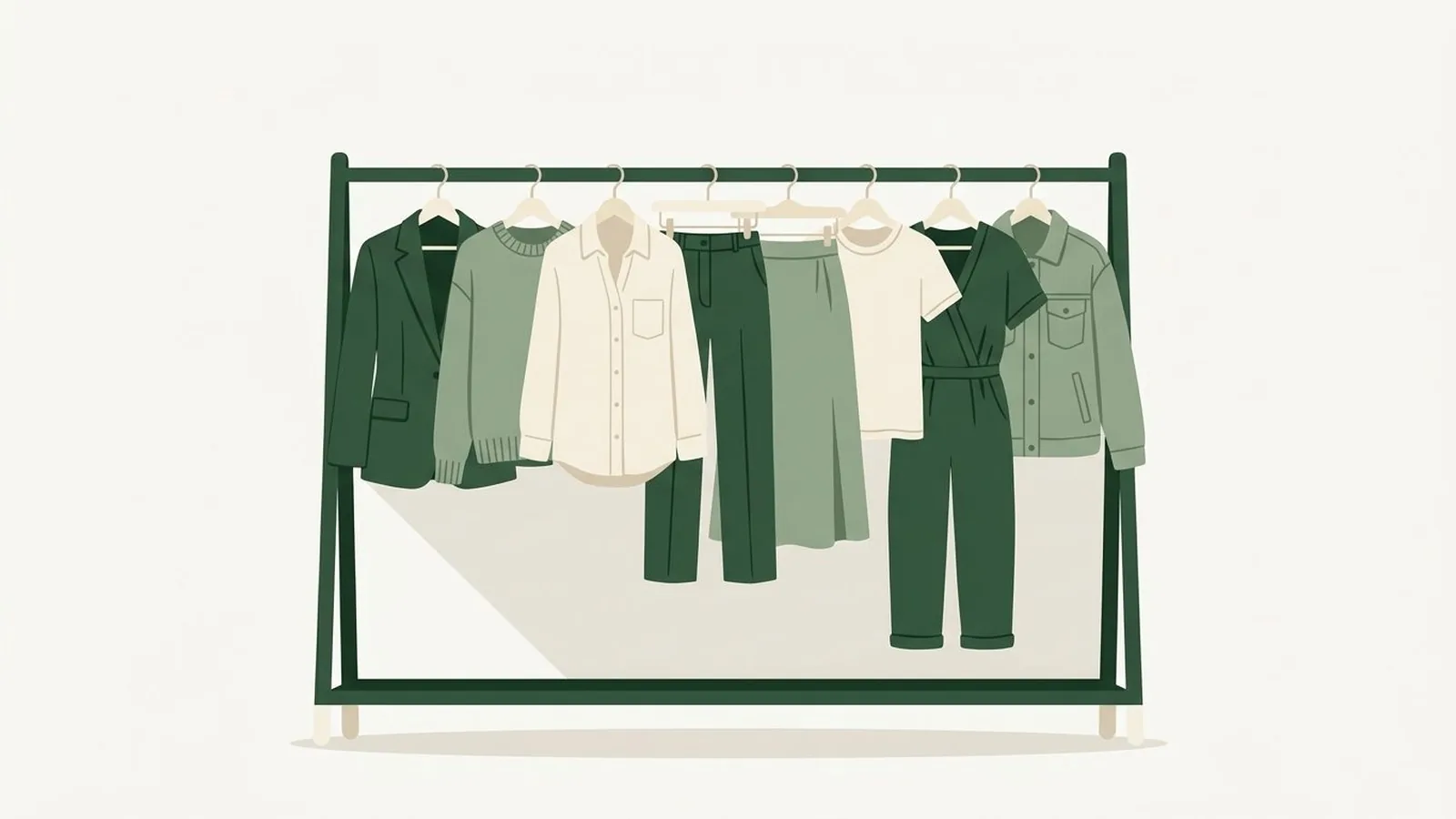
Short answer: for a job interview, wear your season's best neutral as the suit or base (navy or charcoal for cool colouring, brown, olive or warm navy for warm colouring), your best white or cream as the shirt, and one accent from your palette near the face. Avoid the two colours that drain you, usually pure black or stark white, whatever the dress code says.
You've polished your resume, rehearsed your answers, and researched the company. But the color of your outfit is sending a message before you say a single word. Here's how to make sure it's the right one.
In this guide
Why color matters in interviews
Research on first impressions is remarkably consistent: people form judgments about competence, trustworthiness, and likability within the first seven seconds of meeting you. Most of that judgment is visual. And a surprising amount of the visual impression comes down to color.
Color psychology has been studied extensively in professional settings. Navy consistently signals trust and reliability. Gray reads as competent and composed. White suggests precision and clarity. Burgundy and deep red communicate energy and confidence. These associations are real, and interviewers, whether they're aware of it or not, are absorbing them the moment you walk through the door.
But here's the part most interview outfit guides get wrong: they tell you to wear navy or charcoal as if those colors look equally good on everyone. They don't. A charcoal suit that makes one person look sharp and polished can make another person look washed out and tired. The difference isn't the suit. It's the relationship between the color and the person's natural coloring. If your interview outfit is a suit and shirt, our breakdown of men's wardrobe colors by skin tone works through which charcoal, which navy, and which white to reach for.
That's where seasonal color analysis comes in. When you wear colors that harmonize with your skin tone, hair, and eye color, you look healthier, more alert, and more present. When you wear colors that clash with your natural palette, you look fatigued, even if you slept eight hours and feel great. In an interview, where the margin between candidates can be razor-thin, looking visibly energized and well is an advantage you don't want to leave on the table.
General interview color rules
Before diving into season-specific recommendations, here are the principles that apply to everyone:
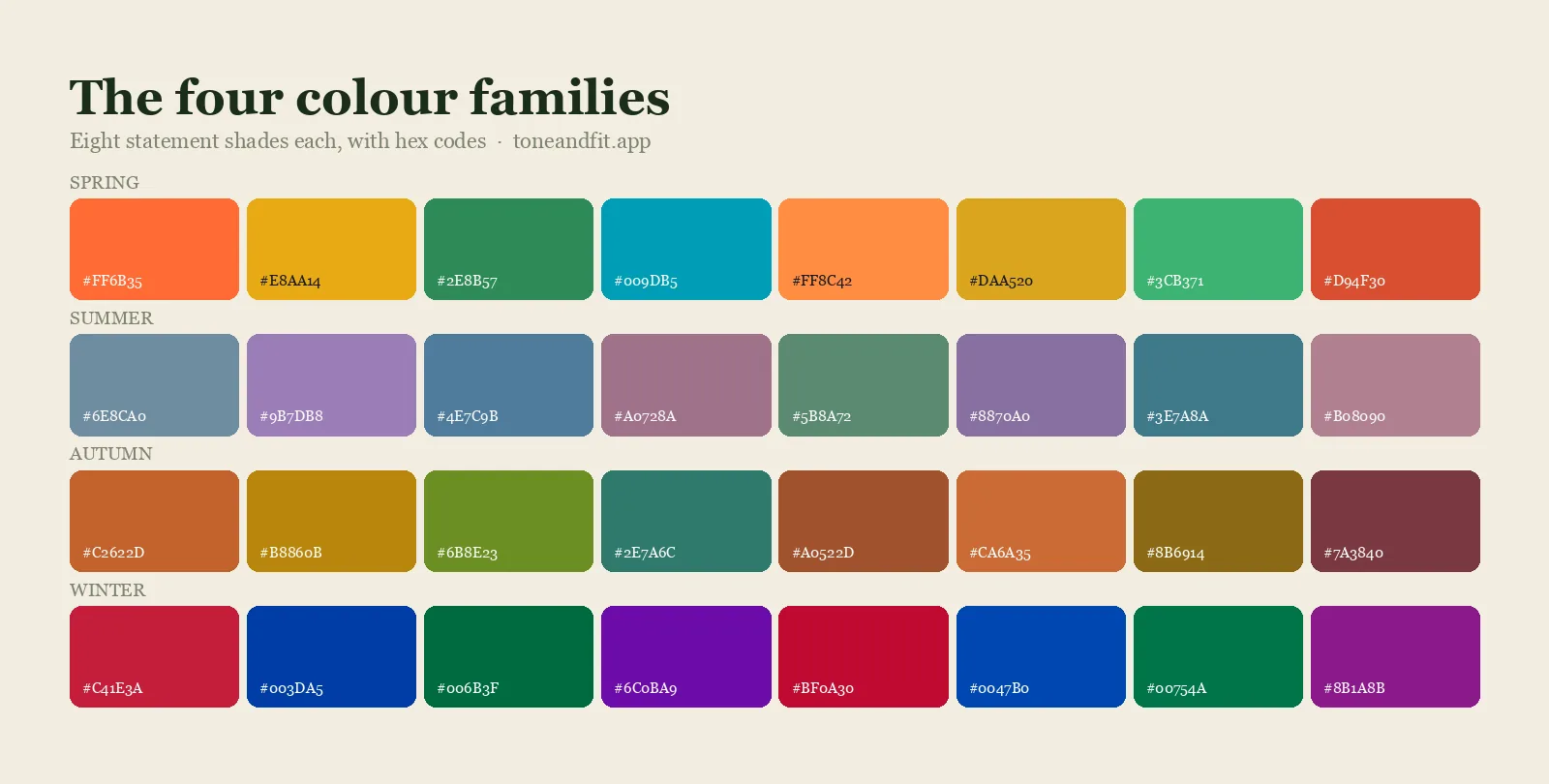
Build your outfit around your season's best neutrals. Your suit, blazer, or primary layer should be a neutral that works with your skin tone. For some people that's navy; for others it's charcoal, chocolate brown, or warm tan. The specific shade matters more than the generic color name. "Navy" encompasses dozens of shades, from warm, greenish-tinged navy to cool blue-black navy. Your season tells you which one.
Add one accent color. A tie, scarf, blouse, pocket square, or piece of jewelry in a color from your personal palette adds visual interest without creating a distraction. It also gives you a place to introduce a psychologically powerful color, like a burgundy tie (confidence) or a sage-green scarf (calm competence), while keeping the rest of the outfit anchored in neutrals.
Limit your total outfit to three colors. One base neutral, one supporting neutral (your shirt or blouse), and one accent. This keeps the look clean and professional while allowing enough contrast to look interesting, not invisible.
Match your metals to your undertone. Your watch, belt buckle, jewelry, and glasses frames should all lean the same direction. Warm seasons wear gold. Cool seasons wear silver. This is a small detail that pulls everything together and signals that you pay attention to how you present yourself.
Season-by-season interview guide
Not sure which season you are? Take a quick selfie with Tone & Fit and find out in under a minute. Or read our guide to seasonal color analysis for a full breakdown. Here's what each season should reach for on interview day.
Spring: warm and bright
Suit or blazer: Warm tan, camel, warm light gray, or warm navy (look for navy that leans slightly green rather than purple). Brown suits work well for Spring types in creative or less formal settings.
Shirt or blouse: Ivory, warm white (never stark white), peach, or warm light blue. Cream is your friend. Bright white will look too harsh against your warm coloring.
Accent (tie, scarf, jewelry): Coral, warm green, golden yellow, or salmon. These colors pick up the natural warmth in your skin and make you look vibrant.
Avoid: Stark black (too heavy for your coloring), cool gray, icy pastels, or anything with a blue-purple base. These colors drain the warmth from your face and can make you look tired right when you need to look your best.
Summer: cool and muted
Suit or blazer: Light gray, blue-gray, soft navy, or a muted medium gray. Your grays should lean cool, not warm. A blue-gray suit is a Summer person's secret weapon in interviews.
Shirt or blouse: Soft white, lavender, dusty blue, or powder pink. These muted, cool tones harmonize beautifully with your low-contrast coloring. Stick with soft shades rather than bold ones.
Accent (tie, scarf, jewelry): Sage, mauve, muted burgundy, or dusty rose. Subtle and refined beats loud and bright for Summer types.
Avoid: Bright orange, golden yellow, warm brown, or anything vivid and saturated. High-chroma warm colors create a visual clash with your cool, soft features and can make you look like you're fighting your own outfit.
Autumn: warm and deep
Suit or blazer: Chocolate brown, olive, warm navy, charcoal-brown, or a rich dark tan. These earthy, grounded tones match the depth of your natural coloring. A warm navy or brown suit will outperform a cool charcoal every time on an Autumn.
Shirt or blouse: Cream, warm white, terracotta, or soft gold. Autumn types look incredible in warm whites and off-whites that would look "dingy" on a Winter type.
Accent (tie, scarf, jewelry): Rust, forest green, burnt orange, deep teal, or mustard. These rich, warm accents complement your natural palette and add polish without flash.
Avoid: Stark white, icy blue, pastel pink, fuchsia, or cool gray. These cool, bright colors feel disconnected from your warm depth and can make even a well-tailored outfit look slightly off.
Winter: cool and bold
Suit or blazer: Charcoal, true black, deep navy, or cool dark gray. Winter types are the one group that actually looks sharp in a black suit. The high contrast between the dark suit and your striking features reads as powerful and composed.
Shirt or blouse: Bright white (your white, not cream), icy blue, light cool gray, or crisp lavender. You can handle stark white because your coloring has enough contrast to stand up to it.
Accent (tie, scarf, jewelry): Burgundy, emerald, royal blue, deep plum, or true red. Bold, saturated colors match your high-contrast natural palette and communicate confidence.
Avoid: Muted earth tones (camel, olive, rust), warm pastels, golden brown, or anything dusty and low-contrast. These colors soften your natural sharpness and make you look faded instead of powerful.
Know your colors before interview day
Take a selfie, get your season and a full personal palette. So you can walk into that interview wearing colors that actually work for you.
Download Tone & FitWhat color suit to wear to an interview
Navy is the safest interview suit on almost every colouring: dark enough to read as serious, and cool enough not to fight warm or cool skin. Charcoal is the second choice, and the better one if your colouring is cool and high contrast (the Winter types), where navy can look slightly soft. Warm colourings (the Autumns and Warm Spring) can wear a brown, olive or warm navy suit, but keep it dark, since a mid brown reads casual. Black is the suit most people reach for and the one that flatters the fewest people: it works on Deep and Cool Winters and drains almost everyone else, which is the opposite of what you want in a room forming a first impression.
If you own one suit and the colour is settled, put the effort into the shirt and the accent colour instead. Those sit next to your face and do most of the work.
What color shirt to wear to an interview (men)
White or light blue. A white shirt is right for cool, high contrast colouring and for any formal industry. If your skin is warm or your contrast is low, a soft white or pale blue shirt is kinder than optic white, which can make warm skin look yellow and a low contrast face look washed out. Pale blue is the most forgiving interview shirt there is: it flatters warm and cool skin, photographs well under office lighting, and keeps navy and charcoal from looking severe. Save pink, lavender and stronger blues for a second interview, once you know the culture.
Tie: one colour, darker than the shirt, no pattern that competes with your face. Burgundy, navy or a muted blue on cool colouring; rust, forest or teal on warm colouring.
What color blouse or top to wear to an interview
Under a jacket, a blouse in your best neutral or your best mid tone does more than a bright colour. Cream or soft white for warm skin, pure white or icy grey for cool skin. If you want colour at the face, choose the muted version of a shade from your season: dusty teal or soft rose for Summers, olive or terracotta for Autumns, true blue or berry for Winters, coral or warm turquoise for Springs. Keep the saturation one step below what you would wear socially. The goal is a face that looks rested and alert, not a top that gets remembered instead of your answers.
Interview colors to avoid
- Black at the face on anyone who is not a Winter: it deepens the shadows under the eyes and jaw.
- Orange, lime and hot pink as the main colour: they pull attention from your face and read as informal in most settings.
- A white of the wrong temperature: optic white on warm skin, cream on cool skin. Both look slightly off and nobody can say why.
- Head to toe neutral with no colour at the face: competent but forgettable. One accent at the collar or lapel fixes it.
Industry-specific adjustments
Corporate and finance
Conservative environments expect conservative dress. Keep your outfit within the navy-charcoal-white triangle, but choose the right shade of each for your season. A Warm Autumn in a warm-toned charcoal suit with a cream shirt and a forest green tie will look both polished and authentic. The color analysis advantage here is subtle but real: you look healthier and more alert than the person next to you who grabbed a generic charcoal suit off the rack without thinking about whether it works with their skin.
Creative and tech
Creative industries give you more room to express personality through color. This is where your accent color can do real work. A Spring person might pair a camel blazer with a coral pocket square. A Winter person might go with a deep navy suit and an emerald tie. You can also consider colored blazers over neutral trousers, or a patterned blouse in your palette's colors. The key is to look intentional, not chaotic. One well-chosen accent is more effective than a full outfit of bold colors.
Startups and smart casual
When the dress code is "smart casual" or "come as you are," you have the most flexibility and, paradoxically, the most risk of getting it wrong. Without the structure of a suit, every color choice is more visible. This is where seasonal color analysis pays off the most. A well-fitted pair of trousers in your best neutral, a shirt or top in a flattering color from your palette, and clean shoes in a matching tone will look effortlessly put-together. The goal is to look like someone who naturally has good taste, not someone who agonized over what to wear.
The confidence factor
Here's what rarely gets mentioned in interview outfit guides: how your clothes make you feel directly affects how you perform.
When you catch a glimpse of yourself in a mirror or a glass door on your way to the interview and you think, "I look good," something shifts. Your posture straightens. Your voice steadies. You make better eye contact. You take up space naturally instead of trying to shrink into the chair. This isn't wishful thinking. It's a well-documented psychological phenomenon called enclothed cognition, the measurable effect that wearing certain clothes has on your cognitive processes and confidence.
Color is a huge part of that equation. When you wear a color that makes your skin glow, your eyes pop, and your features look sharp, you register it instantly. You look in the mirror and see someone who looks healthy, capable, and ready. That feeling carries into the room with you. The interviewer doesn't know why you seem more self-assured than the last candidate, but you do: you're wearing your colors.
Conversely, if you're wearing a color that makes you look washed out or sallow, part of your brain knows it. You fidget more. You worry about how you're coming across. It's a small drag on your confidence at the exact moment you need every ounce of it.
The best interview outfit isn't the one that follows the most rules. It's the one that makes you feel like the most competent version of yourself. And for most people, that starts with wearing the right colors.
Ready to find your season?
One selfie, your 12-season result, and the palette that goes with it. Free, no sign-up.
Find your season free ↗For the underlying reading, analyze your skin tone explains what undertone, depth and contrast actually are.
Frequently asked questions
Can I wear black to a job interview?
It depends on your color season and the industry. Black works well on Winter types; it matches their high-contrast coloring and reads as authoritative. On Spring or Autumn types, black can look too harsh and actually drain confidence from your face. If you're not a Winter, swap black for charcoal, deep navy, or chocolate brown. You'll get the same formality without the color working against you.
What about wearing a red power suit to an interview?
A full red suit is a bold move that can work in creative industries if, and only if, the shade of red matches your season. Winters can pull off true red or burgundy. Autumns look strong in rust or brick red. For most interviews, though, a red accent (tie, scarf, blouse, or jewelry) paired with a neutral suit is the safer play. You still get the energy of red without the risk of overshadowing your qualifications.
What if the company has a specific dress code?
Follow the dress code. Color analysis works within any dress code, not against it. If the company expects a dark suit and white shirt, you still choose between charcoal and navy (based on your undertone), and between bright white and soft white (same logic). If the dress code is business casual, you have even more room to wear your best colors. The point is to optimize within whatever framework you're given.
Does interview outfit color really matter that much?
Research consistently shows that first impressions form within 7 seconds, and visual appearance is the largest factor. Color is a major part of that visual impression, and it affects whether you look healthy, alert, and put-together or tired and washed out. You won't lose a job over a shirt color, but wearing a color that makes your skin glow rather than go flat gives you a subtle, real advantage in those critical first moments.