Colour Analysis App: A Guide for UK and Australian Readers
Written for British and Australian readers. Same seasonal system as everywhere else, different spelling, and a few things that genuinely do change depending on where you are standing when you take the photo.
Find your colour season free.
One selfie, your 12-season result and the full palette that goes with it. No sign-up, and the photo is discarded after analysis.
Find your season free ↗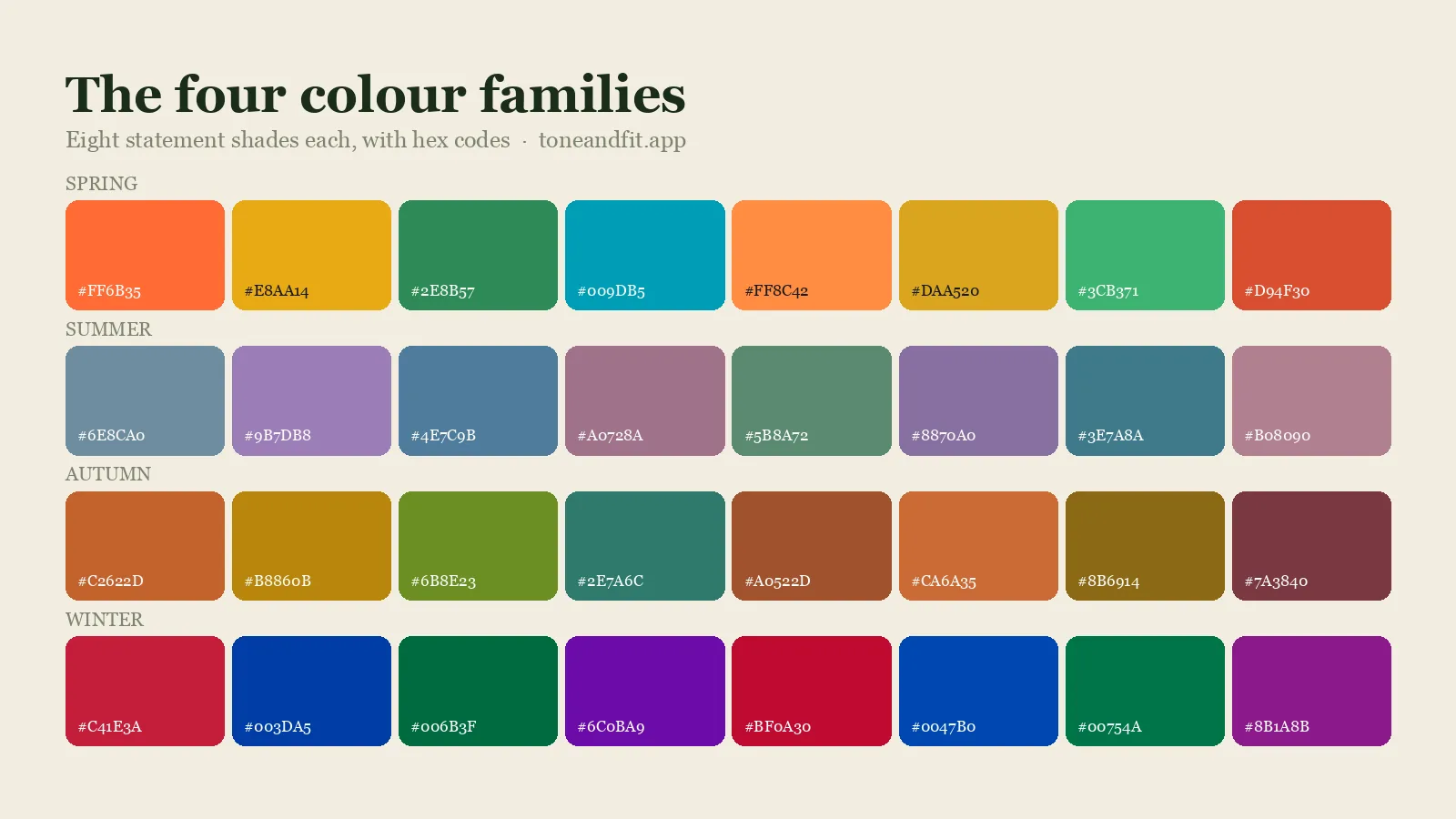
In this guide
Why British light is quietly an advantage
The single biggest cause of a wrong result is not the software. It is the lighting in the photo. Warm indoor bulbs throw a golden cast over everything, and a golden cast makes a cool complexion read as warm, which is enough to move you across the entire seasonal map.
This is where a British winter afternoon turns out to be useful. Bright overcast daylight is diffuse and close to neutral, which is more or less what a professional analyst spends money on lamps to reproduce. A grey day at a window is a genuinely good place to photograph yourself.
Australian readers have the opposite problem. Strong direct sun blows out the highlights on your face and hides exactly the subtleties the analysis depends on. Step into open shade instead, or use indirect light indoors near a window.
Three things to avoid regardless of hemisphere: warm indoor bulbs, a strongly coloured wall directly behind you, and heavy makeup. All three change what the camera records about your skin.
The mechanism behind all of this, and why your phone's white balance cannot simply correct for it, is set out in why your season looks different in every light. If you would rather work through the whole thing manually with drapes and no app at all, there is a step-by-step version in how to do colour analysis at home.
The 12-season system, and why 4 is not enough
Most free quizzes sort you into spring, summer, autumn or winter. Four buckets for every human complexion is too coarse to be useful in a shop. The 12-season system splits each of those into three, which is what analysts have used for decades.
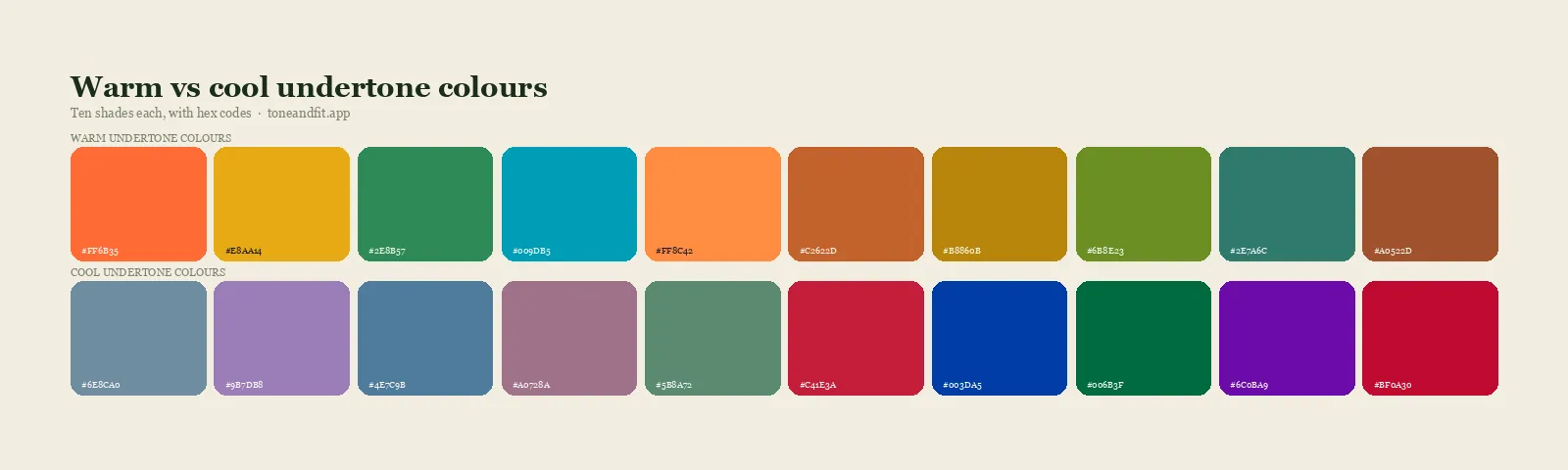
It works on three measurements. Undertone is whether your skin sits warm or cool. Value is whether your natural colouring is light or deep. Chroma is whether it is bright and clear or soft and muted. Those three axes give twelve combinations that occur often enough to be worth naming, and the difference between neighbouring ones is the difference between a colour that lifts your face and one that drains it.
If you want to see the full set laid out with hex codes before you decide anything, the twelve colour palettes are all here, and each season page shows the shades as real swatches rather than describing them in prose.
See which of the twelve you are.
The scan measures undertone, value and chroma from one photo, then names your season and hands you the palette. Free.
Get your colour season ↗Pricing: one-off versus subscription
Country matters less here than model. Apple bills in your local currency and shows the final price, VAT or GST included, before you confirm anything, so there are no conversion surprises at checkout.
What does vary is what you are buying. Some colour analysis apps are subscriptions, which makes sense if what you want is an ongoing styling service: a catalogued wardrobe, outfit planning, seasonal shopping lists. You keep paying because you keep using it.
Your colour season, though, does not change. It is a fact about your colouring, not a service. Paying monthly for a fact you learned in the first thirty seconds is a poor deal, which is why Tone & Fit gives the scan and the season away free and charges once, if you want the full toolkit. Whichever you choose, check before you install whether the season result itself is behind the paywall, because several apps are free to download and then charge to show you the answer.
The other comparison worth making is against a studio session, which in Britain usually means a House of Colour consultant. We have put the two side by side in app versus consultant, and the honest answer is that starting free and escalating only if the result feels wrong costs you nothing.
What to actually look for
Four questions separate a real analysis from a quiz with a nice interface.
Does it measure, or does it ask? A quiz that asks whether your veins look green or blue is recording your guess and handing it back with confidence. The whole difficulty of colour analysis is that people judge their own undertone badly. Look for something that reads the photo.
Twelve seasons or four? Four is a horoscope. Twelve is the system analysts actually use.
What happens to the photo? This matters more under UK GDPR than the marketing copy usually admits. Read the App Store privacy label before you install. On-device processing with no account is meaningfully different from uploading your face to someone's server, and the label will tell you which you are getting.
Do you get colours to avoid? Knowing your palette is half of it. Knowing which shades flatten you is what stops you buying the same wrong jumper twice.
Using your palette on the high street
A palette is only worth having if it survives contact with actual shopping. A few habits make it stick.
Test near the shop door rather than in the fitting room. Fitting-room lighting is chosen to be flattering, not accurate, and a colour that looks right under it can look entirely different in daylight on the pavement outside.
Hold the fabric under your chin, not against your arm. Colour analysis is about what happens to your face, and the effect you are looking for is your under-eye area and jawline either lifting or going flat.
Spend your money on the pieces that sit near your face first. A jumper, a shirt collar, a scarf and a coat lapel do far more work than trousers ever will. Get those four in your season and the rest of the wardrobe can be fairly neutral.
And keep your hex codes on your phone. Online shopping is where a palette earns its keep, because product photography lies constantly about colour and a hex reference is the only reliable check you have.
There is a longer version of this, including how to audit the wardrobe you already own and what to do with the pieces that are close but not quite right, in how to shop your colour palette.
FAQ
Do colour analysis apps work in British daylight?
Better than most people expect. Overcast daylight is diffuse and fairly neutral, which is close to the lighting a professional analyst tries to create with a north-facing window. The thing to avoid is a warm indoor bulb, which pushes everything golden and will read a cool complexion as warm. Stand at a window on a bright grey day and you have near-ideal conditions.
Is there a difference between colour analysis and color analysis?
None at all beyond the spelling. The seasonal system is the same one used by analysts in the UK, Australia, the US and Korea. British and Australian readers tend to search 'colour analysis app' and Americans 'color analysis app', which is the only reason this page and its American counterpart exist separately.
How much does a colour analysis app cost in the UK?
It depends on the pricing model rather than the country. Apple charges in your local currency and shows the final price, VAT included, before you confirm. The bigger difference is one-off versus ongoing: some apps run a subscription, while Tone & Fit gives the scan and your season away free and charges once for the full toolkit.
Is an app as good as an in-person consultation?
For the core question it gets you a long way for nothing. A professional drape in a studio is still the most thorough option and a good analyst will catch nuances software will not. What an app removes is the cost and the booking from finding out roughly where you sit.
Does it work for Australian light?
Yes, though the failure mode is the opposite of Britain's. Australian sun is strong and direct, and harsh sunlight blows out highlights and skews colour just as badly as a warm bulb. Shade or indirect daylight gives a truer reading than full sun.