Deep Winter vs Deep Autumn: The Difference
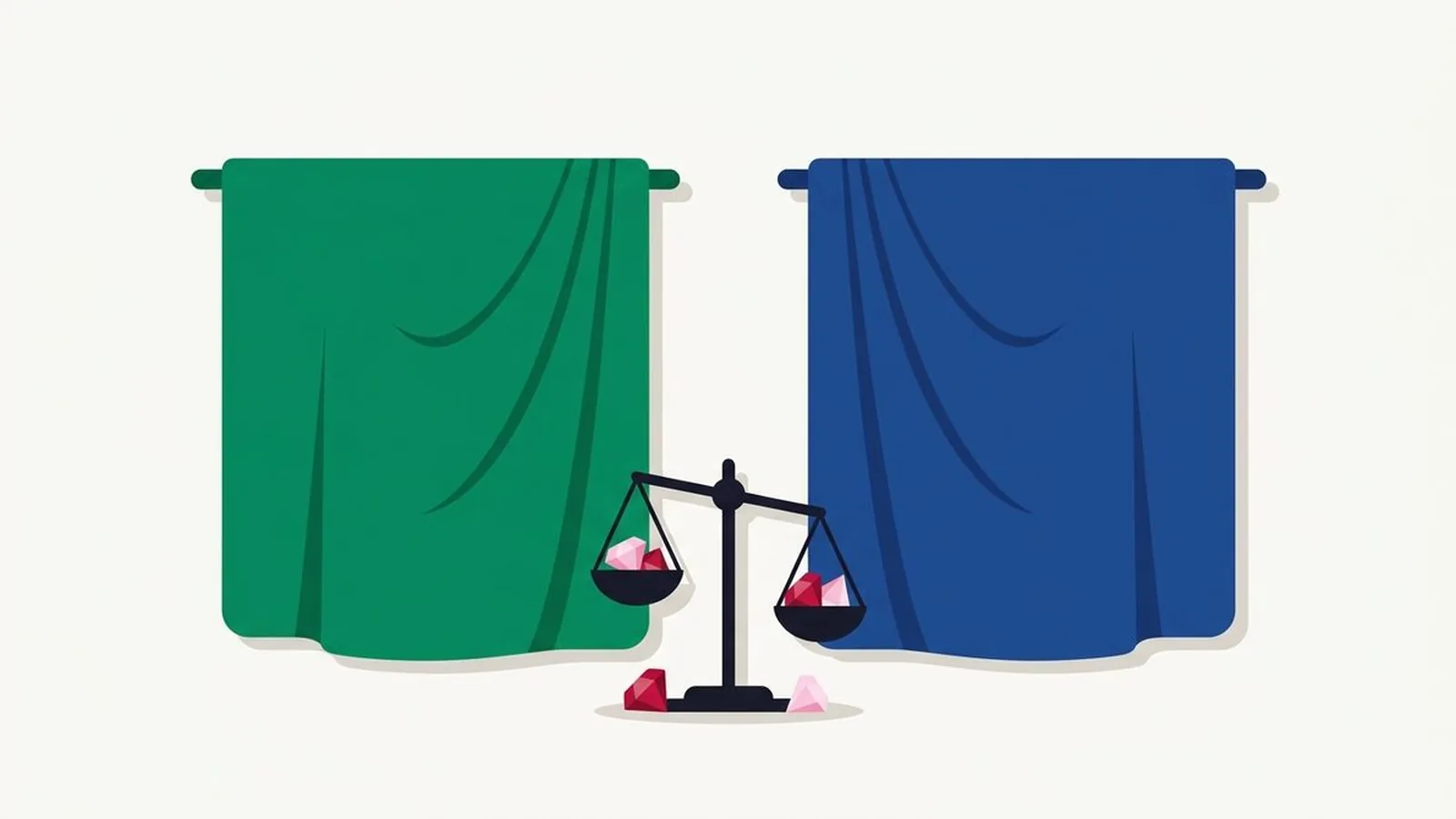
Deep Winter and Deep Autumn are the two deepest, richest sub-seasons in the whole 12-season system, and both can wear a near-black without disappearing into it. The one thing that actually splits them is temperature: Deep Autumn's darkness is warm and earthy, Deep Winter's is cool and clear.
What's in this guide
What Deep Winter and Deep Autumn have in common
Deep Winter and Deep Autumn share exactly one trait: each is the deepest, most richly pigmented sub-season inside its own family, which is exactly why the two get confused so often. Both handle colors that would swallow a lighter season whole. Both carry dark hair and eyes, often a strong contrast between features, and a comfort with saturated, jewel-adjacent color that Light and Soft seasons simply do not have.
If you have read our guide to whether you are a Deep Winter or the parallel guide to whether you are a Deep Autumn and walked away thinking either one could be you, you are not imagining things. Depth is a loud, easy-to-spot signal, dark hair against lighter skin, a striking contrast in photographs, and it is the first thing most people notice about their own coloring. Undertone is the quieter signal underneath it, and it is the one that actually decides which of these two seasons you belong to.
The tell that separates them
The tell is temperature, not darkness. Deep Autumn's undertone is warm, meaning gold, amber and red-orange sit underneath the skin, and its chroma is medium: rich and pigmented, but earthy rather than glass-clear. Deep Winter's undertone is cool, meaning blue, magenta or violet sit underneath the skin, and its chroma is bright: clear and saturated in a way that reads like a cut gem rather than a piece of bark.
Put another way: Deep Autumn is warmth with depth added. Deep Winter is coolness with depth added. Depth is the trait they share, so it cannot be the trait that tells them apart. Once you stop asking "how dark am I" and start asking "does gold or silver look better against my skin," the two seasons stop overlapping. For a slower walkthrough of what undertone actually is and how to read it, our guide to warm vs cool skin undertone covers the mechanism this whole comparison rests on.
Deep Winter vs Deep Autumn, side by side
A quick reference before the tests. Notice that depth and contrast look almost identical on both sides, temperature is where the columns actually diverge.
| Deep Winter | Deep Autumn | |
|---|---|---|
| Undertone | Cool: blue, magenta, violet | Warm: gold, amber, red-orange |
| Depth (value) | Deep, the darkest Winter | Deep, the darkest Autumn |
| Chroma | Bright: clear, jewel-like | Medium: rich but earthy |
| Contrast | High | Medium to high |
| Best colors | True red, emerald, sapphire, true black, icy white | Espresso, rust, pine, deep plum, deep camel |
| Worst colors | Camel, rust, mustard, dusty muted tones | Icy pastels, cool grey, stark white, silver |
| Best metals | Silver, platinum, white gold, gunmetal | Gold, bronze, copper, antique gold |
| Celebrities | Most analysts place Lupita Nyong'o and Anne Hathaway here | Most analysts place Oprah Winfrey and Penélope Cruz here |
Treat the celebrity row as a memory aid rather than a verified fact. Colorists disagree at the edges, and the only reading that matters for your wardrobe is your own.
4 tests to settle it
Descriptions only get you so far. Run these four checks in daylight, no makeup, hair pulled back, and count which season wins more rounds.
1. The metal test
Hold a piece of yellow gold jewelry against one side of your bare neck and silver against the other, in daylight. If gold makes your skin look brighter and silver looks slightly flat or grey by comparison, that is a Deep Autumn signal. If silver brightens your skin and gold looks faintly dull or heavy, that points to Deep Winter. This is the single fastest way to separate the two, because it tests undertone directly rather than asking you to judge darkness.
2. The black vs espresso test
Drape a true black next to your face, then swap it for a warm espresso brown. A Deep Winter usually looks sharp and energized next to true black, features staying crisp rather than getting lost. A Deep Autumn more often looks best next to the espresso, with true black reading slightly cold or flat by comparison, even though both colors are nearly the same depth.
3. The jewel vs earth test
Hold a clear emerald or sapphire next to your face, then a rust or olive in the same depth. Deep Winter tends to look most alive next to the clear jewel tone, while the earthy version reads slightly muddy. Deep Autumn shows the opposite pattern, the rust or olive looks rich and warm, while the emerald or sapphire can look a shade too cold and stark.
4. The white paper undertone test
Hold plain white paper next to your bare skin in daylight. A yellow or golden cast against the white points to Deep Autumn's warm undertone; a pink, blue, or ashy cast points to Deep Winter's cool one. This is the same test used to sort undertone generally, and our guide to finding your skin undertone at home walks through it step by step if you want more detail than one paragraph can give.
If you run all four and the results split evenly, that usually means your undertone sits closer to neutral than either season assumes, and depth is doing most of the visual work in how "deep" you look. A professional drape or an AI color analysis can settle a genuine tie by measuring hue directly instead of asking your eye to judge a subtle temperature difference in a mirror.
Stop guessing which deep season you are.
Tone & Fit's AI measures your undertone, depth, and chroma from a selfie and tells you whether you're Deep Winter, Deep Autumn, or something else, with your full palette in 60 seconds.
Try the App ↗How the two palettes diverge
Unlike two seasons in the same family, Deep Winter and Deep Autumn do not actually share a color palette, they share only the amount of pigment a color needs before it stops looking washed out. Every shade below is copied straight from the Tone & Fit Winter palette guide, so the names and hex codes match what a professional drape or an AI scan will hand you.
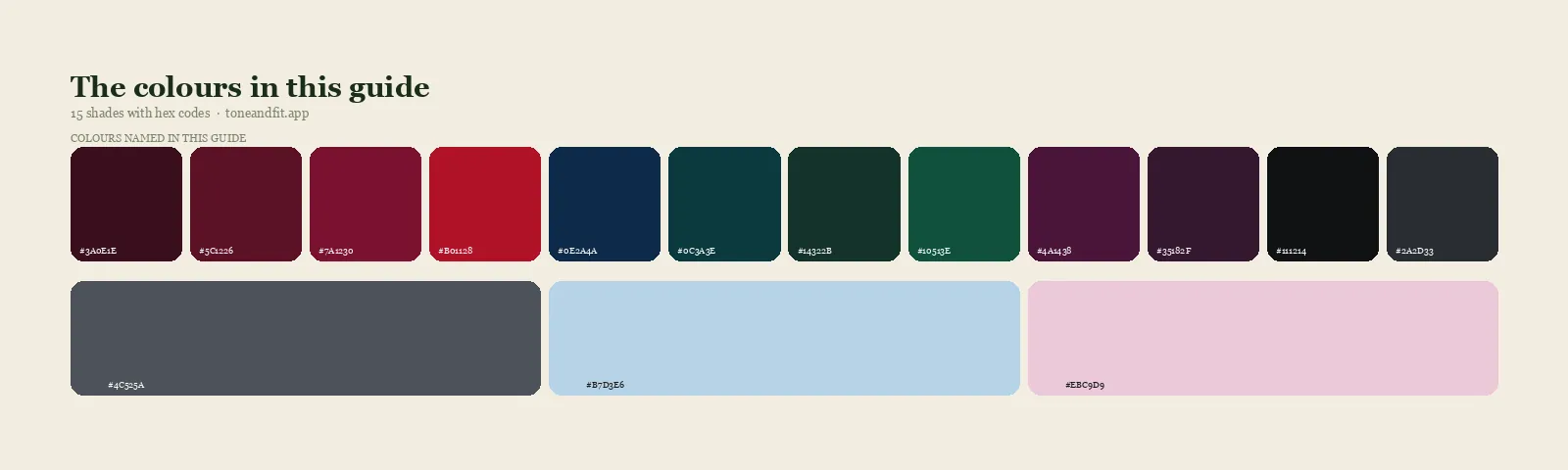
- Black Cherry#3A0E1E
- Cool Burgundy#5C1226
- Garnet#7A1230
- True Red#B01128
- Midnight Navy#0E2A4A
- Deep Teal#0C3A3E
- Deep Pine#14322B
- Emerald#10513E
- Deep Plum#4A1438
- Aubergine#35182F
- True Black#111214
- Dark Charcoal#2A2D33
- Deep Cool Grey#4C525A
- Icy Blue Accent#B7D3E6
- Icy Pink Accent#EBC9D9
Deep Winter: neutrals & accents
Every one of those reads as a jewel rather than a pastel, dark enough to hold its own next to true black, but with a cool, almost blue-black base underneath the pigment. Deep Autumn's darkest shades run the opposite direction: the same intensity of pigment, built on a golden base instead of a cool one.
Deep Autumn's equivalents: chocolate, deep brick, burnt orange, pine green, mahogany, espresso.
Line the two strips up and the split is obvious even without reading a single label: one leans blue-black, the other leans amber-black. Both are equally dark; only one of them is warm. For the complete named list with every hex code, see the dedicated Deep Winter color palette guide and its counterpart, the Deep Autumn color palette guide, or browse the full family on the Autumn palette page.
If you sit between them
Some people genuinely sit near the border, usually because their undertone reads closer to neutral than to a confident warm or cool. If your metal test is close, your black-versus-espresso result depends on the day, and your jewel-versus-earth test keeps flipping, depth is not your deciding trait here, undertone is, and it is worth measuring rather than guessing.
A neutral-leaning deep person often does best by picking a lane rather than mixing both palettes evenly: choose the two or three colors from each side that tested most clearly flattering, then build neutrals around whichever metal, gold or silver, won the jewelry test most convincingly. An AI color analysis or a professional drape session settles a genuine tie in minutes by measuring the actual hue reflected off your skin, which removes the guesswork a mirror cannot resolve on its own.
Common mixups
Mistaking Deep Winter for Cool Winter or True Winter. All three are cool, but only Deep Winter carries this much overall darkness in hair, skin and eyes together. If you are cool-toned but your coloring reads medium rather than deep, the comparison that will actually help is the full Winter palette guide, which lays out all three side by side.
Mistaking Deep Autumn for Warm Autumn. Both are warm, but Warm Autumn sits at a medium depth while Deep Autumn borrows real darkness from its Winter neighbor. Our Deep Autumn vs Warm Autumn comparison draws that line in detail if warmth, not coolness, is the debate you are actually having.
Trusting one test taken under a warm bulb. Indoor incandescent light adds a golden cast to everything, which can make a genuine Deep Winter look warmer than they are. Always run these checks in daylight near a window, and weigh the four tests together rather than committing to whichever one you tried first.
Ready to find your season?
One selfie, your 12-season result, and the palette that goes with it. Free, no sign-up.
Find your season free ↗For the underlying reading, the skin tone analyzer explains what undertone, depth and contrast actually are, and the 12 color seasons overview shows where both of these sit on the full map.
FAQ
What is the main difference between Deep Winter and Deep Autumn?
Undertone and clarity. Deep Winter is cool with bright, clear jewel-tone chroma, while Deep Autumn is warm with medium, earthier chroma. Both are the deepest members of their families, so depth alone will not tell them apart, temperature does.
Is Deep Winter the same as Deep Autumn?
No. They share only one trait, being the darkest, richest sub-season in their own family. Deep Winter is cool and clear; Deep Autumn is warm and earthy. Confusing the two usually comes from noticing darkness and stopping there instead of checking undertone.
Which season is cooler, Deep Winter or Deep Autumn?
Deep Winter. It sits in the cool half of the wheel with blue, magenta or violet undertones, while Deep Autumn sits in the warm half with golden, red-orange undertones. Both can look equally dark in a black and white photo, the color, not the shadow, is what separates them.
Can a Deep Autumn wear black?
Rarely at full strength. Deep Autumn usually looks better in a warm near-black like espresso or dark chocolate than in true black, which can read cold against warm skin. Deep Winter is the one that wears pure black without a second thought.
What colors flatter Deep Winter but not Deep Autumn?
True red, sapphire, emerald, and icy blue or icy pink. These clear, cool jewel tones and icy accents need a cool undertone to look sharp rather than sallow, so they belong to Deep Winter, not Deep Autumn.
What is the fastest way to tell Deep Winter and Deep Autumn apart?
Hold a true red next to a rust or brick red under your jaw in daylight. If the true red looks cleaner and brighter on you, you lean Deep Winter. If the rust looks richer and the true red looks slightly harsh, you lean Deep Autumn. A metal check, gold versus silver, usually confirms it: gold points to Autumn, silver points to Winter.