Blake Lively's Color Season, Analyzed
Blake Lively's color season: most color analysts place her in True Spring, the warm, medium-value, brightly saturated member of the Spring family. Her golden-warm skin, honey-blonde hair and vivid green eyes all point the same direction, though a smaller camp argues she sits one shade lighter, in Light Spring.
In This Article
What Color Season Is Blake Lively?
Blake Lively is most often typed as a True Spring: a warm undertone, a medium overall value, and bright, clear chroma, the exact combination that lets her wear saturated color without the color fighting her face. That reading shows up consistently across the color analysis community, and it lines up with the pattern colorists look for first: warmth that reads golden rather than muddy, paired with enough clarity in the skin and eyes to carry real saturation instead of needing it softened down.
Lively built her career on Gossip Girl, playing Serena van der Woodsen for six seasons, and has since starred in The Age of Adaline, A Simple Favor and It Ends With Us. She is married to actor Ryan Reynolds, and in recent years has built a small consumer goods portfolio, the Betty Buzz and Betty Booze drink lines and the Blake Brown haircare brand. None of that decides a color season on its own, but two decades in front of a camera give colorists an unusually large photo library to work from, across red carpets, film sets and magazine covers shot in every kind of light.
The Evidence: Undertone, Hair, Eyes, Contrast
Before assigning a season, colorists check the same four things we used in our Taylor Swift color analysis: skin undertone, natural hair color, eye color, and overall contrast. The word natural is doing the work in that sentence. A dye job or a spray tan is a choice; the reading that matters is what is underneath it.
Skin Undertone
Lively's skin reads warm: a golden-peach base that tans easily and rarely looks pink, even under the flat, unflattering light of a flash photo. Warm undertones like this carry a yellow or golden cast rather than a pink or blue one, and it is the single biggest reason cool jewel tones, sapphire, fuchsia, icy lilac, tend to look slightly wrong on her next to skin, while warm coral and gold look like they belong there.
Natural Hair Color
The honey-gold balayage stylists still copy under the name "Blake Lively blonde" is built over a natural base that reads closer to a dark golden blonde or light brown. As with any celebrity, the salon color is a choice; the root is the tell. Lively's root consistently reads warm and golden rather than ash, which rules out the cool, silvery blonde that points toward a Summer season.
Eye Color
Her eyes are green, often photographed as hazel-green depending on the light and the styling around them. Warm-toned green without a cool grey or slate rim is one of the more reliable Spring-family signals; a genuinely cool green usually carries that grey cast, which her eyes do not show.
Contrast Level
Medium. Her hair, skin and eyes sit closer together in value than a high-contrast Winter's would, but there is more separation between them than a pastel-on-pastel Light Spring shows. Medium contrast paired with medium warmth and real brightness tolerance is the True Spring signature, and it is also the detail that argues against the palest, softest Spring.
The Case for True Spring
In the 12-season system, every season is built from the same three measurements: undertone, value, and chroma. True Spring sits at warm undertone, medium value, and bright, clear chroma, the brightest and clearest member of the Spring family. Here is how Lively's features line up against that definition.
| Dimension | True Spring Definition | Blake Lively |
|---|---|---|
| Undertone | Warm (golden, peach, yellow-based) | Golden-peach skin, warm honey-blonde hair, warm green eyes |
| Value | Medium (not the lightest or darkest Spring) | Medium-depth blonde hair, medium skin depth |
| Chroma | Bright (clear and saturated, not dusty) | Carries saturated coral, teal and gold without looking costumey |
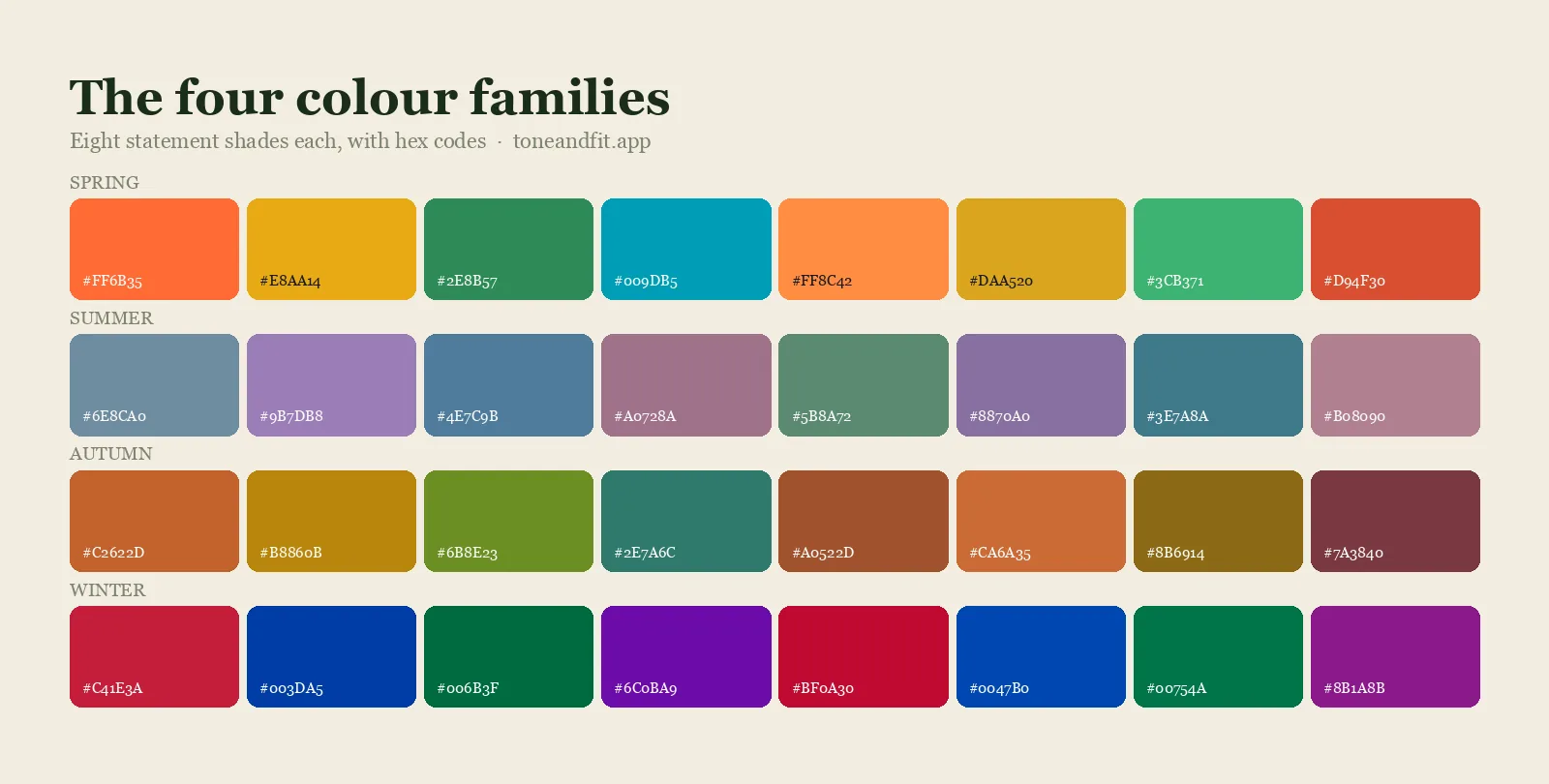
All three line up. Her undertone reads warm, her value reads medium, and her chroma reads bright rather than soft. The True Spring palette reflects exactly that: warm coral, tangerine, sunflower yellow, teal, kelly green and golden brown, worn against camel or warm gold rather than black, grey or silver. When Lively wears those colors, the effect looks less like styling and more like her skin is simply doing what it already does in sunlight.
The Light Spring Counterargument
Not every colorist lands on True Spring. A smaller group places Lively in the neighboring Light Spring season, and the disagreement is worth walking through because it shows how close two Spring seasons can sit.
Light Spring shares True Spring's warm undertone but pulls the other two dimensions lighter and softer: paler skin and hair, and chroma that wants pastel rather than saturated. The Light Spring case for Lively rests on real observations. Her hair reads quite pale in certain highlighted, sun-lit photos, and some of her most complimented looks lean toward soft, delicate pastels rather than anything loud.
Why Most Colorists Still Land on True Spring
The counterargument runs into a specific problem: brightness tolerance. Light Spring's own palette guidance is explicit that saturated warm colors, fire-engine red, bright orange, hot fuchsia-adjacent shades, run too intense for that season's delicate contrast. Lively's red carpet history includes plenty of fully saturated coral, marigold and gold sequin that reads as flattering rather than overwhelming, and that is a True Spring result, not a Light Spring one. A true Light Spring in the same dress would risk looking like the color is wearing her.
The honest answer is that highlighted, sun-bleached hair can push anyone's reading lighter in a single photo, which is exactly why colorists insist on judging the natural root and the reaction to saturation rather than one flattering picture. On both of those tests, the weight of evidence points to True Spring, with Lively sitting closer to the brighter end of her own season than to the border with Light Spring.
What's Your Color Season?
Tone & Fit uses your selfie to read your undertone, contrast and season in seconds, the same three measurements we just walked through for Blake Lively, applied to your own face.
Find Your Season Free ↗Best and Worst Colors on the Red Carpet
Lively's strongest red carpet moments cluster around a specific temperature and intensity, and her occasional misses cluster just as clearly around the opposite one.
- Warm coral and tangerine. These sit right at the center of the True Spring palette and consistently read as some of her most complimented colors, since they mirror the golden-peach cast already in her skin instead of competing with it.
- Gold sequins and warm metallics. Gold, brass and warm bronze catch light the way her skin already does, which is why sequined or metallic gold gowns tend to photograph as luminous on her rather than costumey.
- Teal and kelly green. Both echo her eye color while staying warm enough not to fight her skin, a combination that reliably makes the eyes the focal point of the outfit.
- Camel and golden brown neutrals. These do for Lively what black does for a Winter: they anchor an outfit without draining warmth from the face.
The colors that work against her run in the opposite direction: icy pastels, cool jewel tones like sapphire or true fuchsia, stark optic white, and silver jewelry. Each of those is a cool-toned choice, and cool tones sit on the opposite side of the color wheel from Lively's warm undertone. In photos, the effect is subtle rather than dramatic, her skin can look a shade greyer or flatter than usual, and the outfit reads as a well-made garment rather than a color that belongs on her.
What You Can Learn from Blake Lively's Color Journey
1. Brightness tolerance is its own axis
The whole Light Spring versus True Spring debate comes down to one thing: how much saturation a warm, light-to-medium complexion can handle before it looks overwhelmed. That axis, chroma, matters as much as the warm-versus-cool question most people focus on first.
2. Warm metallics are not interchangeable with cool ones
Gold and silver are not simply "the two options." On a True Spring like Lively, gold, brass and warm bronze do real work; silver and platinum tend to sit quietly against warm skin without adding anything.
3. A salon color is a style choice, not a season
The exact blonde a colorist mixes for a client is a fashion decision, not a diagnosis. If you are chasing a celebrity's hair color, check whether your own natural undertone supports it before you commit, since the same shade can look completely different on warm and cool skin.
4. Golden-hour photography flatters everyone in this palette
Many red carpet arrivals are lit warm on purpose. That lighting will make almost anyone look a little more golden, which is exactly why colorists prefer to judge undertone from candid daylight or indoor flash photos rather than a single glamorous shot.
How to Check Your Own Color Season
You do not need Blake Lively's photo library to run this same analysis on your own face; two free tools do it in under a minute. Take the six-question color season quiz if you want a fast starting point with no photo required, or use the free color analysis tool to get an undertone, contrast and season read from a single photo. Both apply the same undertone, value and chroma framework used throughout this article, just pointed at you instead of a celebrity.
Ready to find your season?
One selfie, your 12-season result, and the palette that goes with it. Free, no sign-up.
Find your season free ↗Frequently Asked Questions
What color season is Blake Lively?
Most colorists type Blake Lively as a True Spring. Her golden-warm skin, honey-blonde hair and warm green eyes point to a warm undertone with medium value and bright, clear chroma, the three traits that define the True Spring season.
Is Blake Lively a True Spring or a Light Spring?
This is the main debate. Both seasons are warm, but they differ on depth and brightness tolerance. Light Spring is paler and softer; True Spring is medium in value and can carry real saturation. Lively's consistent success in saturated coral, gold and teal, colors that overwhelm most Light Springs, is the strongest evidence for True Spring.
What are Blake Lively's best colors to wear?
Based on a True Spring typing, her most flattering colors include warm coral, tangerine, golden yellow, teal, kelly green and golden brown, worn with camel or warm gold rather than black or silver.
What colors should a True Spring avoid?
Icy pastels, cool jewel tones like sapphire or fuchsia, stark black and white, and silver jewelry. These cool, high-contrast choices fight a True Spring's warm undertone and can make the skin look grey rather than golden.
Can I use celebrity color analysis to find my own season?
Celebrity analysis is a useful learning tool but should not replace your own analysis. Celebrities are styled and lit by professionals, which can shift how their coloring reads. Use these examples to train your eye, then check your own undertone, value and chroma in natural daylight or with an app like Tone & Fit.