Blush by Undertone: Warm, Cool, Neutral
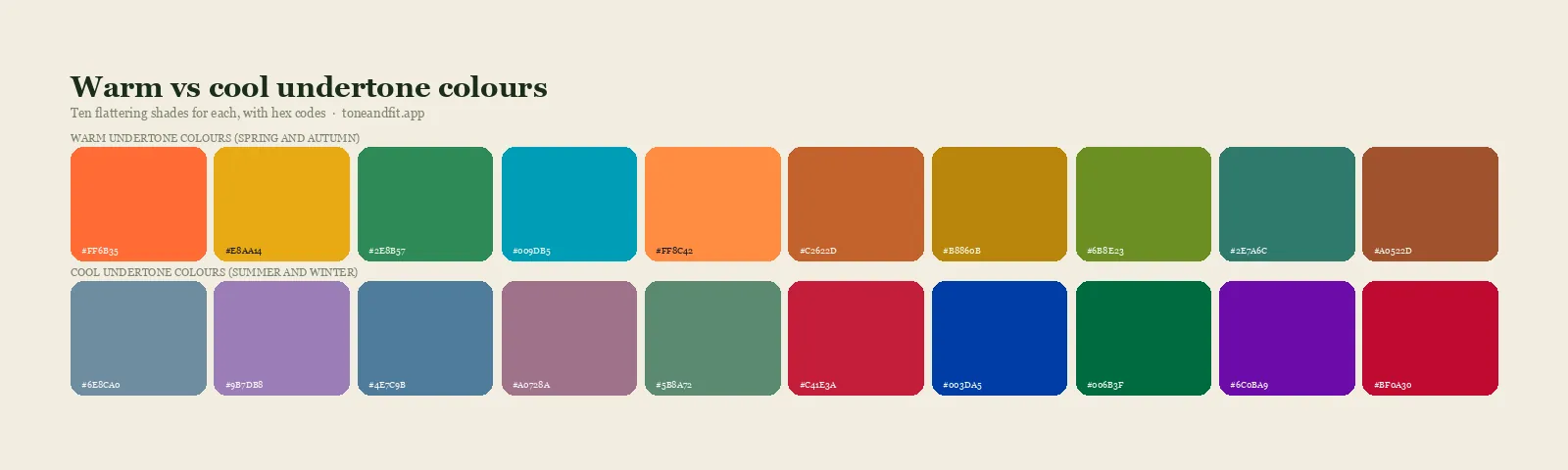
Warm undertones glow in blush with a peach or coral base: apricot, warm coral, terracotta. Cool undertones glow in blush with a pink or berry base: rose, mauve, cool plum. Neutral undertones can wear both and look best in a balanced rosy-brown. Everything else in this article is detail on top of that one rule.
What's in this guide
- What blush color matches my undertone?
- Find your undertone in two minutes
- Best blush for warm undertones
- Best blush for cool undertones
- Best blush for neutral and olive undertones
- Blush vs bronzer: what's the actual difference?
- Does formula change which shade to pick?
- How do you place and test blush before buying?
- FAQ
What blush color matches my undertone?
The blush color that matches your undertone follows the same base-matching rule as every other makeup product: warm undertones want a peach or coral base, cool undertones want a pink or berry base, and neutral undertones can wear a balanced rose that leans neither way. The name on the compact, "rose," "sunset," "berry crush," tells you almost nothing; the base underneath the name is what decides whether it works.
Blush has less room for error than lipstick in one sense and more in another. Less, because blush is meant to mimic a flush your skin could plausibly produce on its own, so a badly mismatched base looks more obviously wrong, more like a smudge than a color choice. More, because blush is usually applied sheerer than lipstick, so small mismatches are easier to soften by going lighter handed while you get the shade right.
Find your undertone in two minutes
You find your undertone in two minutes with three checks you can run right now, in daylight, without makeup on.
- The jewelry check. Hold gold near your face, then silver. Gold flatters warm undertones, silver flatters cool ones, and if both look equally fine you are likely neutral. The full version of this test is in our piece on the gold or silver jewelry test.
- The white paper check. Hold a sheet of plain white paper beside your bare face. Skin that looks yellow or golden against the white is warm. Skin that looks pink or rosy is cool. Skin that looks grayish or balanced is neutral or olive.
- The pinch test. Pinch your cheek gently for a few seconds and watch what color rises to the surface. A true pink or rosy flush points toward a cool undertone; a peachy or golden-brown flush points toward warm. Deeper skin can make the color subtle, so treat this one as a supporting clue rather than a verdict.
Run all three and take the majority answer. For the longer version of each test and how they can mislead you, see how to find your foundation undertone and warm versus cool skin undertone. If you would rather start from a confirmed reading than trial and error, the seasonal color analysis quiz or the free color analysis tool gives you an undertone and a starting shade family before you open a single compact.
Best blush for warm undertones
Warm skin carries a golden, peachy, or yellow cast, and it takes blush with that same heat well while looking chalky or dull under anything with a strong pink or blue base.
| Shade family | Named examples | Best for |
|---|---|---|
| Peaches | Apricot, peach, warm coral-peach | Everyday, lighter warm skin |
| Warm corals | Coral, papaya, warm watermelon | A brighter daytime flush |
| Terracottas | Brick, warm rose-brown, sunbaked rose | Deeper warm skin, autumn coloring |
| Warm nudes | Toasted beige-pink, caramel rose | A barely-there, no-makeup flush |
What to avoid: icy pinks, blue-based fuchsia, and cool mauve. These push warm skin toward looking sallow or bruised rather than flushed, the same effect described in our piece on colors that wash you out, just concentrated on the cheeks.
Best blush for cool undertones
Cool skin carries a pink, rosy, or bluish cast, and it takes blush with a pink or berry base well while looking flushed or orange under warm, peachy shades.
| Shade family | Named examples | Best for |
|---|---|---|
| Cool pinks | Rose, baby pink, cool watermelon | Everyday, lighter cool skin |
| Berries | Raspberry, plum-berry, cranberry | A deeper, more defined flush |
| Mauves | Mauve, dusty rose, cool taupe-pink | Softer, more muted coloring |
| Cool plums | Plum, berry-wine, cool orchid | Deeper cool skin, evening wear |
What to avoid: orange-based coral, terracotta, and golden bronze-pink. On cool skin these tend to sit on top of the face rather than blend into it, and can emphasize any sallowness rather than covering it.
Best blush for neutral and olive undertones
Neutral undertones
Neutral skin sits between warm and cool without committing to either, which gives it the widest workable range of any undertone. The strongest neutral shades are the balanced ones: a rosy-brown that is neither clearly pink nor clearly peach, a soft berry that has been warmed slightly, or a dusty rose that reads as color rather than temperature. Our explainer on neutral undertone skin covers how to tell true neutral from a mild warm or cool lean, which matters more for blush than for almost any other product since a mild lean still shows up at the cheeks.
Olive undertones
Olive skin carries a green cast layered over a warm or neutral base, and it needs a blush with enough depth and warmth to register against that cast rather than disappear into it. Warm terracotta, brick rose, and a deeper berry-rose all hold up well. Pale, frosted pinks and anything with a strong blue-violet base tend to vanish or read faintly grey, the same pattern our guide to color analysis for olive skin tones describes for foundation and lipstick.
Blush vs bronzer: what's the actual difference?
Blush mimics a natural flush and goes on the apples or upper cheekbones in a pink, peach, or berry tone; bronzer mimics sun-warmed skin and goes wherever the sun would naturally hit, the forehead, nose, and jawline, in a warm, neutral brown with no pink or berry in it at all. They solve two different problems, and neither one substitutes cleanly for the other.
| Blush | Bronzer | |
|---|---|---|
| Mimics | A natural flush | Sun-warmed skin |
| Placement | Apples or upper cheekbones | Forehead, nose, jawline, temples |
| Color family | Pink, peach, coral, berry | Warm, neutral brown, no pink |
| Undertone-matched? | Yes, closely | Loosely, mainly warm-leaning |
The common mistake is reaching for bronzer as an all-purpose cheek color. Used alone on the cheeks, a warm bronzer on cool skin can look muddy rather than flushed, since it is missing the pink or berry note cool skin actually needs. Most routines that use both apply bronzer first for warmth and shape, then blush on top for the flush of color.
Does blush formula change which shade to pick?
Formula changes how forgiving a shade is, not which undertone family it needs to come from. Powder blush is the most forgiving: it is easy to build up in thin layers, so a slightly-off shade can be softened by applying less. Cream and liquid blush sink into the skin and show true color faster, which means an undertone mismatch shows up sooner and more visibly than it would in powder.
Liquid and gel "tint" formulas, popular for a barely-there, no-makeup flush, are the least forgiving of all, since they are designed to look like skin rather than sit on top of it, so the base has nowhere to hide if it fights your undertone. If you are experimenting with a new undertone direction, start in powder, confirm the shade works, then move to cream or liquid once you know the base is right.
How do you place and test blush before you commit to a shade?
You place blush by smiling and applying color to the round part of the cheek that lifts, then blending up and out toward the top of the ear rather than straight across, which mimics where a real flush naturally sits. You test a shade before buying it by swatching on the cheek or jawline rather than the hand, since the skin there is a different depth and often a different apparent undertone from your face.
- Swatch on your jawline, not your hand. The back of the hand has thicker, often differently toned skin than the face.
- Build in thin layers. Three light layers beat one heavy one, and let you stop the moment the color looks like a flush rather than a shape.
- Check in daylight. Store lighting flatters almost everything; a window or the outdoors will not.
- Wait ten minutes. Cream and liquid formulas in particular can oxidize and shift warmer as they set, so judge the settled color, not the first swipe.
- Look at your whole face. A blush that works makes the rest of your complexion look more even, not just the cheek itself brighter.
See your undertone before you shop for blush.
One selfie gives you your undertone, your season, and shade guidance across blush, lipstick, and foundation. Free to scan, no account needed, photo never stored.
Download Tone & Fit ↗FAQ
What blush color suits my undertone?
Warm undertones suit blush with a peach, coral, or terracotta base. Cool undertones suit blush with a pink, rose, or berry base. Neutral undertones can wear both and look best in a balanced rosy-brown that leans neither warm nor cool. As with lipstick, the base matters more than the name printed on the compact.
How do I know if a blush is warm or cool toned?
Swatch it on your jawline next to a known warm shade like apricot and a known cool shade like rose. A warm blush will look golden or peachy next to the rose. A cool blush will look pink or berry next to the apricot. If you have no reference shades, check the pan or bottle in daylight and ask whether the pink leans toward orange or toward blue.
Is bronzer the same thing as blush?
No. Blush mimics a natural flush and uses a pink, peach, or berry tone placed on the apples or upper cheekbones. Bronzer mimics sun-warmed skin and uses a warm, neutral brown with no pink or berry in it, placed wherever sunlight would naturally hit: forehead, nose, and jawline. Many routines use both together, but they are not interchangeable, and a bronzer worn as an all-over blush usually looks muddy rather than flushed.
Why does my blush disappear or turn muddy by midday?
Usually one of two reasons: the formula is too sheer for your skin's natural pigment to stay visible on top of, or the undertone is fighting your skin rather than matching it. A cool pink blush on warm skin can grey out and read as muddy within a few hours, while the correct warm equivalent stays visibly pink or coral all day. Building color in thin layers rather than one heavy application also helps it wear more evenly.
What blush works for olive undertones?
Olive skin carries a green cast over a warm or neutral base, so it needs a blush with enough depth and warmth to register against it. Warm terracotta, brick rose, and a deeper berry-rose all work well. Pale, frosted pinks and anything with a strong blue-violet base tend to disappear or read ashy on olive skin, the same failure pattern that shows up with lipstick and foundation on this undertone.
Does my color season change which blush I should wear?
Your undertone decides the base, warm or cool, and your season refines the intensity. Bright seasons like True Winter and True Spring carry a clearer, more saturated blush well. Soft seasons like Soft Summer and Soft Autumn look better in a dustier, more muted version of the same base. Deep seasons can wear a richer, more pigmented shade without it looking heavy, and light seasons look best keeping it sheer.