Korean Skin Tone Chart: Depth and Undertone
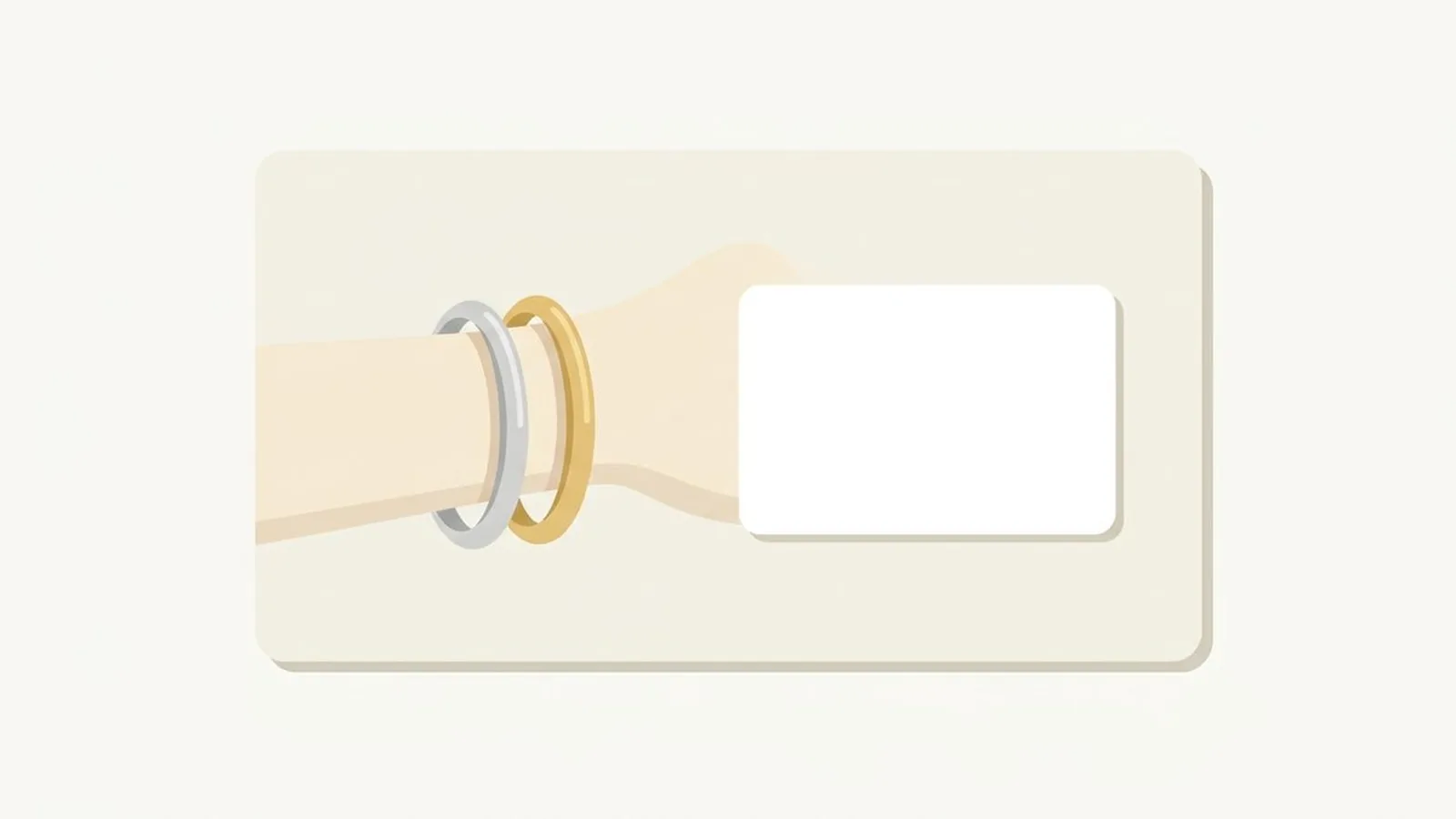
A Korean skin tone chart lines up skin depth, from very fair to deep, against undertone, warm, cool or neutral, to show which of the four Korean personal color types a combination typically points toward. It works as a fast starting point for shopping or self diagnosis, not as a substitute for measuring your own undertone and depth directly.
What's in this guide
What a Korean skin tone chart actually shows
A Korean skin tone chart is a grid that crosses skin depth against undertone to point toward one of the four Korean personal color types: Spring Warm, Summer Cool, Autumn Warm or Winter Cool. Read down to the row that matches how light or deep your skin looks in natural light, then across to the column for your undertone, and the cell you land on names the type that combination most often produces. It is a shortcut for a rough guess, not a finished diagnosis, since two more traits, brightness and mutedness, still decide the final answer once depth and undertone are set.
The format will look familiar if you have used a Western skin tone chart before: both use the same two axes, just organized around a different naming system on the other side. For the general purpose version of this grid, with hex coded shade swatches instead of color type names, see our full skin tone chart. This guide stays focused on the Korean framing and on the shade numbering that shows up on Korean cosmetic packaging, since that is where most people actually meet this chart in practice.
The two axes: depth and undertone
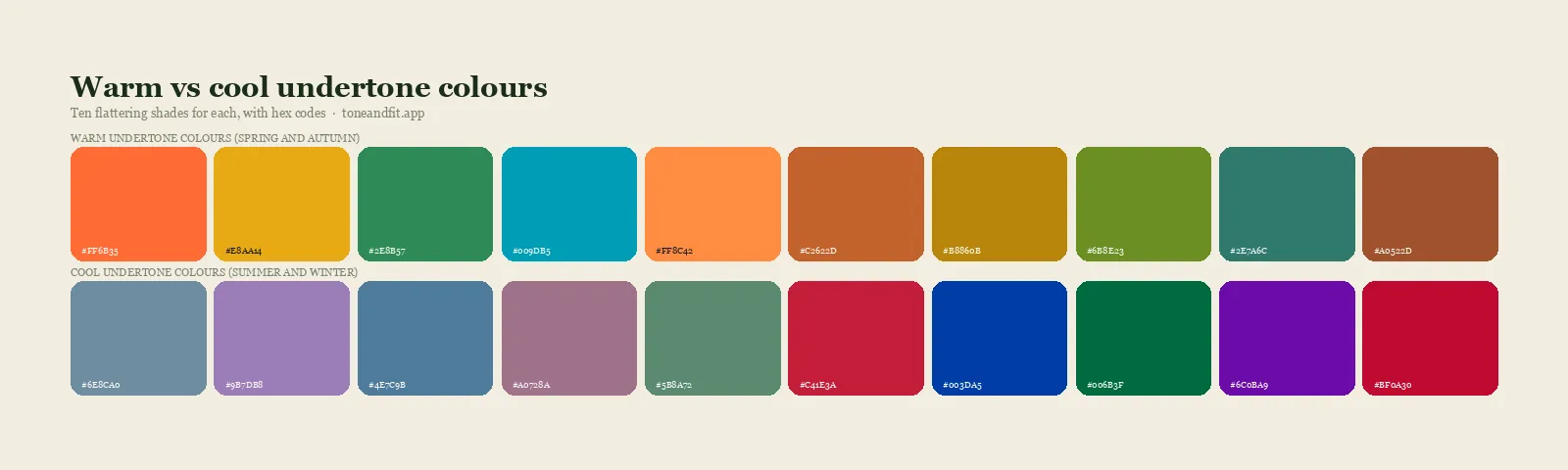
Depth and undertone answer two completely different questions, and a Korean skin tone chart only works if you keep them separate. Depth asks how much melanin your skin carries at rest, from very fair to deep, and it moves with the seasons: more sun pushes you a row deeper, winter pulls you back up. Undertone asks whether the color underneath your skin leans warm, golden and peachy, cool, pink and blue, or neutral, a balanced mix of both, and unlike depth, it never changes regardless of tan or time of year.
Mixing the two up is the single most common mistake people make when reading any skin tone chart. A fair, cool complexion and a deep, cool complexion share a column but sit in completely different rows, and they need different depths of color even though they share the same temperature. If the warm versus cool question is still fuzzy for you, our warm vs cool skin undertone guide walks through the distinction with simple, at home checks.
The Korean skin tone chart
The Korean skin tone chart below crosses six depth bands against warm, cool and neutral undertone, describing what each combination actually looks like rather than assigning a fixed shade number, since exact numbers vary too much by brand to standardize here.
| Depth band | Warm undertone looks like | Cool undertone looks like | Neutral undertone looks like |
|---|---|---|---|
| Very fair | Ivory with a soft peachy or golden flush | Porcelain with a pink or faintly blue flush | Balanced ivory, neither peachy nor pink |
| Fair | Warm beige with a yellow undertone | Cool beige with a rosy undertone | Beige that reads flat under both gold and silver |
| Light-medium | Honey beige, golden in daylight | Rose beige, slightly pink in daylight | Beige that shifts only slightly toward either cast |
| Medium | Warm tan with visible gold | Neutral-cool tan with a muted, ashy cast | Tan that takes both warm and cool colors equally well |
| Tan | Caramel with a golden-brown cast | Tan with a cool, slightly grey cast | Tan with an even, balanced cast |
| Deep | Deep golden brown to bronze | Deep brown with a cool, blue based undertone | Deep brown that reads evenly under gold and silver |
Read this the same way you would read the general chart: find the row that matches your depth in plain daylight, then the column that matches your undertone, and the description in that cell should sound like your own skin more than the other two columns do. If none of the three descriptions in your row feels clearly right, that is itself useful information, since it usually means you sit closer to neutral than you assumed.
How Korean beauty shade numbers work
Korean beauty shade numbers usually pair a number for depth with a letter for undertone, and the number generally runs lighter to darker as it climbs, but there is no single standard that every brand follows. A few patterns repeat often enough to be worth knowing, even though the specifics shift from line to line:
- The number tracks depth. Within one brand's own range, a lower number sits closer to that brand's fairest shade and a higher number sits closer to its deepest. The same number from two different brands can land at very different depths, since there is no shared numbering system across the industry.
- The letter tracks undertone. N commonly marks a neutral shade. W or Y commonly marks a warm, yellow leaning shade. C or P commonly marks a cool, pink leaning shade. Plenty of brands skip the letter entirely and describe undertone in the product name instead.
- Matching within a brand is more reliable than matching across brands. Two shades from the same line that share a number are usually close in depth and differ mainly in undertone. The same number from a different brand is not a safe substitute without checking it in person.
Because of that inconsistency, treat any shade number as a rough starting point within a single product line, never as a universal depth reading you can carry from brand to brand. Our guide to finding your foundation undertone covers how to check a shade against your actual skin instead of trusting the label alone, and the same approach works whether the label uses Korean, Japanese, or Western shade naming.
Skip the label guesswork. Get your depth and undertone measured.
Free · No account · Photo never stored
Try Tone & Fit ↗From chart cell to personal color type
Depth and undertone together point toward one of the four Korean personal color types, though the full picture also needs brightness and mutedness, which a two axis chart cannot show by itself. As a rough guide, fair to light-medium plus warm usually points to Spring Warm, fair to light-medium plus cool usually points to Summer Cool, medium to deep plus warm usually points to Autumn Warm, and medium to deep plus cool usually points to Winter Cool. Neutral undertone is the hardest column to place from depth alone, and it commonly ends up split between the muted end of Summer Cool and the muted end of Autumn Warm depending on which way it leans.
Our Korean color analysis guide has the full depth by undertone by type table, along with how each of the four Korean types maps onto the wider 12-season system that this site uses elsewhere, so a Summer Cool result, for example, narrows further into Light Summer, True Summer or Soft Summer.
Where this chart breaks down
A depth and undertone chart breaks down hardest in two places: the neutral undertone column and the medium depth rows, because that is exactly where brightness and mutedness end up doing most of the real sorting. Two people can share the same depth and the same warm undertone and still belong to different personal color types, because one has bright, clear coloring and the other has soft, muted coloring, a distinction no depth and undertone grid can show on its own.
Neutral undertone is its own trap. A chart has to put neutral somewhere, but real neutral skin often reads as leaning slightly warm in one light and slightly cool in another, which is why a self diagnosed neutral undertone is one of the least reliable calls a person makes about their own skin. Our guide to neutral undertone skin goes deeper into why that column is so often a placeholder rather than a settled answer. If your depth or undertone genuinely sits between two rows or columns, a chart is the wrong tool to force a decision, and the next section covers what to use instead.
How to check your own depth and undertone
The fastest way to check your own depth and undertone is a short, two part routine: read your depth in a mirror against a plain background, then confirm your undertone with a direct test rather than a guess.
Four steps, about ten minutes
- Read your depth in daylight. Stand near a window with no makeup and no filter, and compare your skin to the six depth bands above. Judge the depth your skin returns to by default, not a recent tan.
- Run the white paper test for undertone. Hold a plain white sheet of paper next to your jaw in the same daylight. A yellow or golden cast against the white points to warm, a pink or blue cast points to cool, and no clear cast points to neutral.
- Cross-check with the jewelry test. Hold gold and silver jewelry against your bare neck. Whichever metal makes your skin look brighter and more even should point to the same undertone as the paper test. If the two disagree, retest in stronger daylight.
- Confirm with an AI reading. An app that reads depth and undertone directly from a selfie removes the guesswork of judging your own reflection, and places the result on a full 12-season palette rather than stopping at a rough chart cell.
If you would rather start with a quick, no photo option, the color analysis quiz narrows your season family down in a couple of minutes. The free web tool gives a photo based reading right in your browser if you want a measured answer without installing anything first.
Ready to find your season?
One selfie, your 12-season result, and the palette that goes with it. Free, no sign-up.
Find your season free ↗For the underlying reading, our skin tone analyzer explains what undertone, depth and contrast actually are.
FAQ
What is a Korean skin tone chart?
A Korean skin tone chart lines up skin depth against undertone to show which of the four Korean personal color types, Spring Warm, Summer Cool, Autumn Warm or Winter Cool, a given combination tends to fall into. It is a starting point, not a diagnosis, since brightness and mutedness also decide the final type.
How do Korean cosmetic shade numbers work?
Most Korean shade codes pair a number for depth with a letter for undertone, such as N for neutral or W for warm, though the exact numbers and letters differ by brand. There is no single universal numbering standard across Korean cosmetics, so treat a shade number as a guide within one product line rather than a fixed depth reading.
What is the difference between skin tone and undertone?
Skin tone is how light or deep your skin looks at the surface, and it changes with a tan or the season. Undertone is the underlying warm, cool or neutral cast beneath the skin, and it stays the same year round regardless of tanning.
Can I find my undertone from a Korean shade number alone?
Not reliably. A shade's letter code is a hint, but brands are inconsistent about what each letter means, and many products skip the letter entirely. A direct test, like the white paper or jewelry test, or an AI reading, is more reliable than reading a cosmetic label.
Why does neutral undertone show up differently across charts?
Neutral sits between warm and cool, so different lighting and different products can make the same neutral skin look slightly warm one day and slightly cool the next. Most charts put neutral in its own column, but it is genuinely the least stable reading on any skin tone chart.
How does a Korean skin tone chart relate to the 12 color seasons?
The four Korean personal color types each map to a family of three seasons in the 12-season system, so a Korean Summer Cool result narrows things to Light Summer, True Summer or Soft Summer, for example. Our Korean color analysis guide has the full mapping table.