How to Determine Skin Undertone: 5 Ways
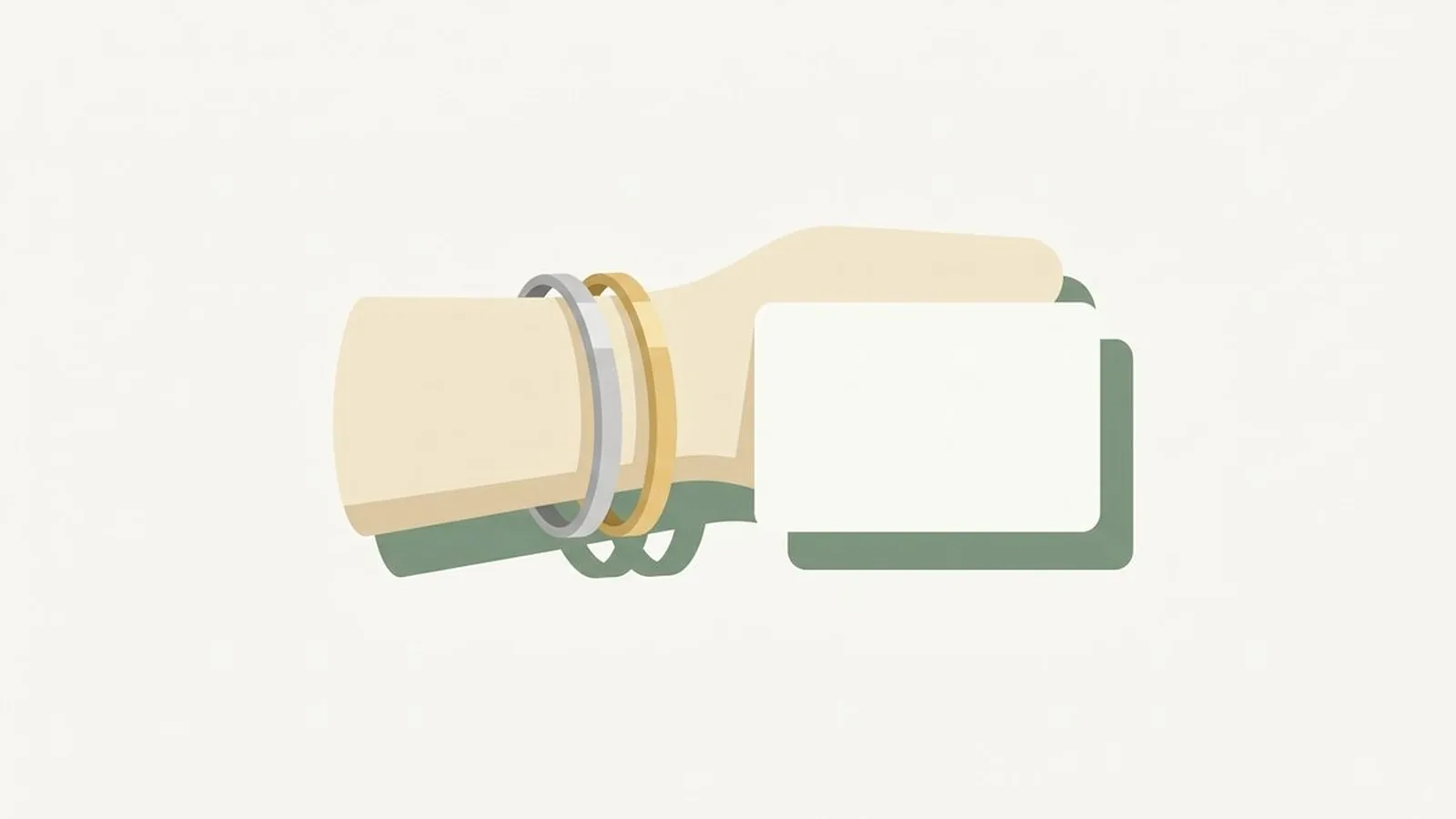
The fastest way to determine your skin undertone is to check three signals at once: whether your veins read blue or green in daylight, whether silver or gold makes your skin look brighter, and whether your skin pulls pink or gold next to plain white paper. When at least two of those signals agree, you have a reliable answer: warm, cool, or neutral.
Quick answer
Five ways to determine skin undertone, roughly quick-but-weak to slow-but-strong: the vein test, the white paper test, the jewelry test, the sun reaction test, and AI photo analysis. No single one is conclusive alone; two or three agreeing is what actually settles it.
What's in this guide
What skin undertone actually is
Skin undertone is the consistent, underlying hue beneath your skin that stays the same regardless of a tan, a blush, or the season, and it falls into one of three categories: warm, cool, or neutral. It is different from skin tone, which is simply how light or deep your skin reads on the surface. Two people can share the exact same surface tone and still have opposite undertones, which is why "find your shade" and "find your undertone" are not the same task.
Undertone matters because it is one of the three measurements, alongside value and chroma, that decide your full color season. Get the undertone wrong and every color recommendation built on top of it is wrong too, which is why it is worth running more than one test before you commit to a wardrobe decision.
Way 1. Check your veins
The 30-second starting point
In natural daylight, turn the inside of your wrist toward you and look at the color of your veins through the skin.
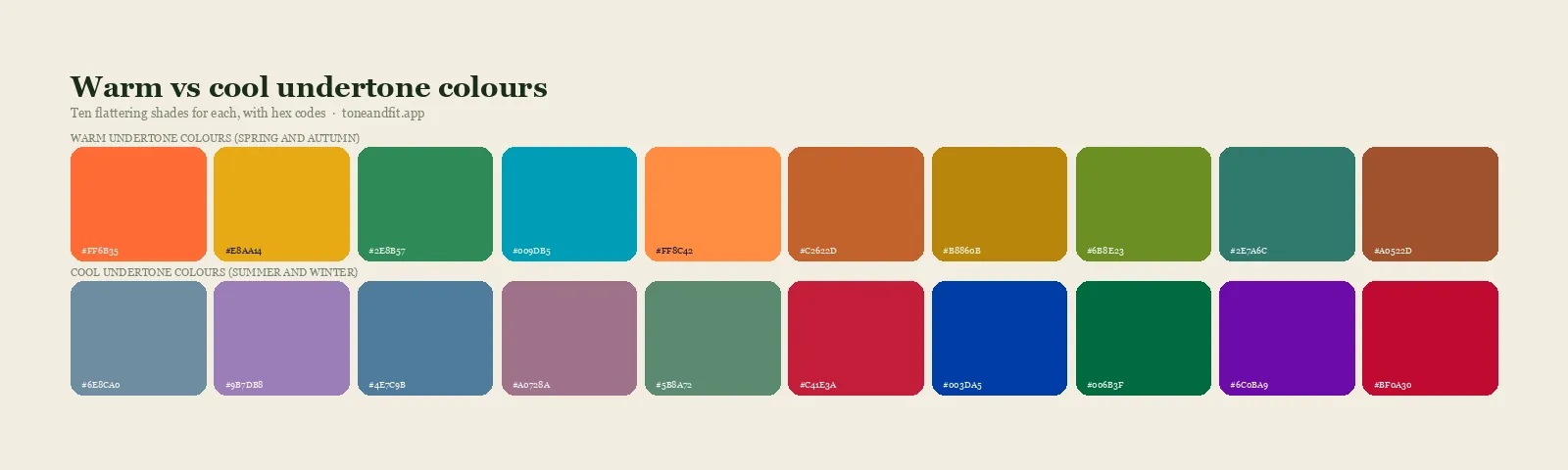
Warm undertones absorb more red light, which pushes the veins underneath toward green. Cool undertones absorb less red, leaving the veins their natural blue-violet. It is a genuinely fast test, but it is also the weakest one on this list: vein depth, skin thickness, indoor lighting, and even the temperature of your hands can shift the color enough to flip the result. Treat a clear vein reading as a hint, not a verdict, and confirm it with at least one other test below.
Way 2. Try the white paper test
The one colorists actually rely on
Hold a sheet of true white printer paper directly against your bare, makeup-free jaw in indirect daylight, ideally near a north-facing window, and look at your skin in a mirror.
White paper works because it gives your skin a neutral reference point. Against true white, the cast that is normally masked by your surroundings, your clothes, your walls, your phone screen, suddenly becomes obvious. This is close to what professional colorists do when they hold a true-white drape against a client's face, which is why it is the most trusted home test on this list. Our companion guide on how to find your skin undertone at home covers a few extra variations of this same test, including using a cream-colored paper as a second reference point.
Way 3. Test gold versus silver jewelry
The metal that makes you glow
Hold a piece of yellow gold jewelry against one side of your bare neck and a piece of silver against the other, in daylight, in front of a mirror.
"Wins" means the metal that makes your skin look brighter and more even, not the one you simply prefer wearing. This test is more reliable than the vein test because it measures the actual interaction between color and your skin, which is what undertone testing is for, rather than relying on an indirect proxy like vein color. Rose gold is the wildcard: it tends to flatter both warm and cool-leaning neutral undertones, so it is not a useful data point either way.
Way 4. Watch how your skin reacts to the sun
A weaker, secondary clue
Think about how your skin has historically responded to sun exposure with no sunscreen.
This one comes with a real caveat: sun reaction is driven mainly by melanin density, which decides your skin's depth, not by the temperature that decides your undertone. The two traits are related often enough that this test has stuck around as a rule of thumb, but it is the least precise method here and should never be your deciding vote. Use it only to break a tie between two more reliable tests, never as your first or only check.
Way 5. Let AI read it from a photo
A photo-based AI analysis samples pixel-level color across your skin, hair, and eyes, measures the temperature of each region, and cross-checks the result against your eye and hair color to filter out lighting noise. That combination of direct measurement and cross-checking is why it tends to agree with a professional colorist's read more consistently than any single manual test above.
The catch is that the AI is only as good as the photo. To get a clean read: take the photo in natural daylight beside a window, skip makeup or filters, keep the background plain, and pull your hair off your face. If the AI result disagrees sharply with your other tests, the most common cause is a photo taken under a warm indoor bulb or with a beauty filter still switched on.
Skip the guesswork. Get your undertone in 60 seconds.
Free. No account. Photo never stored.
Try Tone & Fit ↗Which method should you trust first?
Not every test carries the same weight, so here is how the five stack up when they disagree with each other.
| Method | What it measures | Reliability alone | Common failure |
|---|---|---|---|
| Vein test | Blood vessel color through skin | Weak | Vein depth and lighting distort the color |
| White paper test | Skin's direct cast against a neutral reference | Strong | Indoor bulbs and leftover makeup skew it |
| Jewelry test | Skin's visual reaction to warm vs cool metal | Moderate | Metal preference gets confused with glow |
| Sun reaction test | Melanin response, a loose proxy for undertone | Weak | Tracks depth more than temperature |
| AI photo analysis | Pixel-level color across skin, hair and eyes | Strong | Only as accurate as the input photo |
A practical rule: if the white paper test and an AI photo read agree, trust that result and stop testing. If they disagree, retake the photo in better daylight before you assume either test is wrong. The vein and sun tests are best used as tiebreakers, not as your primary evidence.
How to confirm your undertone for certain
Once you have a working answer, two free tools let you confirm it and take the next step. Take the color season quiz if you want a fast starting point with no photo required, six questions and you have a season to test your undertone answer against. Or use the free color analysis tool to get an undertone, contrast and season read from a single photo in about thirty seconds. Our full undertone test guide also walks through every method here in more depth, with a scorecard for tallying your own results. To see where your answer lands alongside your surface depth, the skin tone chart lays out all four undertones against six depth bands with hex codes for each cell.
For the deeper background on how undertone fits into the bigger picture, our guide to warm vs cool skin undertone explains the mechanism behind every test in this article, and seasonal color analysis explained shows how undertone combines with value and chroma to produce your final season.
Ready to find your season?
One selfie, your 12-season result, and the palette that goes with it. Free, no sign-up.
Find your season free ↗FAQ
What is the most accurate way to determine skin undertone?
No single home test is fully reliable by itself. The most accurate approach combines two or three of the five ways in this guide, or uses an AI photo analysis, which measures pixel-level color directly instead of relying on your eye to judge a subtle cast in the mirror.
Does skin undertone change with a tan?
No. A tan adds surface melanin, which can make skin look darker or more golden, but the underlying undertone stays the same. A warm undertone that tans is still warm; a cool undertone that tans is still cool.
What if my results disagree with each other?
Disagreement is common and usually means one of two things: a test was run in bad lighting, or your undertone genuinely sits close to neutral. Weight the more reliable tests, the white paper test and an AI photo read, more heavily than the vein or sun tests when they conflict.
Can two people with the same skin tone have different undertones?
Yes, and this is one of the most misunderstood facts about undertone. Skin tone is how light or deep your skin is; undertone is a separate, independent quality. Two people with identical depth can have opposite undertones and need completely different colors.
Is olive skin its own undertone?
Olive usually describes a skin tone with a green-grey cast layered over a neutral or warm undertone, rather than a fourth undertone category. Most olive skin still sorts into warm, cool, or neutral once you run the tests in this guide.
Can undertone really be neutral?
Yes. A neutral undertone has a balanced mix of warm and cool, so tests can genuinely split down the middle instead of leaning one way. Neutral undertones can usually wear colors from both warm and cool palettes.