Pale Skin Undertone: Warm, Cool or Neutral
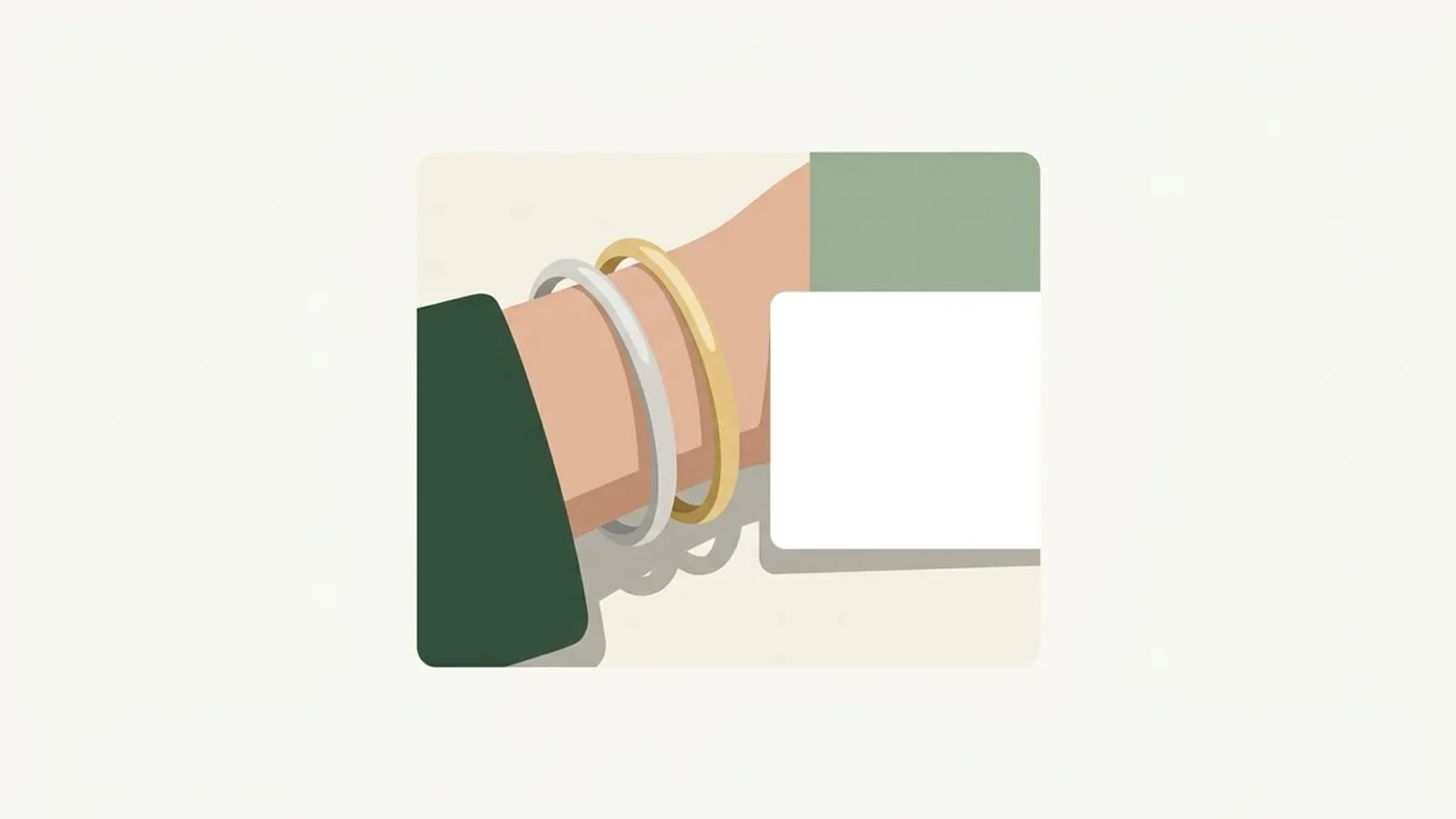
Pale skin can be warm, cool, or neutral undertone. Paleness tells you how much melanin your skin carries, not which way it leans, so the fastest way to answer the question is to test the temperature directly rather than guess from how light you are.
Quick answer
Hold a sheet of pure white paper next to bare, makeup-free skin in daylight. Pale skin that looks ivory or golden against the white is warm, pink or faintly blue is cool, and skin that barely differs from the paper is neutral. Confirm with the vein and jewelry tests below, or let AI read it from a selfie.
What's in this guide
- What is my undertone if I have pale skin?
- Is pale skin automatically cool?
- How to test pale skin for warm, cool, or neutral
- Signs your pale skin is warm undertone
- Signs your pale skin is cool undertone
- Signs your pale skin is neutral undertone
- Best colors and metals for each pale undertone
- How to check your own undertone right now
- FAQ
What is my undertone if I have pale skin?
Pale skin can carry a warm, cool, or neutral undertone in roughly the same spread as any other skin depth, because depth and undertone are two separate measurements. Depth is how much melanin your skin holds, which decides how light or dark it reads. Undertone is the temperature of what sits underneath that depth, warm (golden, peachy), cool (pink, blue-based), or neutral (a balanced mix). A pale person and a deep-skinned person can share the exact same undertone and need the exact same reds, blues, and metals, just at different intensities. You can see that independence directly in our chart of skin tone shades and undertones, where every undertone column runs the full range of depths.
The one real wrinkle pale skin adds is subtlety. With less melanin in play, the undertone signal is often quieter than it is on medium or deep skin, so a pale warm and a pale cool can look more alike at a glance than a deep warm and a deep cool would. That is why testing matters more here, not less. For the full walkthrough of the four classic tests, white paper, veins, jewelry, and a photo reading, see our guide to finding your skin undertone at home. What follows adapts each of those tests specifically for pale skin, where the signs look a little different than they do on deeper coloring.
Is pale skin automatically cool?
No, pale skin is not automatically cool. That is one of the most common mix-ups in this whole topic, and it happens because words like "porcelain" and "fair" get marketed almost exclusively toward pink-toned foundation shades, which quietly trains people to hear "pale" and think "cool." Warm pale skin, the ivory or golden-fair kind, is just as common as cool pale skin, the pink or porcelain kind, and neutral pale skin sits between them.
The confusion has a real cost. Someone with warm pale skin who assumes they must be cool ends up buying icy pinks and blue-based reds that sit flat against their face, when peach, coral, and warm ivory would do the opposite. The reverse happens just as often to cool pale skin pushed toward peachy foundation shades that turn orange within an hour. Undertone is a measurement, not an assumption you get to skip because of how light your skin happens to be.
How to test pale skin for warm, cool, or neutral
The most reliable way to test pale skin's undertone is to run three quick physical checks in the same sitting and see which answer repeats, rather than trusting any single test alone. Each one reads slightly differently on pale skin than it does on deeper coloring, which the table below spells out.
| Test | How to run it | Warm sign on pale skin | Cool sign on pale skin | Neutral sign |
|---|---|---|---|---|
| White paper | Hold true-white paper at the jaw in daylight | Skin looks ivory or faintly golden next to the white | Skin looks pink, or nearly disappears against the white | No clear cast in either direction |
| Veins | Check the inside of the wrist in daylight | Veins read green | Veins read blue or purple | An even mix of both |
| Jewelry | Hold gold and silver against the bare neck | Gold makes skin look brighter, not sallow | Silver makes skin look brighter, not flat | Both look about equally good |
| Flush | Notice the natural color in cheeks after exercise or cold | Flush reads peachy or apricot | Flush reads bright pink or red | Flush is a soft, muted pink-beige |
One genuine advantage of pale skin: veins usually sit closer to the surface and show clearly, so the vein test tends to be more reliable here than it is on medium or deep skin, where thicker surface pigment can muddy the read. The jewelry test is still worth running as a second opinion, since it measures the undertone-and-color reaction directly rather than through a proxy; our gold or silver jewelry guide covers the edge cases like rose gold and white gold in detail. If two of the three tests agree, treat that as your answer. If all three disagree, you are very likely neutral.
Signs your pale skin is warm undertone
Warm pale skin usually looks ivory, golden-fair, or peachy rather than pink, and it carries a golden cast even without a tan. The tells cluster consistently once you know what to look for:
- Gold jewelry flatters more than silver, making the skin look brighter rather than sallow.
- Freckles, if present, look golden or amber-brown rather than pink-based.
- Veins on the wrist read green rather than blue.
- Flushing looks peachy or apricot, not bright pink, after sun, exercise, or cold.
- Hair is often strawberry-blonde, golden-blonde, warm brown, or copper-red, though warm pale skin can pair with any hair color.
- Eyes tend toward hazel, warm green, or golden brown, though this varies more than the skin signal does.
Foundation aisles usually label this combination "warm ivory," "golden fair," or a shade coded W or a plus sign. If most of these tells match you, the warm half of our best colors for pale skin guide is the one to read next.
Signs your pale skin is cool undertone
Cool pale skin usually looks pink, rosy, or carries a faint blue-white cast, and it is the pattern most foundation brands actually mean when they print "porcelain" on a bottle. The tells run the opposite direction from warm:
- Silver jewelry flatters more than gold, keeping the skin looking clear rather than making it look dull.
- Visible redness or a rosy cast shows easily, sometimes read as sensitivity even when the skin is healthy.
- Veins on the wrist read blue or purple rather than green.
- Flushing looks bright pink or red, not peachy, after sun, exercise, or cold.
- Hair is often ash blonde, dark brown, black, or a true, blue-based red, again with real variation.
- Eyes lean blue, grey, or cool green more often than warm hazel.
Foundation shades built for this combination are usually coded "cool," "pink," "rose," or C. If this list sounds like you, jump to the cool section of our best colors for pale skin guide, and read warm vs cool skin undertone if you want the underlying mechanics of why these two patterns diverge so sharply.
Signs your pale skin is neutral undertone
Neutral pale skin does not pull clearly warm or cool: the white paper test gives no strong verdict, and both gold and silver look reasonable rather than one obviously winning. True neutrals make up a real minority of people, and pale ones get an unusual perk, foundation matching is often easier for them, because more shade ranges are built around a balanced "ivory neutral" than around either extreme.
- Veins on the wrist show a genuine mix of green and blue rather than settling on one.
- Both peachy and pink blushes work, without one looking obviously wrong.
- Gold and silver both look acceptable, even if one is marginally better on close inspection.
- Flushing reads as a soft, muted pink-beige rather than clearly peach or clearly bright pink.
If your results keep landing down the middle, our dedicated guide to neutral undertone skin covers how to pick a lean when you need one, since most neutrals still do better leaning very slightly warm or cool once color, not just foundation, enters the picture.
Best colors and metals for each pale undertone
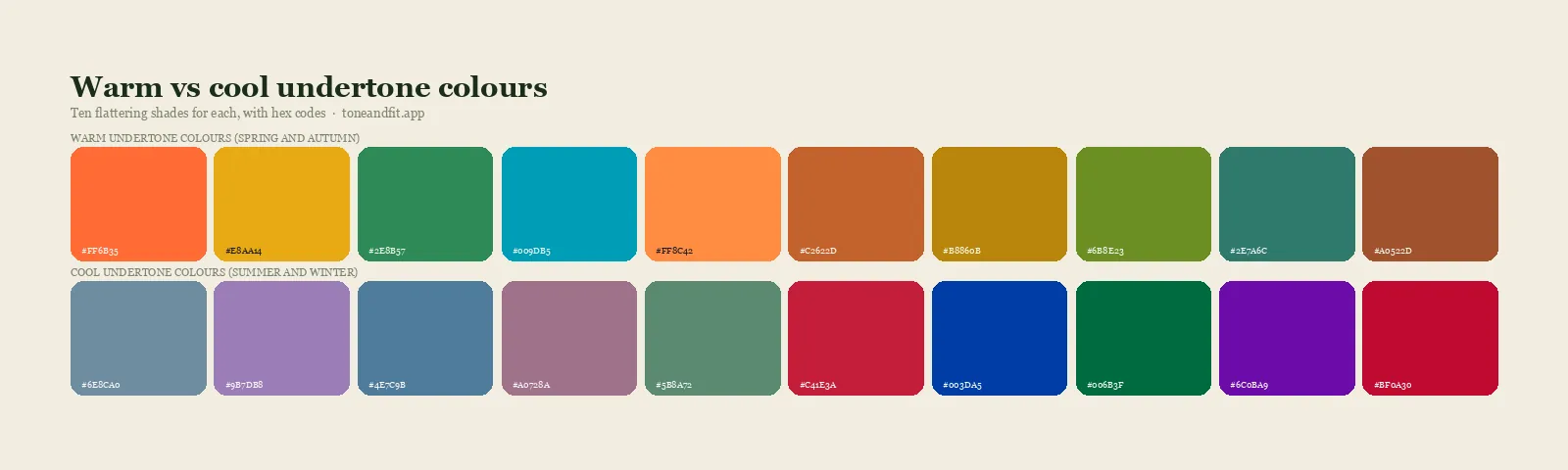
The short version: warm pale skin wears peach, coral, and warm ivory best, cool pale skin wears rose, periwinkle, and cool navy best, and neutral pale skin can borrow from both lists depending on the piece. Depth matters here too. Because pale skin has less natural pigment to compete with a color, very saturated or very dark shades worn close to the face can take over the frame faster than they would on deeper skin, so contrast is worth watching alongside temperature.
| Undertone | Colors that work hardest | Best metal | Foundation words to look for |
|---|---|---|---|
| Warm pale | Peach, coral, warm ivory, golden yellow, camel | Gold, rose gold, brass | Warm, golden, ivory, W |
| Cool pale | Soft rose, periwinkle, cool navy, lavender, cherry red | Silver, white gold, platinum | Cool, pink, rose, C |
| Neutral pale | Soft teal, dusty plum, muted coral, soft white | Either, mixed metals | Neutral, balanced, N |
This table is deliberately a starting point. For the full color lists, including exactly which shades to avoid and how contrast level changes the advice further, our complete best colors for pale skin guide goes much deeper on all three undertones. For the foundation side specifically, finding your foundation undertone walks through matching pigment rather than the broader wardrobe question this guide focuses on.
Skip the guessing. Get your undertone in 60 seconds.
Free · No account · Photo never stored
Try Tone & Fit ↗How to check your own undertone right now
The fastest way to check your own pale skin's undertone right now is to run the white paper test in the next two minutes, then confirm with a second method before you commit a wardrobe or a foundation shade to the answer. Grab a sheet of true-white printer paper, find a spot near a window with no direct sun, remove makeup, and hold the paper at your jawline while you look in a mirror. Note whether you pull ivory-gold or pink-blue, then repeat the vein and jewelry checks from earlier in this guide to see if they agree.
If you want a faster or more consistent read, two options exist beyond the physical tests. Our seasonal color analysis quiz asks the same underlying questions these tests answer and places you in a full season, undertone included, in a couple of minutes. Or use the free photo analysis tool to get an instant reading straight from a daylight selfie, no download required. Both work well as a first pass; the physical tests above are the best way to double-check either result before you shop.
FAQ
Is pale skin always cool undertone?
No. Pale is a depth word, describing how light skin is, while cool is a temperature word, describing what the skin leans toward underneath. Warm pale skin, ivory or golden fair, is just as real as cool pale skin, pink or porcelain fair. The two traits are independent, so knowing someone is pale tells you nothing about their undertone on its own.
Can pale skin be warm undertone?
Yes. Warm pale skin usually reads ivory, golden-fair, or peachy rather than pink, flushes apricot rather than bright pink, and looks better in gold jewelry than silver. It is one of the three pale undertone patterns, alongside cool and neutral.
What foundation shade should I look for with pale skin?
Match depth and undertone separately. For depth, look at shade ranges labeled fair, porcelain, or ivory. For undertone, warm pale skin wants a shade tagged warm, golden, or W, cool pale skin wants pink, rose, or C, and neutral pale skin can usually wear a shade simply labeled neutral or N without adjustment.
Does undertone affect how easily pale skin burns?
Sun sensitivity is driven mainly by depth, how much melanin the skin carries, not by warm or cool undertone. Two people with the same pale depth tend to burn at a similar rate whether their undertone is warm, cool, or neutral. Undertone changes which colors flatter the skin, not how it reacts to the sun.
Can an app or quiz find my undertone accurately?
A quiz is a reasonable starting point since it asks the same questions the physical tests answer, but it depends on memory and judgment. A photo reading, taken in daylight without filters, checks the pixels directly and tends to agree more consistently with the physical tests than a self-scored quiz does.
What is the difference between skin tone and undertone on pale skin?
Skin tone is depth, how light or dark skin reads, and pale sits at the light end of that scale. Undertone is temperature, the warm, cool, or neutral cast underneath, and it does not move when depth does. Two pale people can share the exact same tone and still need opposite color palettes because their undertones differ.
Can I check my color season from a photo?
Yes. The free Tone & Fit web tool reads your color season from one selfie in about 30 seconds, with no sign-up and no photo stored by us. The Tone & Fit app for iPhone and Android then builds your full palette of 38 named shades.