Cool Winter or Cool Summer? How to Tell Which Cool Season You Are
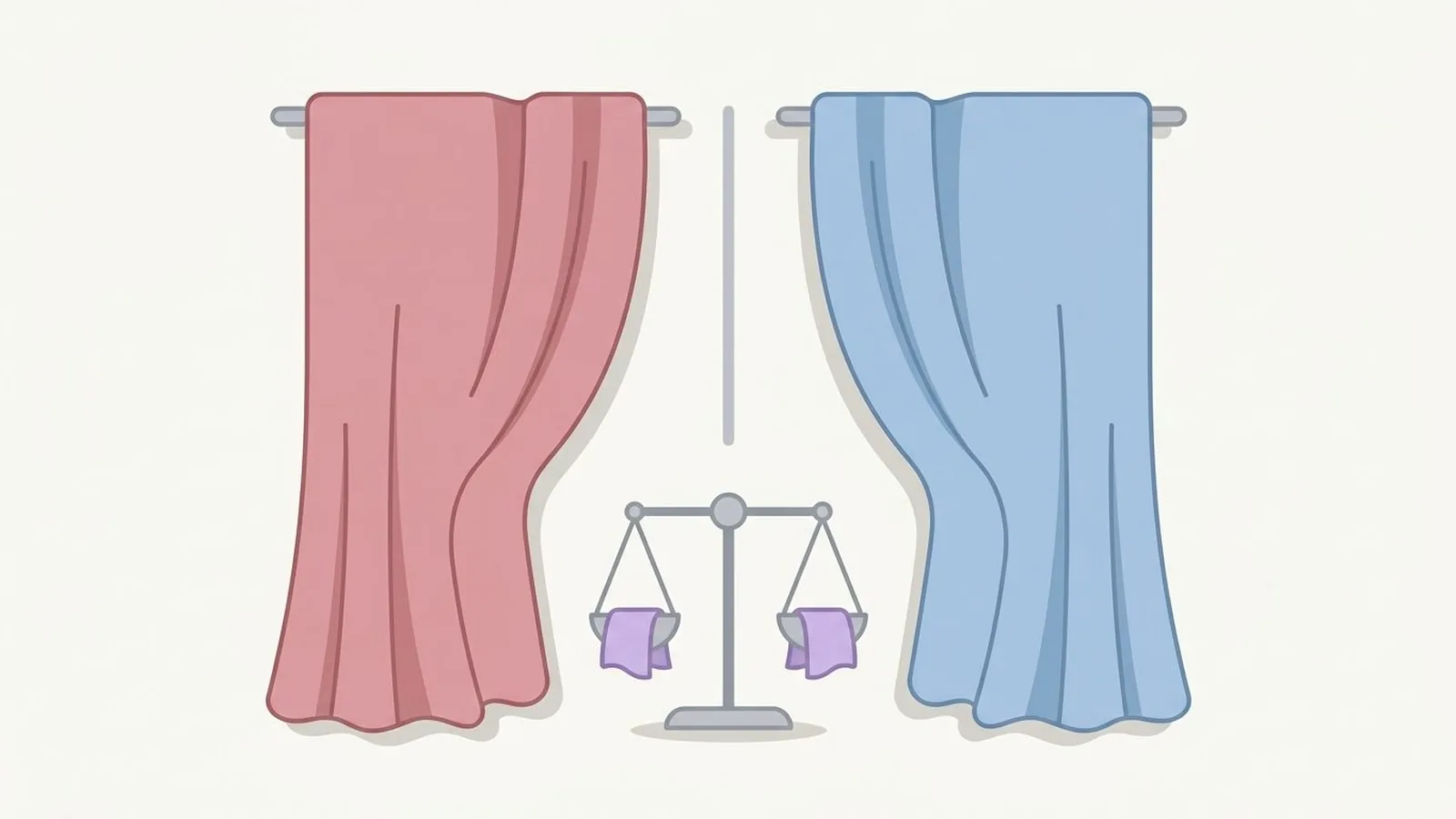
You know you are cool. Silver beats gold, blue-pink beats peach, and anything golden makes you look tired. The question is whether your cool comes in bold jewel tones or soft dusty ones, and that single trait decides everything else.
What's in this guide
What the two cool seasons share
Cool Winter and Cool Summer are the two "true cool" seasons in the modern 12-season system, the pair that sits at the coldest edge of the map with no warmth to soften them. Every other season carries at least a whisper of gold. These two carry none. That is why they get confused with each other more than with anyone else: they agree completely on the trait most people test first.
Both seasons look best in blue-based color. Both light up next to silver, platinum, and white gold and go sallow next to yellow gold. Both suit blue-red lipstick over orange-red, rose over peach, and berry over brick. If you have run the vein check, the jewelry check, and the white-versus-cream check from our guide to finding your skin undertone at home, both seasons would pass every one of them with the same answer: cool, cool, cool.
That is exactly why undertone alone cannot separate them. Undertone is only one of the three measurements that define a season. As our primer on seasonal color analysis explains, every season is a combination of undertone (warm or cool), value (light or deep), and chroma (bright or muted). Cool Winter and Cool Summer agree on the first measurement and part ways on the third. If you already suspect one of the two, our dedicated guides on whether you are a Cool Winter and whether you are a Cool Summer go deep on each; this article is for the moment you are stuck between them.
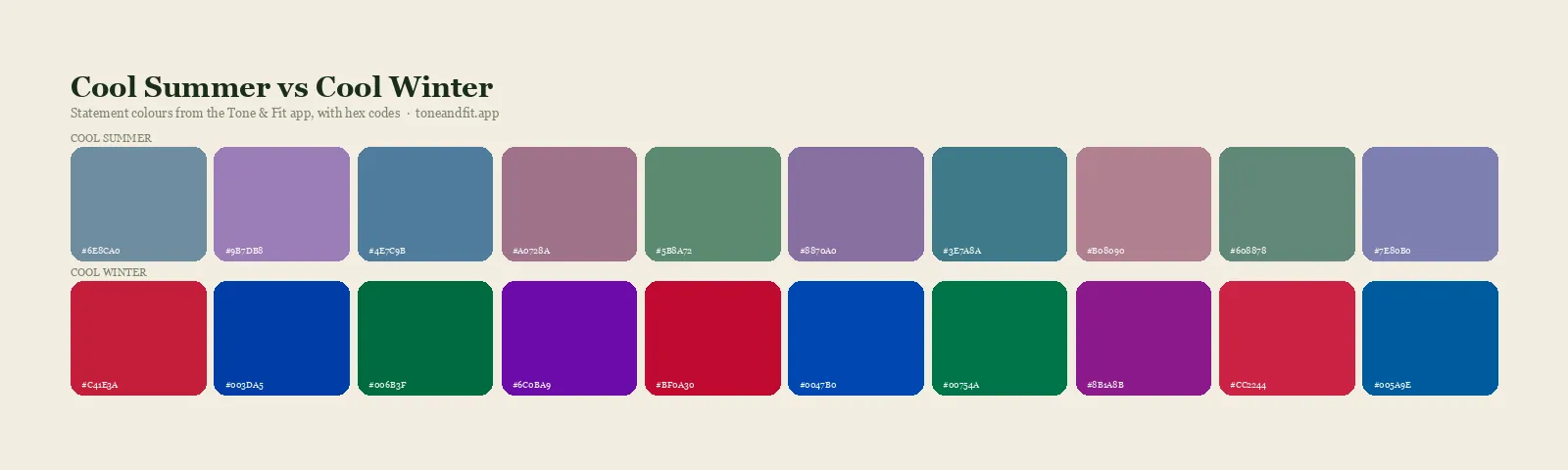
The one difference that matters
Here is the whole distinction in two sentences. Cool Winter is cool and bright. Cool Summer is cool and muted.
Chroma, sometimes called clarity or saturation, measures how pure and intense a color is versus how much grey has been mixed in. Cool Winter coloring has high chroma: clear eyes, high contrast between hair and skin, features that can stand up to vivid, saturated color without being swallowed by it. Put a Cool Winter in sapphire, fuchsia, or true black and the face sharpens, the eyes flash, the whole picture snaps into focus.
Cool Summer coloring has soft chroma: gently blended features, lower contrast, an overall impression that is elegant rather than striking. Put a Cool Summer in those same vivid jewel tones and the color wins the fight. The dress walks into the room before the person does. Give that same person a dusty rose, a soft periwinkle, or a slate blue and suddenly the skin looks smooth, the eyes look clear, and everything harmonizes.
So the question that decides between these two seasons is not "am I cool?" You already know you are. The question is "does intense color amplify me or overwhelm me?" Everything below is a way of answering that. For the wider context of where these two sit among all twelve seasons, our overview of the 12 color seasons maps the full grid.
Cool Winter vs Cool Summer side by side
A quick reference before the tests. Notice that the top row agrees perfectly and every other row flows from the chroma split.
| Cool Winter | Cool Summer | |
|---|---|---|
| Undertone | Cool | Cool |
| Chroma | Bright, saturated | Soft, muted |
| Contrast | High: dark hair, lighter skin, clear eyes | Low to medium: blended, gentle transitions |
| Black | Excellent | Heavy, casts shadows |
| Signature colors | Sapphire, fuchsia, blue-red, royal purple | Dusty rose, periwinkle, slate blue, soft plum |
| Best metal finish | Polished, high-shine silver | Brushed or matte silver, pewter |
| Typical hair | Dark ash brown to black | Ash blonde to medium ash brown |
4 tests to settle it
Descriptions only get you so far. Put real color next to your face in indirect daylight, no makeup, hair pulled back, and watch what your skin does. Run all four tests and count which season wins more rounds.
1. The black test (the decider)
Drape pure black fabric right up to your chin. On a Cool Winter, black looks crisp and expensive: the jaw looks defined, the eyes look brighter, and the face holds its own. On a Cool Summer, black grabs attention away from the face and throws faint shadows around the mouth and under the eyes, making the skin look slightly grey or tired. Now swap the black for mid-grey or soft navy. If relief washes over the picture and your skin evens out, that is a strong Cool Summer signal.
2. The contrast test
Take a bare-faced photo and convert it to black and white. Look at the gap between your hair, skin, and eyes. Cool Winters usually show a wide gap: visibly dark hair against noticeably lighter skin, with eyes that punch out of the frame. Cool Summers show a narrow, blended range where hair, brows, and skin sit within a few shades of each other. High contrast points Winter. Soft, close-together greys point Summer.
3. The jewel-versus-dusty test
Hold a saturated fuchsia or sapphire next to your face, then swap it for dusty rose or slate blue. One of these will make your skin look smooth and your features look intentional; the other will look like a costume. If the vivid jewel tone energizes your face, you are leaning Cool Winter. If it shouts while the dusty shade whispers in perfect harmony, you are leaning Cool Summer.
4. The lipstick test
Try a true blue-red or vivid fuchsia lip. On a Cool Winter it reads glamorous and balanced, like the finishing touch the face was waiting for. On a Cool Summer the same lipstick tends to dominate, turning the whole look "all lips." Cool Summers come alive in soft berry, rose, and mauve instead. Whichever intensity level feels like it belongs decides the round. Our Cool Winter makeup guide shows what the bright end of this spectrum looks like in practice.
One caution before you score yourself: make sure the cool premise actually holds. If several drapes keep suggesting warmth, back up and re-run the fundamentals in our explainer on warm versus cool undertones, because a soft warm season in the wrong test light can masquerade as a muted cool one.
Stop guessing which cool season you are.
Tone & Fit's AI measures your undertone, value, and chroma from a selfie and tells you whether you're Cool Winter, Cool Summer, or something else, with your full palette in 60 seconds.
Try the App ↗How the palettes diverge
The payoff for getting this right is a wardrobe where everything flatters and everything matches. The two palettes share a cool backbone but differ in volume, and knowing which volume is yours changes nearly every purchase.
Where they agree
The seasons meet in the cool mid-range: raspberry, cool rose, emerald turquoise, medium blue-green, and cool greys. These border colors are why borderline people can dress from either palette for years without noticing anything is off. If you are truly stuck, live in this shared zone while you figure it out.
The shared cool core: raspberry, cool rose, emerald turquoise, steel blue, cool grey.
Where Cool Winter pulls ahead
Cool Winter owns the vivid, high-voltage end: true black, pure white, sapphire, fuchsia, blue-red, royal purple, and icy sharp pastels used as accents. These need bright natural coloring to balance them, and Cool Winter has it. The full range, including neutrals and combinations, is laid out in our Cool Winter color palette guide.
Cool Winter exclusives: true black, sapphire, fuchsia, blue-red, royal purple.
Where Cool Summer pulls ahead
Cool Summer owns the soft, powdery end: dusty rose, powder blue, periwinkle, lavender, mauve, soft plum, and slate. On a Cool Summer these read refined and luminous, never washed out, because their gentleness matches the gentleness of the coloring. On a Cool Winter the same shades can look faded, like the color equivalent of speaking too quietly.
Cool Summer favorites: dusty rose, powder blue, periwinkle, soft plum, slate.
Hair follows the same logic. Both seasons need ash, never gold, but Cool Winter can go glossy espresso or blue-black while Cool Summer looks best keeping hair within a few shades of its natural ash tone. Our guide to the best hair color for your skin tone covers both directions in detail.
Common mistakes and look-alikes
A few traps catch almost everyone who tries to choose between these two seasons on their own.
Assuming dark hair means Winter. A medium-ash-brown Cool Summer with slightly deeper coloring can look "dark" in photos, and plenty of Cool Winters lighten their hair. Judge the contrast between features and the reaction to saturated color, not the hair shade in isolation.
Testing under warm indoor light. A warm bulb mutes everything and can make a genuine Cool Winter believe vivid color is "too much," pushing them toward Summer by mistake. Always test in indirect daylight near a window.
Confusing personality with chroma. Preferring quiet, minimal clothes does not make you a Cool Summer, and loving bold fashion does not make you a Cool Winter. The measurement is about what your coloring can balance, not what your taste enjoys. Plenty of Cool Winters dress quietly, in deep saturated neutrals rather than brights, and still honor their season.
Stopping at the wrong fork. If vivid color suits you but icy brightness feels slightly off, your real question may be Cool Winter versus True Winter. And if softness suits you but silver feels less obvious, compare Cool Summer with Soft Summer before committing. Border seasons are settled one fork at a time.
If you have run the four tests and still feel split, that is not a personal failure. The chroma difference is real but subtle, and the human eye is genuinely bad at judging saturation on its own face. This is precisely the case where measurement beats intuition: our comparison of a color analysis app versus a consultant weighs the options, and the full personal color analysis guide ties the whole system together if you want to go deeper.
Ready to find your season?
One selfie, your 12-season result, and the palette that goes with it. Free, no sign-up.
Find your season free ↗For the underlying reading, the skin tone analyzer explains what undertone, depth and contrast actually are.
FAQ
What is the main difference between Cool Winter and Cool Summer?
Chroma. Both seasons are firmly cool, but Cool Winter is bright and saturated while Cool Summer is soft and muted. A Cool Winter glows in vivid jewel tones like sapphire and fuchsia. A Cool Summer looks best in gentler, dustier versions of the same hues, like soft periwinkle and dusty rose.
Can black tell Cool Winter and Cool Summer apart?
Yes, black is one of the fastest single tests. Pure black looks striking and elegant on a Cool Winter but tends to overpower a Cool Summer, casting shadows and hardening the features. Cool Summers usually look better in charcoal, slate, or soft navy, which give depth without the harshness.
Do Cool Winter and Cool Summer share any colors?
They share a border. Cool rose, raspberry, emerald turquoise, and medium blue-greens sit close enough to the line that both seasons can often wear them well. The seasons split at the extremes: icy brights and true black belong to Winter, while dusty pastels and powdery softs belong to Summer.
Can I be both Cool Winter and Cool Summer?
You have one best season, but many people sit near the border between the two. If you are borderline, you can borrow freely from the neighboring palette, especially in the shared mid-range colors. Testing chroma directly, with drapes or a measurement tool, settles which palette should be home base.
What jewelry suits both seasons?
Silver, white gold, and platinum flatter both, since both seasons are cool. The difference is finish: polished, high-shine silver suits Cool Winter's brightness, while brushed, matte, or antiqued silver harmonizes better with Cool Summer's softness. Yellow gold fights both seasons equally.
How can I be sure which cool season I am?
Run the black test, the contrast test, the jewel-versus-dusty drape test, and the lipstick test together in daylight. If three point the same way, trust that answer. If they split, an AI color analysis or a professional drape measures your chroma directly rather than asking your eye to judge a subtle saturation difference.