K-Beauty Makeup by Personal Color Type

Korean makeup by personal color means matching your foundation, blush, lip, and eye shades to your undertone first, warm or cool, then to how bright or muted your coloring runs. A warm personal color reaches for coral, gold, and terracotta; a cool personal color reaches for rose, silver, and berry, and almost every K-beauty product decision follows from that one split.
In this article
What "Korean makeup by personal color" actually means
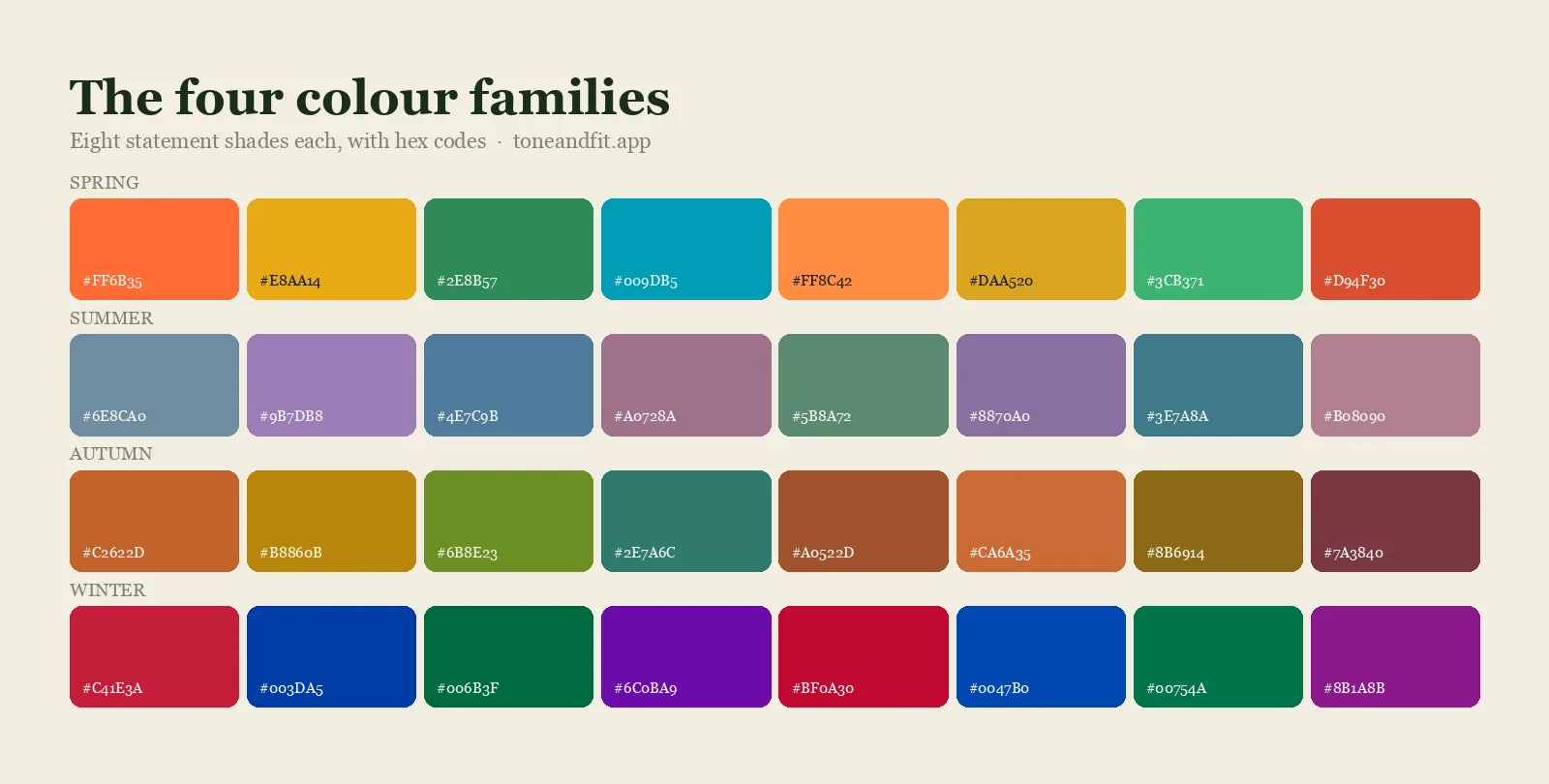
Korean makeup by personal color means every product on your face, base, blush, lips, eyes, follows the same warm-or-cool decision before anything else. Korean personal color studios sort everyone into four base types first: Spring Warm, Summer Cool, Autumn Warm, and Winter Cool, and only after that ask how bright, light, muted, or deep the coloring runs. Our Korean color analysis guide covers where that four-type system comes from and how it maps to the Western 12-season system; this guide picks up from there and stays entirely on makeup: the actual shade families and techniques for each type.
The reason this order matters is that a "pretty" shade in isolation means nothing. A gorgeous coral blush can look chalky and orange on cool-toned skin, and a beautiful rose lip can look muddy and bruised on warm-toned skin, not because either color is wrong, but because it is fighting the undertone underneath it. Match the undertone first and almost any shade within that family will work; skip that step and even an expensive, well-reviewed product can look off.
Base and cushion foundation: match undertone first
Base makeup, especially the cushion compact that Korean beauty popularized, is the one product where undertone match matters more than anything else on this page, because base sits under every other color you apply. A foundation with a golden or peachy base flatters Spring Warm and Autumn Warm skin, warming it slightly and evening out any redness without adding grey. A foundation with a pink, neutral, or rosy base flatters Summer Cool and Winter Cool skin, keeping it clean and bright rather than pushing it toward orange.
The simplest way to check a cushion or liquid foundation in-store is the jaw test: swipe a line from cheek to jaw in natural light and let it sit for a minute. A warm-toned foundation on cool skin will look slightly orange or dirty once it oxidizes; a cool-toned foundation on warm skin will look ashy or grey. Neither mistake is obvious under store lighting, which is exactly why it is worth the extra minute. Our guide to finding your foundation undertone walks through the full test along with backups for tricky, neutral-leaning skin.
Blush by personal color type
Blush is where personal color makeup gets specific fast, because the four Korean types split into genuinely different families rather than lighter or darker versions of the same shade. Spring Warm blush lives in peach and warm coral, colors that mimic a natural warm flush rather than sitting on top of the skin. Autumn Warm goes a shade deeper and earthier: warm terracotta and a soft brick tone that reads sophisticated rather than girlish. Summer Cool wants a cool, powdery pink or soft mauve, kept sheer rather than built up. Winter Cool can carry a clear, cool pink or a berry-tinted blush with more pigment than any of the other three types without it looking harsh.
The K-beauty habit of applying blush in a soft round or slightly draped placement, rather than a sharp, sculpted line, works with every personal color type equally well; the placement technique is universal, only the shade family changes. For the full range of named shades and swatch tests by undertone, our blush by undertone guide goes deeper than the summary here.
Lips and the gradient technique, by type
The K-beauty gradient lip, concentrated color pressed onto the center of the lips and blended outward so the edges fade toward the natural lip tone, is a placement technique rather than a color, which means it works for every personal color type as long as the pigment underneath it matches that type's undertone. The technique stays identical: dab, don't line, and blend before the product sets.
| Personal color type | Gradient lip shade | Everyday alternative |
|---|---|---|
| Spring Warm | Coral or warm watermelon | Peachy nude |
| Autumn Warm | Brick or terracotta red | Toffee or honey-beige nude |
| Summer Cool | Rose or soft mauve-berry | Rosy beige nude |
| Winter Cool | True red or blue-based cherry | Mauve-taupe nude |
Warm types who reach for a berry gradient, or cool types who reach for a coral one, usually notice the same problem: the color looks slightly muddy right at the edges where it fades into bare lip, because the blend is fighting the skin's own undertone instead of matching it. Switching to the shade family in the table above almost always fixes that fade line without changing the technique at all. The complete undertone-by-undertone shade breakdown, including reds and everyday nudes, lives in our lipstick color guide.
Find your exact type in 60 seconds.
Tone & Fit reads your undertone, value, and chroma from a selfie and hands you matching base, blush, lip, and eye shades, no studio visit required.
Try Tone & Fit Free ↗Eyeshadow, brows, and highlighter by type
Eyeshadow in K-beauty leans heavily on soft, wearable browns and taupes, the shade family often marketed as a "milk tea" palette, but that one popular palette does not flatter every personal color equally. Spring Warm and Autumn Warm eyes brighten under a warm, golden-brown milk-tea shadow with a bronze or copper shimmer. Summer Cool and Winter Cool eyes need the same soft brown pulled cooler: a taupe or grey-brown base rather than a golden one, since a warm milk-tea shade can make cool-toned eyes look slightly bruised or tired instead of soft.
Brow color follows hair, not skin: warm personal colors generally suit a warm-brown or soft auburn brow pencil, while cool personal colors suit an ash-brown or cool-grey one, since a warm brow on a cool face reads as an obvious mismatch even when every other product is correct. Highlighter is the simplest call of the five: gold, champagne, or a warm bronze highlighter lifts Spring Warm and Autumn Warm skin, while silver, pearl, or an icy-white highlighter lifts Summer Cool and Winter Cool skin. Swap the two and the glow reads chalky or greasy instead of luminous, the same mismatch a highlighter makes on the wrong side of any undertone line.
Your full look at a glance
Here is every element from this guide in one place, organized by the four Korean personal color types.
| Type | Base | Blush | Lip | Eyes | Highlighter |
|---|---|---|---|---|---|
| Spring Warm | Golden, peachy undertone | Peach, warm coral | Coral, watermelon | Golden-brown, bronze | Gold, champagne |
| Autumn Warm | Golden, deeper undertone | Terracotta, soft brick | Brick, terracotta | Warm bronze, copper | Warm bronze |
| Summer Cool | Pink, neutral undertone | Cool pink, soft mauve | Rose, mauve-berry | Cool taupe, grey-brown | Silver, pearl |
| Winter Cool | Pink, cool undertone | Clear cool pink, berry | True red, cherry | Cool grey-brown, charcoal | Icy silver, white pearl |
Read this table the way a Korean studio color card is meant to be read: as a starting shade family to test against your own face in daylight, not as a rule that overrides what you see in the mirror. If your coloring sits between two columns, favor whichever undertone the vein and jewelry tests on your wrist and jaw actually confirm.
How to check this on yourself
The fastest way to check any of this on yourself is the same jaw test Korean studios open with: hold a warm coral swatch and a cool berry swatch against bare skin in daylight and watch which one your face does the least work to carry. The one that makes your skin look even and rested, rather than sallow or flushed, tells you your undertone before you buy a single product.
If you want a faster, more precise answer than a mirror test, our color analysis quiz narrows your season down in about two minutes with no photo required, and the free photo analysis tool reads your undertone, value, and chroma directly from a selfie and returns matching shades across base, blush, lip, and eye in about a minute. Either one turns the table above into a single row that is actually yours, and pairs naturally with the broader warm versus cool undertone guide if you want the underlying reasoning first.
Ready to find your season?
One selfie, your 12-season result, and the palette that goes with it. Free, no sign-up.
Find your season free ↗For the underlying reading, our skin tone analyzer explains what undertone, depth, and contrast actually are.
FAQ
What is Korean makeup by personal color?
Korean makeup by personal color means choosing your foundation, blush, lip, and eyeshadow shades to match whether your undertone is warm or cool first, then how bright or muted your coloring is. It is the same warm-tone and cool-tone sorting Korean personal color studios use, applied directly to a makeup bag instead of a wardrobe.
What lip color suits a Spring Warm or Autumn Warm personal color?
Warm types wear lipsticks with an orange or gold base rather than a blue one. Spring Warm looks best in coral, warm watermelon, and clear tomato red. Autumn Warm can go deeper into brick, terracotta, and rust without either shade looking muddy.
What lip color suits a Summer Cool or Winter Cool personal color?
Cool types wear lipsticks with a blue or violet base. Summer Cool looks best in rose, dusty berry, and soft mauve pink. Winter Cool can carry the most saturated cool shades of the group: true red, cherry, fuchsia, and deep berry.
Does the K-beauty gradient lip technique work for every personal color?
Yes, because the gradient lip is a placement technique, not a color, so it adapts to any personal color as long as the pigment used matches that type's undertone. A warm type builds the gradient with coral or tomato; a cool type builds it with berry or rose. The technique stays the same, only the shade family changes.
Should I use gold or silver highlighter for my personal color?
Warm personal colors, Spring Warm and Autumn Warm, look brightest in a gold or champagne highlighter. Cool personal colors, Summer Cool and Winter Cool, look brightest in a silver, pearl, or icy-white highlighter. Using the opposite metal tends to look chalky or greasy rather than luminous.
Do I need to know my Korean personal color type or my 12-season type to shop K-beauty?
Either works, since the two systems map directly onto each other. Knowing your warm or cool undertone alone gets most of the way there for makeup shopping, and knowing your full 12-season type refines exactly how bright, muted, light, or deep each shade should be within that undertone.
Can I check my color season from a photo?
Yes. The free Tone & Fit web tool reads your color season from one selfie in about 30 seconds, with no sign-up and no photo stored by us. The Tone & Fit app for iPhone and Android then builds your full palette of 38 named shades.