Best Bronzer Shades for Your Undertone and Skin Depth
What's in this guide
- The one rule: match undertone, then add depth
- Best bronzer shades by undertone
- Best bronzer shades by skin depth
- Best bronzer shades by color season
- Powder, cream or liquid
- Bronzer versus contour
- How to test a shade before you buy
- Common bronzer mistakes
- Do you need a different bronzer by season?
- FAQ
The best bronzer shade is one to two shades deeper than your skin with the same undertone: golden and honey tones for warm skin, soft taupe and rosy brown for cool skin, and a balanced caramel or tan for neutral skin. Get the temperature right and bronzer looks like a sun glow. Get it wrong and it looks orange, muddy or like dirt on your cheekbones.
This is the shade by shade guide to choosing one. It belongs to our wider look at what colors look good on you, because makeup follows the same undertone logic as clothes. We describe shade families, not product names, so the advice holds for any brand, drugstore or luxury, powder or cream.
The one rule: match undertone, then add depth
Bronzer is supposed to look like the warmth your skin would pick up from sun. That means two things must be true. First, it should share your skin's undertone, so the glow looks like it came from you. Second, it should be a little deeper than your skin, so it reads as color rather than as a second foundation.
The usual mistake is choosing by depth alone. A medium bronzer that looks beautiful on a friend can turn gray on you if your skin is cool, or orange if your skin is pink. If you are not sure of your temperature yet, start with how to find your skin undertone at home, and see warm versus cool skin undertone if the tests disagree.
A good starting point on depth is one to two shades deeper than your foundation, and a different starting point if your face is lighter than your body: match the bronzer to the shade you would look in after a sunny week. Go deeper only for contouring, which is a different job covered below.
Best bronzer shades by undertone
Warm undertone: golden, honey and caramel
If gold jewelry flatters you and your skin has a peachy or yellow glow, you have a warm undertone, and bronzers with a golden or amber base will look the most natural. Look for honey, golden caramel, warm sand, apricot brown and soft terracotta. These echo the golden warmth already in your skin. Avoid anything with a gray, ashy or pink cast, which can look flat against warm skin.
Cool undertone: taupe, rosy brown and soft mocha
If silver jewelry flatters you and your skin has a pink, rosy or blue tinged glow, you have a cool undertone. Strong orange or golden bronzers sit on top of cool skin like a mask. Choose soft taupe, rosy beige, cool mocha, muted cocoa and mauve brown instead. These add shape and warmth without fighting the pink in your skin. A pearl or satin finish tends to look more natural than a heavy gold shimmer.
Neutral undertone: balanced caramel and soft tan
If both gold and silver look good on you, you have a neutral undertone, which gives you the widest range. Balanced caramel, toffee, soft tan and nutmeg tend to be the safest. You can lean a little warmer in summer and a little cooler in winter. If you are unsure whether you are neutral, our guide to neutral undertone lists the signs.
Olive undertone: warm bronze with a green safe edge
Olive skin has a green or gray cast on top of a warm or neutral base, and the wrong bronzer can bring out sallowness. Choose bronzers with a brown or bronze base and a touch of warmth rather than pink or orange, such as warm bronze, soft chestnut and tawny brown. See olive undertone explained for how to confirm yours.
Best bronzer shades by skin depth
Undertone chooses the temperature, depth chooses how strong the shade should be. Use this table as a shortlist, then confirm against your own face in daylight.
| Your depth | Warm undertone | Cool undertone | Neutral undertone |
|---|---|---|---|
| Fair | Soft golden beige, light apricot | Pale taupe, soft rosy beige | Light sand, pale caramel |
| Light to medium | Honey, golden tan | Cool mocha, rosy brown | Soft caramel, light toffee |
| Medium to tan | Amber, warm bronze, terracotta | Muted cocoa, mauve brown | Toffee, nutmeg |
| Deep | Rich copper, deep amber, warm mahogany | Espresso, deep plum brown | Deep caramel, chestnut |
If you have deep skin, remember that bronzer works best as a rich, slightly warmer or redder version of your own tone, not a lighter one. A bronzer that looks right on lighter skin can look ashy or invisible on deep skin, and warm copper or reddish brown tones tend to give the glow you are after. Our guide to deep skin undertone explains why deep skin can be warm, cool or neutral, which matters for choosing between those shades.
Best bronzer shades by color season
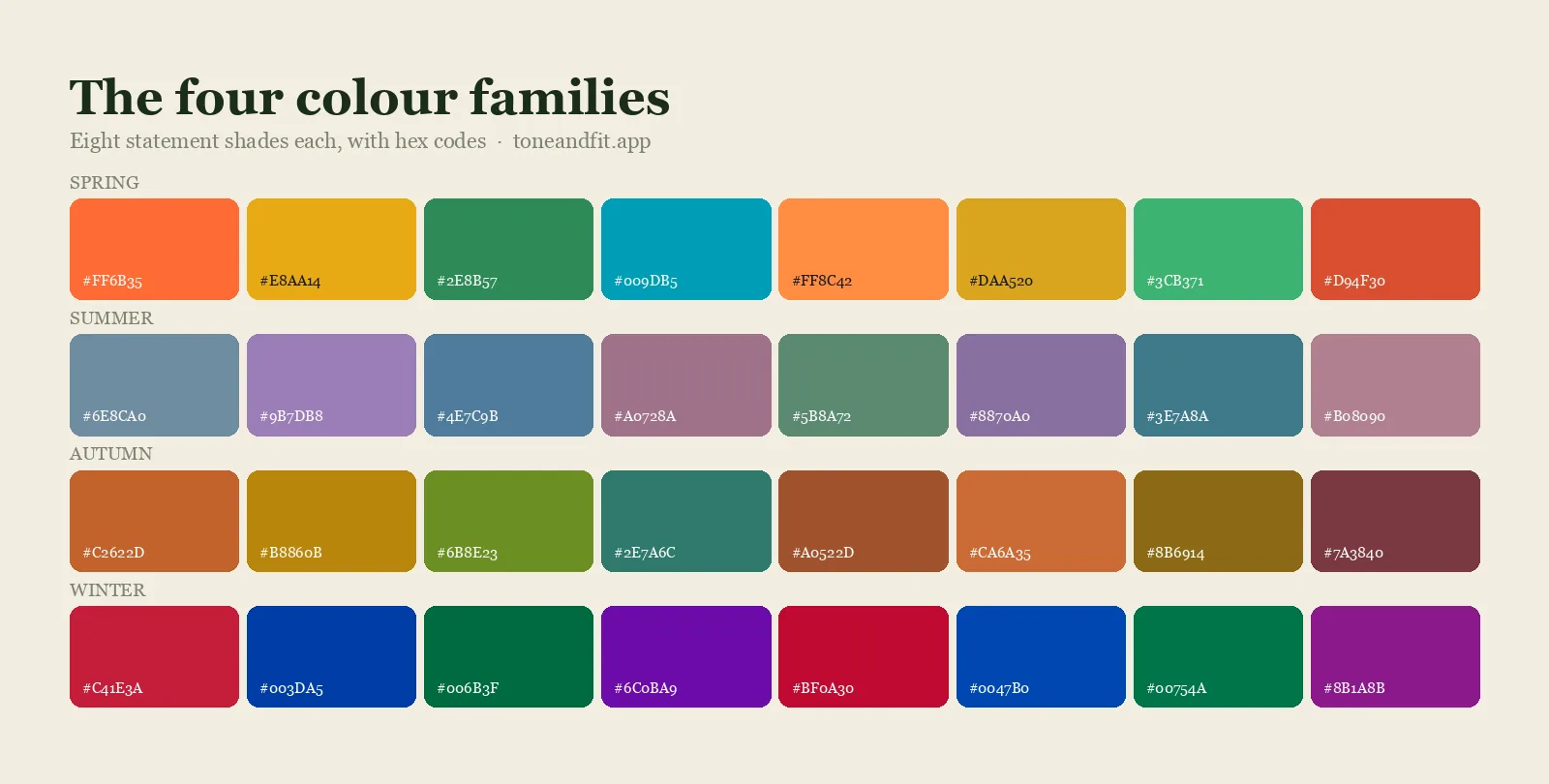
If you already know your color season, you can shortcut the guessing. Bronzer should echo the same warmth or coolness as your season palette:
| Season family | Bronzer direction | Look for |
|---|---|---|
| Spring (warm, clear) | Warm and fresh, never heavy | Peachy golden, light apricot, honey |
| Summer (cool, soft) | Cool and muted | Soft taupe, rosy brown, cool beige |
| Autumn (warm, rich) | Warm and earthy | Terracotta, amber, copper bronze |
| Winter (cool, clear) | Cool and defined | Mocha, espresso, plum brown |
Each of our season makeup guides goes further, with shades for blush, lipstick and eyes alongside bronzer: Warm Spring, True Summer, Deep Autumn and Cool Winter. If you do not know your season, you can find it free from one selfie and come back to this table.
Skip the guesswork
The free web tool names your season from one selfie, with no sign-up. The app's scan is free too and shows your undertone, best metals and starter colors; your season and full palette in the app are an optional upgrade.
Find my season free → Get the app ↗Powder, cream or liquid: which finish suits you
Shade matters more than formula, but formula changes how forgiving a shade is.
- Powder bronzer is easiest to control and suits normal to oily skin. It can look dry or cakey on mature or very dry skin, so use a fluffy brush and a light hand.
- Cream bronzer melts into skin and looks the most like a natural glow, especially on dry or mature skin. It is also easy to overapply, so build in thin layers and blend with a sponge or fingers.
- Liquid or drops mix into foundation or moisturizer for an all over warmth. They are the most forgiving if you are afraid of looking stripy, and the easiest way to avoid a visible line.
- Matte versus shimmer: matte shades read as shadow and sculpt, while a satin or soft pearl finish reads as glow. Heavy glitter ages the face by highlighting texture, so keep shimmer fine.
Bronzer versus contour: do not mix them up
Bronzer adds warmth, contour adds shadow. They are different shades for different jobs, and using one as the other is a common reason for muddy results.
- Bronzer goes where the sun naturally hits: the tops of the cheekbones, across the forehead near the hairline, the bridge of the nose, and lightly along the jaw. It should be warm and only a little deeper than you.
- Contour goes in the hollows, under the cheekbones, along the sides of the nose and under the jaw. It should be cooler and grayer than your skin, because real shadows are cooler than lit skin, and it can be two or more shades deeper.
If you only want to own one product, choose a neutral, matte taupe leaning bronzer for a subtle contour or a soft golden one for a sun kissed look, depending on which result you prefer. Warm toned skin often does better with a warm bronzer that doubles as a soft contour, while cool skin often does better with a taupe shade.
How to test a bronzer shade before you buy
- Swatch on your jawline, not your hand. Hand skin is often a different depth and undertone from your face. The jawline lets you see how the shade blends into both your face and neck.
- Check in daylight. Store lights are usually warm or harsh and distort shades. Step to a window or outside, or take a quick photo without flash.
- Wait a few minutes. Some shades oxidize and shift on skin. Judge the shade after it has settled.
- Look at the whole face. The bronzer should look like it belongs with your blush and lipstick. If it fights them, adjust the blush, not just the bronzer. Our guides to blush by undertone and the best lipstick color for your undertone help you keep the whole look consistent.
- Ask whether you look healthy, not tanned. The goal is a lit from within glow, not a visible product line.
Common bronzer mistakes
- Too orange. Orange bronzer on pink or cool skin is the classic mistake. Switch to taupe, rosy brown or a muted neutral shade.
- Too gray or muddy. A cool, ashy bronzer on warm skin looks dirty. Choose a golden or amber base instead.
- Too deep. If you can see a line where the bronzer stops, the shade is too deep or not blended enough. Drop a shade and blend upward.
- Foundation mismatch. A foundation with the wrong undertone makes every bronzer look off. See foundation shade by undertone and the best foundation undertone match first, because bronzer sits on top of your base.
- Forgetting the neck. A bronzed face with a pale neck looks like a mask. Blend a little warmth down onto the jaw and neck.
Do you need a different bronzer in different seasons?
Your undertone stays the same, but your skin depth can change with a tan, and that changes which depth you need. In summer, you may want a shade deeper than your winter bronzer. The temperature stays the same: a cool undertone does not become warm because you are tanned, so keep choosing from the same temperature family and only shift the depth. If a tan is blurring your test results, see how to find your undertone with a tan.
Make bronzer work with the rest of your palette
Makeup and clothing share the same logic. A warm bronzer looks best with warm blush, warm lipstick and clothes in a warm palette, and a cool, taupe bronzer sits comfortably with rosy blush and cool toned wardrobe colors. If you want the full picture, the seasonal color analysis explained guide shows how every makeup and clothing choice flows from the same three dimensions, and the personal color analysis guide covers the process end to end. If you are still working out which temperature you are, the skin tone analyzer guide is the quickest place to start.
Quick recap
- Choose bronzer by undertone first, then by depth: one to two shades deeper than your skin.
- Warm skin: golden, honey, amber. Cool skin: taupe, rosy brown, mocha. Neutral: balanced caramel and soft tan.
- Use a separate, cooler and grayer shade if you want contour.
- Swatch on your jawline in daylight, and blend onto your neck.
- Check the bronzer against your foundation, blush and lipstick so the whole face works as one picture.
Skip the guesswork
The free web tool names your season from one selfie, with no sign-up. The app's scan is free too and shows your undertone, best metals and starter colors; your season and full palette in the app are an optional upgrade.
Find my season free → Get the app ↗FAQ
What color bronzer is best for my skin tone?
Choose a bronzer one to two shades deeper than your skin with the same undertone. Warm skin suits golden, honey and amber shades, cool skin suits taupe, rosy brown and mocha, and neutral skin suits balanced caramel and soft tan.
How do I choose bronzer for a cool undertone?
Look for soft taupe, rosy beige, muted cocoa or mauve brown, and avoid strong orange or golden shades. A satin or soft pearl finish tends to look more natural on cool skin than a heavy gold shimmer.
What bronzer looks best on warm undertones?
Golden bronzers in honey, amber, warm sand and terracotta tones echo the natural warmth in warm skin. Avoid ashy or gray toned shades, which can look flat or dirty on a warm complexion.
Should bronzer be darker than my foundation?
Yes, usually one to two shades deeper, so that it reads as warmth rather than a second foundation. If you can see a line where the bronzer stops, it is too deep or needs more blending.
What is the difference between bronzer and contour?
Bronzer adds warmth where the sun would hit, such as the tops of the cheekbones and forehead. Contour adds shadow in the hollows and is usually cooler and grayer than your skin, and can be deeper than bronzer.
What is the best bronzer for deep skin tones?
Deep skin usually looks best with a rich, slightly warmer or redder version of its own tone, such as copper, deep amber or mahogany for warm undertones and espresso or plum brown for cool undertones. A bronzer that is too light can look ashy or invisible.
Why does bronzer look orange or muddy on me?
Orange usually means the bronzer is too warm for a cool or pink undertone, and muddy or gray usually means it is too cool for a warm undertone. Find your undertone first and then choose a shade in that temperature family.
Can I check my color season from a photo?
Yes. The free Tone & Fit web tool reads your color season from one selfie in about 30 seconds, with no sign-up and no photo stored by us. The Tone & Fit app for iPhone and Android then builds your full palette of 38 named shades.