How to Find Your Undertone When You Have a Tan
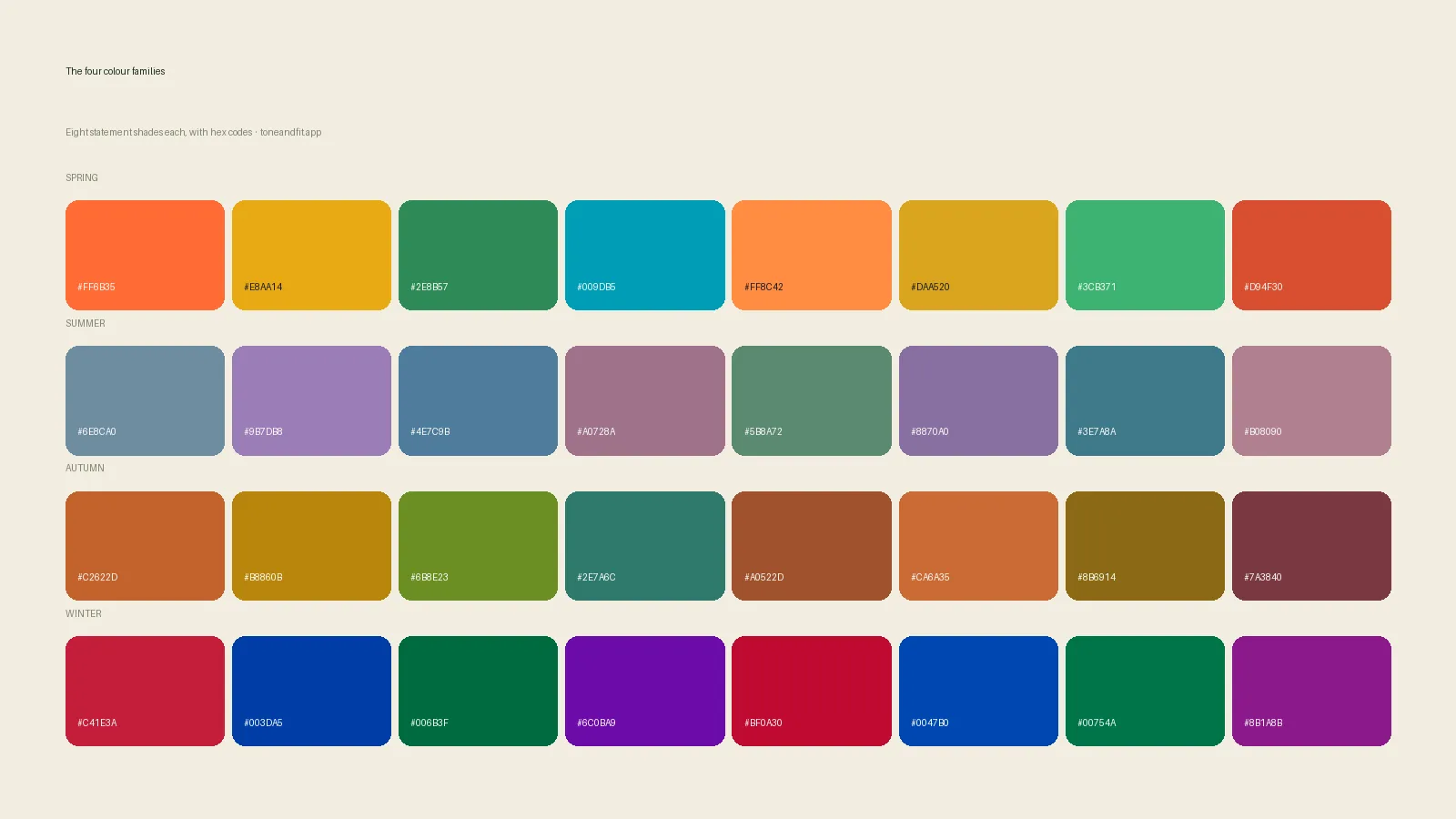
To find your undertone when you are tanned, test skin the sun rarely reaches, like the inner upper arm, and use methods that ignore surface color: the jewelry test, the white paper test on your neck and the drape test in daylight. Tanning changes how dark your skin looks. It does not change the underlying warm, cool or neutral cast.
The short version: a tan is a layer on top of your skin, and undertone lives underneath it. Most at-home undertone advice assumes you are looking at untanned skin, which is why it goes wrong every summer. Golden-brown skin looks warm to almost everyone, including people who are cool underneath. The way through is to test protected skin, compare against fixed references such as metal and paper, and if you are unsure, wait until the tan fades and repeat. The complete untanned method is in our skin tone analyzer guide, which this post extends to the tanned case.
What's in this guide
- What a tan changes and what it does not
- Why the usual tests give the wrong answer on a tan
- The step-by-step method
- Step 1: test skin the sun does not reach
- Step 2: use references that do not tan
- Step 3: run a drape test in daylight
- If it is a self-tan rather than a sun tan
- Reading conflicting results
- Dressing a tan without changing your season
- FAQ
What a tan changes and what it does not
A tan is extra pigment in the outer layers of skin. It makes you deeper and, in most people, warmer looking, because golden-brown pigment sits over whatever was there before. What it does not do is rewrite your undertone, which comes from the color cast beneath the surface: the pink, red or blue in cool skin, and the yellow, peach or golden in warm skin.
Color analysis splits skin into three separate properties, and a tan mostly affects one of them.
- Undertone (warm, cool, neutral). Underlying, stable, and the thing you are trying to find.
- Depth (light to deep). A tan moves this temporarily, which is why summer skin can read a full step deeper.
- Clarity or chroma (soft to bright). A tan can slightly soften or warm up how vivid your coloring looks, and it fades back.
That is why your color season usually holds through the year even though your skin does not. It is also a common source of confusion, because a summer tan can push a cool person to look warm enough that the usual tests read wrong. The wider background on how these three properties combine is in seasonal color analysis explained.
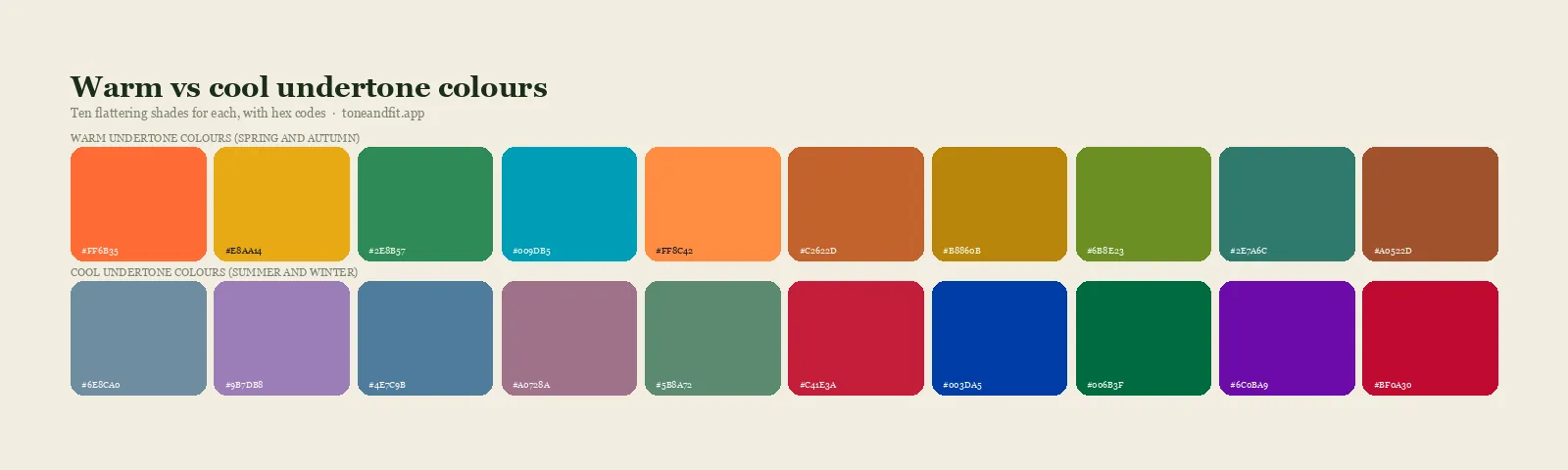
Why the usual tests give the wrong answer on a tan
The four classic home tests are covered in how to find your skin undertone at home. Each of them has a specific weakness when you are tanned.
| Test | Why a tan breaks it | Fix |
|---|---|---|
| Vein color on the wrist | Tanned skin over the veins changes how they look, and the wrist is usually exposed to sun | Use the inner upper arm, or skip this test while tanned |
| Skin color in the mirror | Golden-brown surface color reads warm regardless of undertone | Compare against paper and metal instead of judging by eye |
| How you tan | Whether you burn or brown is a weak clue and is not reliable evidence of undertone | Do not use it as a deciding test |
| Jewelry test | Tanned skin makes gold look flattering and silver look stark on almost anyone | Check against the untanned inner arm, and judge which looks calmer rather than which looks brighter |
The common trap is deciding you must be warm because you look warm right now. If you have always been told you look great in silver and white, and your summer skin says otherwise, believe the longer record. The methods below are designed to separate the two.
The step-by-step method
You need daylight, a plain white sheet of paper, a piece of gold and a piece of silver jewelry (or foil), a mirror, and about ten minutes. Read the three steps once, then do them in order. The method is a close cousin of how to do color draping at home, adapted to skin that has seen sun.
Step 1: test skin the sun does not reach
Find the part of your body that has been covered the most this summer. The inner upper arm, the skin just behind the ear and the underside of the forearm are common candidates. Compare that patch with the skin of your face or hands. The difference between the two is your tan.
Now look only at the protected patch in daylight, near a window, and describe what you see without overthinking it:
- Pink, rosy, reddish or bluish tint: points cool.
- Yellow, peach, golden or olive tint: points warm.
- A mix, or a color that is hard to name: points neutral, or means the light is misleading you.
This alone answers the question for many people, because the protected skin is your undertone with the tan removed. If your protected skin is clearly pink and your face is clearly golden brown, that is a cool undertone under a warm-looking tan. If you are not sure how to describe what you see, the wording in warm versus cool skin undertone helps.
Step 2: use references that do not tan
Your eye judges color relative to whatever sits next to it. A tanned face next to a tanned hand looks like nothing in particular, so you need something with a stable color next to your skin.
The white paper test
Hold a plain white sheet next to your neck, jawline or the protected arm patch, in daylight. Look at what the paper does to your skin. Skin that looks pink or rosy against white points cool. Skin that looks yellow or golden against white points warm. Skin that looks grey or ashy suggests you are neither strongly warm nor strongly cool, or that the paper is the wrong white. Test the neck and the protected arm rather than the face if your face has the strongest tan.
The gold and silver test
Lay a piece of gold next to the protected arm patch and then a piece of silver. Ask which one makes the skin look more even and healthy, not which one looks nicer on its own. If silver wins on the protected skin, that points cool. If gold wins, that points warm. If both look fine, that suggests neutral, which is worth reading about in neutral undertone skin. The related guide on gold or silver jewelry by skin undertone covers the reasoning in more detail.
Why the neck matters
The neck is a good testing zone because it is shaded by the chin and often less tanned than the face, while still being close enough to the face that the result transfers. Check that you are not looking at a strap line or shadow. If the neck is tanned as well, fall back on the inner arm.
Step 3: run a drape test in daylight
Stand by a window, not under a ceiling lamp, and hold a warm-toned fabric next to your face and then a cool-toned one. Good pairs are a cream against a bright white, a camel against a grey, or a coral against a berry pink. The one that makes your face look clearer and your skin look calmer is the one that agrees with your undertone. The one that makes you look yellowish, greyish or tired is the one that clashes.
Tans complicate this step in a predictable way: warm fabrics flatter almost every tanned face, because they echo the golden surface. That is why you should weight the drape test lower than Steps 1 and 2 while you are tanned, and treat it as a tiebreaker rather than a verdict. If you want the full round-by-round version with warm and cool, light and deep, bright and muted comparisons, see the draping guide. For a first pass at the season your results point to, the find my color season guide connects undertone results to a palette.
Skip the tan guesswork
Tone & Fit reads undertone, depth and chroma from one selfie and returns your season with its palette.
Try Tone & Fit free ↗If it is a self-tan rather than a sun tan
Self-tanner behaves differently from a real tan. Most formulas add a uniform orange, brown or golden layer and do not follow your natural pigment pattern. That makes the protected skin test more useful, since a patch you skipped can still show your natural cast, and it makes the face and hands much less useful as evidence. If you have applied self-tanner recently, do not judge undertone from anything you applied it to. Wait until it has fully worn off, or test an untouched patch.
Foundation and bronzer create the same problem in a smaller area. Take makeup off before any of these checks, and photograph nothing in a filter, since those can shift color as well. The article on why phone cameras misreport skin tone explains why a photo alone is a poor test surface.
Reading conflicting results
It is normal for the three steps to disagree a little. Use this table to decide what to do next.
| What you found | Likely reading | Next step |
|---|---|---|
| Steps 1 and 2 agree, drape disagrees | Trust Steps 1 and 2. The tan is flattering warm fabrics. | Note your undertone and move on |
| Step 1 says cool, jewelry says either | Probably cool or neutral | Repeat on the untanned arm in a different window |
| Everything is split evenly | Possibly neutral undertone | Read about neutral coloring, then test again in three to four weeks |
| Everything points the same way | Confident result | Match it to a season |
If you cannot settle it, do not force an answer. Wait until the tan has mostly faded and repeat the same steps on your face. Comparing a tanned result with a faded result is one of the most reliable ways to learn your real undertone, because whichever answer survives the change is the answer.
Dressing a tan without changing your season
Your season is stable, and your summer skin is a temporary variation on it. A few adjustments make more sense than a full palette change.
- Stay in your undertone family. A cool person with a tan should still lean toward cool shades, just chosen a step deeper.
- Go one step deeper or clearer if you feel washed out. A pale cream that flatters in winter can vanish against summer skin, and a slightly richer white or ivory works better.
- Use the seasonal swap, not the season swap. Move up a shade in depth or brightness inside your palette. Do not jump to another palette.
The full workflow for turning a result into a wardrobe is in how to shop your color palette, and the twelve-season map is at the 12 color seasons. If you are deeper skinned to begin with, color analysis for deep skin tones covers how undertone reads at that depth. For the shade-matching side, foundation shade by undertone is worth a look, since it is where a tan shows up most in daily life.
One last point. A tan makes everyone look a little more alike to the eye, which is why undertone gets harder to see in summer and easier in winter. If your result only settles once the tan is gone, that is not a failure of the method, it is the method working. The complete order of operations from undertone to season to palette lives in our personal color analysis guide, and the color analysis app guide explains how the same job is done from a selfie.
Find your undertone in one selfie
Get your 12-season result and palette from a single photo. Free to try, no sign-up.
Find your season free ↗FAQ
Does a tan change your skin undertone?
No. A tan adds pigment to the outer layers of skin, which changes how dark and how golden your skin looks, but undertone comes from the color cast under the surface and stays the same. That is why a cool-toned person can look warm in summer and return to looking cool when the tan fades.
How do I find my undertone when I am tanned?
Test skin the sun does not reach, such as the inner upper arm or the skin behind your ear. Then hold a white sheet of paper next to your neck or that protected patch in daylight, and compare gold and silver against it. Weight those results above a drape test, since warm fabrics flatter almost every tanned face. If the results conflict, repeat once the tan has faded.
Why do I look warm in summer but cool in winter?
A summer tan places golden-brown pigment over your natural coloring, so almost everyone reads warmer in summer. When it fades, your underlying undertone shows again. If you look cool in winter and warm in summer, your undertone is more likely the winter reading, and the summer change is depth and surface color rather than a different season.
Can I be cool-toned and still tan easily?
Yes. Whether you tan easily says something about how your skin responds to sun, but it is not a reliable indicator of undertone. Plenty of cool-toned people tan well and plenty of warm-toned people burn. That is why tanning behavior should not be used as a deciding test.
Does self-tanner change how I should test undertone?
Yes. Self-tanner applies a uniform layer of color that does not follow your natural pigment, so the areas you applied it to are poor evidence. Test a patch you did not treat, or wait until it has worn off completely. Remove foundation and bronzer before testing as well.
Should I change my color palette in summer?
Usually not. Your season is based on undertone, depth and clarity, and only depth and clarity move a little with a tan. A better approach is to stay inside your palette and choose slightly deeper, clearer or richer versions of the same colors while your skin is darker.
Is the vein test reliable on tanned skin?
It is less reliable, because tanned skin over the veins changes how they look and the wrist is often sun exposed. If you want to use it, check veins on a protected area such as the inner upper arm, and treat the result as one clue among several rather than a verdict.