Best Suit Colors for Your Color Season

Short answer: the best suit colour depends on three things: your undertone, your depth and your contrast. Cool seasons wear charcoal, true navy and black best; warm seasons wear brown, olive and warm navy; light seasons need mid-tones rather than the darkest versions, and high-contrast seasons can take the sharpest neutrals. The season-by-season table and shirt pairings are below.
Most men own two suits: a navy one and a charcoal one. That is not a bad start. But navy and charcoal each come in a warm version and a cool version, and the one hanging in your closet may be quietly working against your face in every photo you appear in.
The short answer: if your coloring is cool, your best suits are true navy, charcoal, cool grey, black (deep seasons only), and pine. If your coloring is warm, your best suits are bronze brown, olive, camel, warm taupe, and a navy with a softened, slightly greyed cast rather than an electric one. If you sit in the middle, a mid-tone soft navy and a warm-leaning grey will carry almost everything you need. The rest of this guide narrows those bands down to your specific season, and tells you what shirt and tie to put with each. If it is the layer nearest your face you want to get right first, start with which shirt colors suit your skin tone and build the suit around that.
What's in this guide
- Why suit color is a coloring decision, not a trend decision
- The three variables that decide your suit color
- Best suit colors by season, at a glance
- Winter seasons: the sharp neutrals
- Autumn seasons: earth over grey
- Spring seasons: warm and light
- Summer seasons: soft and cool
- Work, weddings, and interviews
- Shirt, tie, and shoe pairings that hold the palette
- Five suit color mistakes worth fixing
- FAQ
Why suit color is a coloring decision, not a trend decision
A suit is roughly eighty percent of the color someone sees when you walk into a room. It is a very large block of a single shade sitting directly under your chin, which means it behaves like a giant reflector card. Whatever temperature that fabric has, it bounces up onto your jaw, your cheeks, and the skin under your eyes.
When the suit's temperature matches your skin's temperature, the effect is invisible in the best possible way. Your face looks even, your eyes look defined, and nobody comments on the suit at all. They comment on you. When the temperatures fight, something reads as slightly off in a way most people cannot name. Your skin looks sallow, or the shadows under your eyes deepen, or the suit looks like it is wearing you.
This is exactly what color analysis for men exists to solve. It is not about limiting you to five approved colors. It is about knowing which version of navy, which version of grey, and which version of brown belongs to you, so the suit you spend real money on earns its place for a decade instead of sitting in the closet because something about it never felt right.
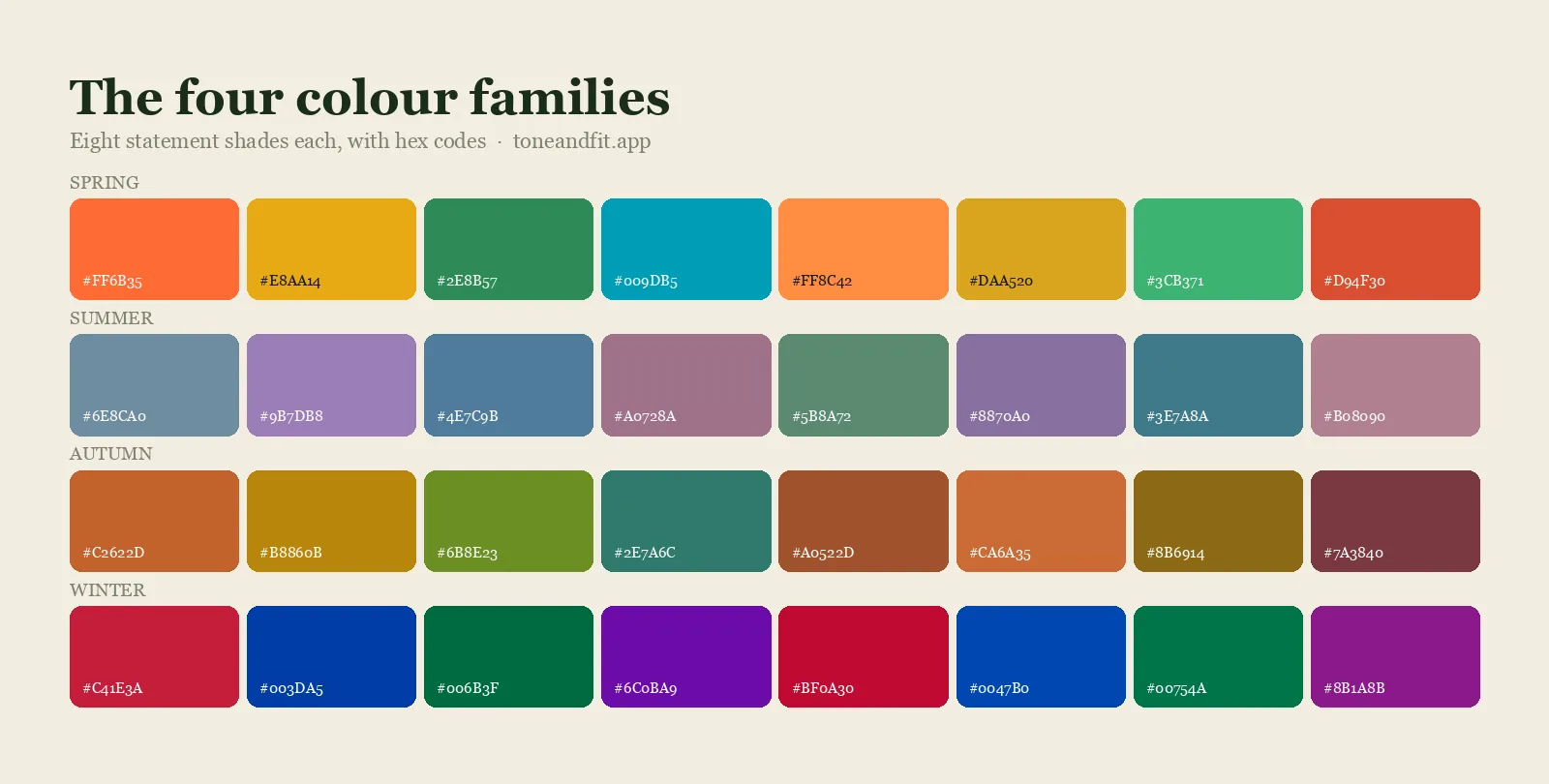
Menswear makes this easier than womenswear, because the palette is narrower to begin with. There are maybe eight suit colors in wide circulation. Once you know your season, four of them are yours and four of them are not, and you never have to think about it in a fitting room again.
The three variables that decide your suit color
Three properties of your natural coloring do all the work here. They are the same three that decide every other color question you will ever have, from hair color to shirt fabric.
1. Temperature: warm or cool
Does your skin carry a golden, olive, or peachy cast, or a pink, red, or blue one? If you have never checked, the fastest route is our walk-through on finding your skin undertone at home, which covers the vein test, the jewelry test, and the white-paper test. Warm coloring wants brown, olive, camel, and a softened navy. Cool coloring wants charcoal, true navy, pine, and cool grey. If the two tests disagree with each other, you are likely neutral, and both bands are open to you at reduced intensity.
2. Value: how deep your coloring runs
Hold your natural hair color, your eye color, and your skin next to each other. If the whole picture reads dark, you can carry a genuinely deep suit: charcoal, espresso, midnight navy, and in some cases black. If the whole picture reads light, that same charcoal will overpower you and read as a black rectangle with a face floating above it. Light coloring wants mid-greys, stone, light taupe, and a lighter blue.
3. Contrast: the gap between your features
A man with black hair and pale skin has enormous contrast. A man with sandy hair, hazel eyes, and beige skin has almost none. High contrast can carry a charcoal suit with a white shirt, because the outfit matches the drama already present in the face. Low contrast gets flattened by that same combination and looks better in a tonal pairing where the suit and the shirt sit close together. Our guide to finding your contrast level gives you three ways to measure this, including a black and white photo test that takes ten seconds.
Put temperature, value, and contrast together and you have your color season. There are twelve of them, and each one has a suit answer.
Best suit colors by season, at a glance
| Season | Best suits | Avoid |
|---|---|---|
| True Winter | Black, charcoal, true navy, cool grey | Camel, olive, warm brown |
| Deep Winter | Black, midnight navy, espresso charcoal | Stone, light grey, tan |
| Cool Winter | Charcoal, true navy, pine, slate | Bronze, rust brown, gold |
| Deep Autumn | Espresso brown, dark olive, bronze navy | Icy grey, pure black, stone |
| True Autumn | Coffee brown, olive, warm taupe, rust | Cool grey, black, blue-navy |
| Soft Autumn | Mushroom, soft olive, warm mid-grey | Black, high-shine charcoal |
| True Spring | Camel, warm mid-blue, tobacco | Black, charcoal, cool grey |
| Light Spring | Stone, light warm grey, soft camel | Charcoal, espresso, black |
| Warm Spring | Golden tan, warm navy, cognac brown | Slate, pure black, icy blue |
| True Summer | Soft navy, blue-grey, slate | Black, camel, rust |
| Light Summer | Light blue-grey, dove, soft navy | Charcoal, espresso, black |
| Soft Summer | Greyed navy, mushroom grey, taupe | Pure black, bright royal, tan |
Not sure which row is yours? The twelve seasons walk-through narrows it down by hand, or the app does it from a selfie in under a minute.
Find out which navy is yours
One selfie, your 12-season result, and a palette you can shop from. Free, no sign-up.
Get your season free ↗Winter seasons: the sharp neutrals
Winter is the only group that can wear a genuinely black suit without being swallowed by it, and even then it depends on depth. Winter coloring is cool and clear, which means the suit palette is the classic one: black, charcoal, true navy, and cool grey.
True Winter is the black suit season. High contrast, cool skin, and clear features mean a black suit with a crisp white shirt reads as intentional rather than funereal. Charcoal and true navy are your workhorses. What to skip: camel, olive, and anything with a golden cast, all of which will drop a yellow film over cool skin.
Deep Winter can go even deeper. Midnight navy, near-black charcoal, and espresso-leaning darks all work, and this is the one Winter that can borrow a very deep brown without looking warm. Light suits are the risk here, since stone and light grey wash out deep coloring entirely. Our deep winter men's page has the fuller wardrobe breakdown.
Cool Winter sits slightly softer. Charcoal, true navy, pine green, and slate are the picks. Pine in particular is an underused suit color that reads formal at a wedding and interesting at everything else. See the cool winter men's page for the shirt and tie side of it.
Autumn seasons: earth over grey
Autumn is the group most badly served by the standard menswear rack, because the standard rack is built for cool coloring. If you are Autumn, the grey suit that everyone told you was a safe default is the one making you look tired.
Deep Autumn wants espresso brown, dark olive, and a bronze-cast navy rather than a blue-cast one. Black is technically wearable at a black tie event but it is never your best. If you have deep, warm coloring, our deep autumn men's guide covers the full suit and outerwear set.
True Autumn is the richest brown season in the twelve. Coffee brown, olive, warm taupe, and rust-adjacent browns all land. A brown suit with a cream shirt is one of the most flattering combinations available to a True Autumn man and almost nobody wears it. Skip cool grey and true black. Our true autumn men's page goes further.
Soft Autumn needs everything muted. Mushroom, soft olive, and a warm mid-grey are the picks, and the fabric matters as much as the shade: matte wool and flannel work, high-shine worsted does not. Pure black is the single worst suit color for Soft Autumn, because the contrast is far higher than anything in the face.
Spring seasons: warm and light
Spring coloring is warm and clear, usually with lighter value than Autumn. The suits that suit Spring men are the ones that look almost too friendly on the hanger.
True Spring does well in camel, a warm mid-blue, and tobacco. A camel suit sounds like a gamble and reads beautifully in daylight on warm, clear coloring. Black and charcoal are the ones to leave, because Spring's lightness cannot support that much depth.
Light Spring is the lightest suit palette of the twelve. Stone, light warm grey, and soft camel. If a wedding calls for something darker, a soft navy is a better compromise than charcoal.
Warm Spring takes golden tan, a warm navy, and cognac brown. The tell for a warm navy is that it looks slightly greyed or greened next to a true navy, rather than electric.
Summer seasons: soft and cool
Summer is cool like Winter but muted rather than clear, which changes the answer. The Winter navy is too saturated for Summer coloring, and the Winter black is far too much.
True Summer wants soft navy, blue-grey, and slate. This is the most naturally suit-friendly season in menswear, because the entire English tailoring tradition happens to sit inside the True Summer palette.
Light Summer takes light blue-grey, dove, and a soft navy. Charcoal is the trap. It looks correct on the hanger and reads as a weight the face cannot carry.
Soft Summer wants greyed navy, mushroom grey, and taupe. The whole palette is quiet, and the suit should be too. Pure black and bright royal both push past what Soft Summer coloring can absorb. If any of this sounds like you but you are unsure, the personal color analysis guide covers how to separate Soft Summer from Soft Autumn, which is the most commonly confused pair.
Work, weddings, and interviews
The office suit
Buy your season's best neutral first, not the most formal one. If you are Autumn, that means brown or olive before charcoal. A suit you look well in and wear twice a week beats a technically more formal one you avoid.
The interview suit
Interviews reward looking alert rather than looking severe. Stay in your season's mid-to-deep range and keep the shirt in your temperature. Our piece on what colors to wear to a job interview covers the full read, including what the tie is doing.
The wedding suit
Daytime weddings favor lighter and warmer, evening weddings favor deeper. Warm seasons get more room at a daytime wedding than they ever get at the office, so this is where the camel or the olive earns its place. Cool seasons should hold navy and charcoal and skip the brown, however good it looks on the groom.
Black tie
Black tie is the one occasion where the dress code beats your palette. Everyone wears black or midnight navy. Warm seasons can soften the effect by choosing midnight navy over pure black and by keeping the shirt off-white or ivory rather than optic white.
Shirt, tie, and shoe pairings that hold the palette
The suit sets the temperature and the shirt sets the light level near your face, which means the shirt is doing more work than most men give it credit for.
- White shirts are not one color. Optic white belongs to Winter. Everyone else looks better in soft white, cream, or ivory. If your white shirt makes your skin look grey in photos, this is why. Our piece on colors that wash you out explains the mechanism.
- Match the shoe to the suit's temperature. Black shoes belong with cool suits. Warm suits want mid-brown, cognac, or oxblood. Black shoes under a brown suit is the most common temperature clash in menswear.
- Metal counts. Watch case, belt buckle, cufflinks, and tie bar are small but they sit in the visual field. Warm coloring wants gold, brass, and bronze. Cool coloring wants silver, steel, and white gold. The gold or silver test settles it in about a minute.
- Ties carry the accent. The suit and shirt should be your neutrals. The tie is where a color from your season palette gets to appear, and it is the cheapest way to make an existing suit work harder.
- Olive skin is its own case. Olive coloring can be warm, cool, or neutral, and the suit answer changes accordingly. Start with the best colors for olive skin tone before you commit.
Five suit color mistakes worth fixing
- Buying black as a default. Black is a Winter color and a formalwear convention, not a universal neutral. For nine of the twelve seasons, charcoal or midnight navy does the same job and does it better.
- Treating navy as one shade. There is a bright cool navy, a greyed soft navy, and a warm greened navy. They read completely differently against skin. Hold the fabric under your jaw in daylight before you buy.
- Ignoring contrast. A charcoal suit and a white shirt is a high-contrast combination. On low-contrast coloring it dominates the face. Move to a tonal shirt and the same suit works.
- Shopping under store lighting. Retail lighting is warm and flattering by design. Step to a window or a doorway, or take a photo in daylight. Our piece on how lighting changes your color read covers this in detail.
- Choosing the shade the mannequin wore. The mannequin has no undertone. You do. Start from your own coloring using what colors look good on me and work backward to the rack.
Stop guessing at the fitting room mirror
Tone & Fit reads your undertone, value, and contrast from one selfie and hands you the palette. Free on iPhone.
Find your season free ↗If you are comparing options, see our tested roundup of color analysis apps before you install anything.
FAQ
What suit color looks best on everyone?
There isn't one, but a mid-tone navy comes closest. It sits between the extremes of value, and because navy exists in warm, cool, and neutral versions, almost every season has a navy that belongs to them. If you only ever buy one suit, buy a navy and take the time to find the version whose temperature matches yours rather than grabbing the first one on the rack.
Can I wear a black suit if I have warm skin?
You can, and for black tie you often have to. It just won't be your most flattering option. Black is a cool, maximum-depth color, so on warm coloring it tends to drain the skin and flatten the face. Two fixes help: choose midnight navy or a very deep charcoal instead when the dress code allows, and keep the shirt ivory or soft white rather than optic white so there is less contrast right under your chin.
Is a brown suit actually professional?
In most industries outside law and finance, yes. Brown reads slightly less formal than navy or charcoal, which is why it works well in creative, academic, and client-facing roles and less well in a courtroom. For True Autumn and Deep Autumn coloring, a well-cut brown suit is often more flattering than anything grey, so the question is really about your industry rather than about the color.
How do I tell if a navy suit is warm or cool?
Put it next to a second navy in daylight. Cool navy leans blue or slightly violet and looks crisp. Warm navy looks softer, slightly greyed or slightly greened, and can look almost dusty by comparison. If you have no second navy to compare against, hold the fabric next to a piece of true royal blue: a cool navy will look like a darker version of it, a warm navy will look like a different family.
Does my season change which grey suit I should buy?
Yes, in two ways. Temperature decides whether you want a cool grey with a blue cast or a warm grey with a brown or greenish cast. Value decides how dark it should be: deep seasons take charcoal, light seasons take a mid or light grey, and a light season in charcoal generally looks like the suit is wearing them.
What color shirt goes with every suit in my palette?
Your season's version of white. Winter takes optic white, Autumn and Spring take cream or ivory, and Summer takes soft white or a pale blue-grey. Getting the white right is a smaller change than replacing a suit and it makes a visible difference in photos, because the shirt sits closer to your face than the jacket does.