Best Colors for Blue Eyes: What Actually Makes Them Brighter
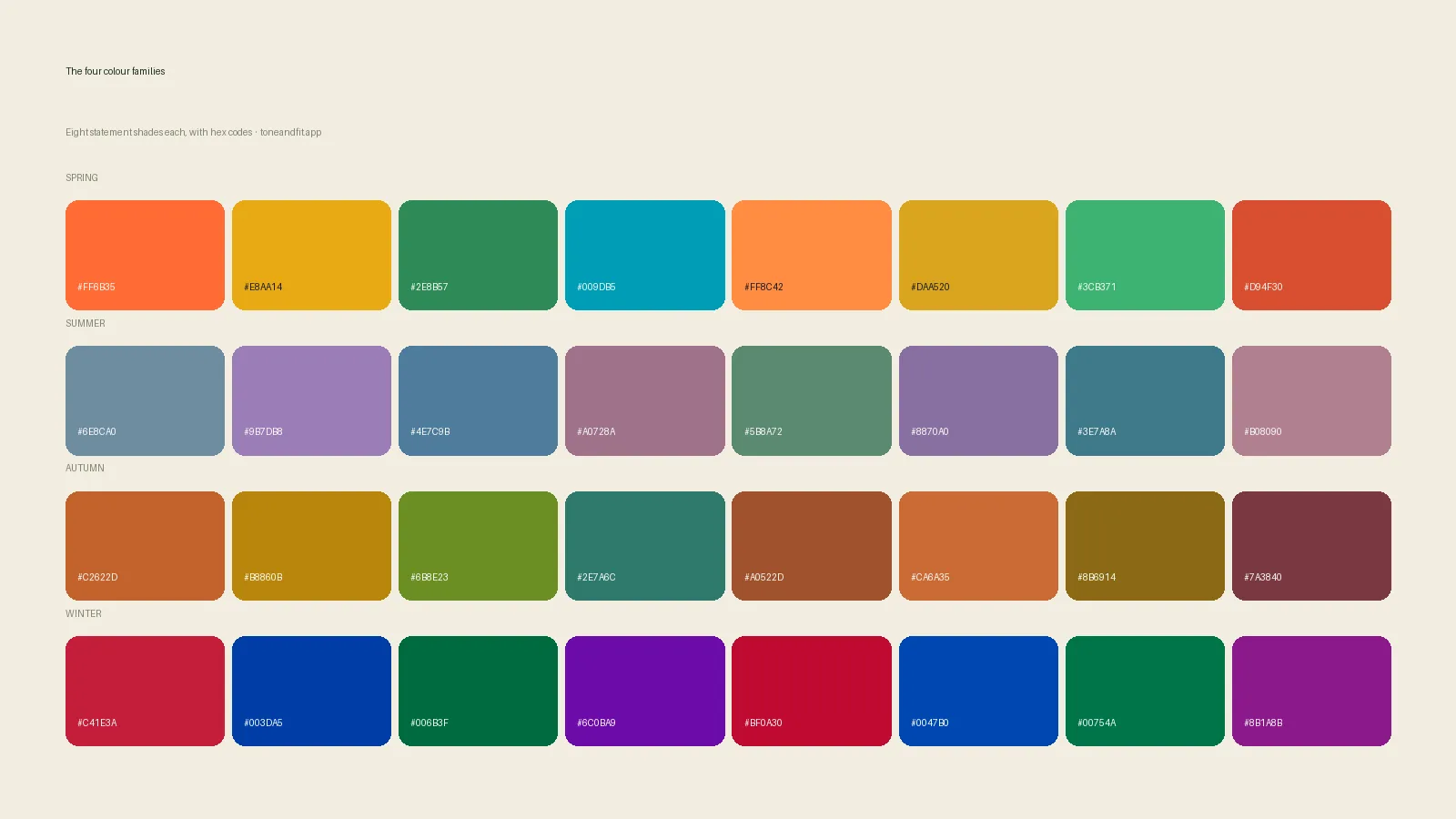
The best colours for blue eyes are the warm ones sitting opposite blue on the colour wheel: rust, copper, terracotta, bronze, amber and warm camel. The worst is the blue that matches your iris exactly, which is also the one most people reach for.
The short version: blue eyes brighten through contrast, not through matching. Warm oranges and coppers create the maximum contrast and make the blue read as vivid. Deep blues at a different value from your iris create a quieter version of the same effect. But eye colour is the tiebreaker, not the starting point, because your face takes up far more of the picture than your irises do. Get the shade right for your skin first, then pick the version of it that flatters your eyes.
What's in this guide
- The quick list, by what you want
- Why opposites brighten and matches flatten
- Which blue are your eyes, actually?
- Best colours for each type of blue eye
- Why your undertone outranks your eye colour
- Best colours for blue eyes by colour season
- Makeup: eyeshadow, liner and lipstick
- Colours to be careful with
- FAQ
The quick list, by what you want
Different occasions need different amounts of drama. Here is the shortlist sorted by effect rather than by season.
| What you want | Wear | Why it works |
|---|---|---|
| Maximum pop | Rust, copper, terracotta | Direct opposite of blue, the strongest available contrast |
| Everyday and wearable | Camel, warm taupe, bronze | Softer warm neutrals with the same orange bias |
| Quiet intensity | Navy, deep teal, pine | Blue at a different value from your iris, so the eye still separates |
| Soft and romantic | Lilac, dusty rose, sage | Near-neighbours of blue that flatter without shouting |
| Formal and sharp | Wine, charcoal, ivory | Neutral grounds that let the eye do the work |
Those hex values are starting points for shopping and mood boards, not prescriptions. The shade that suits you inside each family depends on your skin, which is what the rest of this guide sorts out. If you want the version of this tailored to your own colouring rather than to your eyes, start with our guide to what colours look good on me, the parent guide this article sits under.
Why opposites brighten and matches flatten
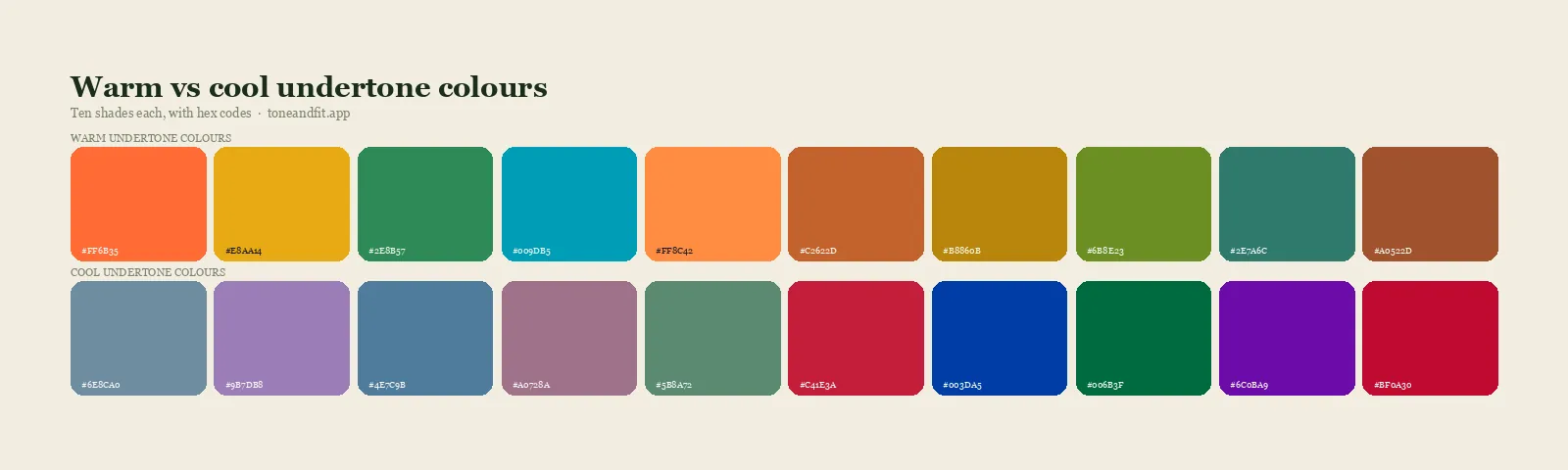
Blue and orange sit opposite each other on the colour wheel. Put them side by side and each one makes the other look more intense. This is the same effect that makes a single orange lifeboat so visible against the sea, and it is the entire mechanism behind every "colours that make blue eyes pop" list you have ever read.
The reverse is also true and less often mentioned. Put two similar blues next to each other and they stop separating. When someone with pale blue eyes wears a pale blue shirt, the eye and the shirt merge into one blue area in the viewer's perception, and the iris stops being a feature. It is not that the shirt looks bad. It is that the eyes disappear into it.
This gives you two usable strategies:
- Opposition. Wear a warm orange-family shade near your face. Strong effect, obvious, works in photographs.
- Separation. Wear a blue that is clearly darker, lighter or more saturated than your iris. Subtle effect, more wearable daily, and it keeps the eye reading as blue rather than dissolving.
Both are about the gap between your eye and the fabric. A useful way to think about this is contrast in general, which also governs how much difference you want between your hair, skin and clothes. Working out your contrast level tells you how large that gap should be before it starts looking severe.
Which blue are your eyes, actually?
"Blue eyes" covers a range wide enough that one recommendation cannot serve all of it. Stand at a window in indirect daylight and look closely.
- Ice blue. Very pale, almost translucent, often with a visible darker ring around the iris. High contrast against the pupil.
- Steel or grey-blue. Blue with a grey haze over it. Changes with the weather and with what you wear, which makes people call them "colour-changing".
- True mid blue. Clear cornflower or sky blue, evenly coloured, the classic.
- Deep or navy blue. Dark enough that people sometimes read them as grey or even brown at a distance.
- Blue-green or teal. Blue with a ring or a wash of green, sometimes with gold flecks near the pupil.
The gold flecks matter more than people realise. If your blue eyes have visible gold or amber near the pupil, warm colours will do something extra for you: they light up those flecks and the whole eye reads warmer and more interesting. If your eyes are purely blue with no warm flecking, the warm-versus-cool question is decided entirely by your skin.
Best colours for each type of blue eye
| Eye type | Best colours | Skip or dilute |
|---|---|---|
| Ice blue | Navy, charcoal, icy pink, true red, cool burgundy, black | Pale blue, pale grey, anything as light as the iris |
| Steel or grey-blue | Teal, petrol, plum, dusty rose, soft white | Khaki, mid brown, mushroom greys that pull the eye grey |
| True mid blue | Rust, copper, camel, warm coral, deep teal | Cornflower blue, sky blue, matching denim near the face |
| Deep or navy blue | Cornflower, periwinkle, ivory, warm gold, bright white | Navy next to the face, near-black blues |
| Blue-green or teal | Terracotta, rust, olive, aubergine, bronze | Sea green and turquoise, which mirror the iris exactly |
Notice how the answers invert. Ice blue eyes are brightened by darkness, deep blue eyes by lightness. That is the separation principle at work: you want distance from your iris in whichever direction your iris is not.
Blue-green eyes are the one case where the standard advice needs adjusting. Because the iris already contains green, olive and aubergine work on them in a way they do not on pure blue eyes, and the plums and berries in our green eyes guide are worth borrowing. If your eyes shift between blue and green depending on what you wear, you have more range than anyone else on this list, and it is worth reading the companion piece on brown eyes too, since hazel sits between the two.
Why your undertone outranks your eye colour
Here is the part most eye-colour articles leave out. Your irises are small. Your face, neck and chest are not. A colour that flatters your eyes but fights your skin will read as wrong, because the viewer sees the larger area first.
Blue eyes occur on warm and cool complexions alike, which is why "blue eyes should wear X" advice contradicts itself so often. The fix is to sequence the decision correctly:
- Find your undertone. Warm, cool or neutral. Four tests that work are in how to find your skin undertone at home, and the underlying distinction is in warm versus cool undertone.
- Pick the family that suits your skin. That decides whether your rust is a warm brick or a cooler cranberry, and whether your teal leans green or blue.
- Within that family, favour the shades furthest from your iris. This is where eye colour finally gets a vote.
Run in that order, the advice stops contradicting itself. Here is how it lands:
| Your skin | Blue-eye colours that work | The one to lead with |
|---|---|---|
| Warm undertone | Copper, rust, camel, warm coral, moss, golden ivory | Copper |
| Cool undertone | Navy, cool plum, raspberry, icy blue, charcoal, pure white | Navy |
| Neutral undertone | Teal, soft coral, wine, taupe, soft white | Teal |
Cool-toned readers sometimes object that navy is "matching" and should therefore be off-limits. It is not, as long as the navy is far darker than your iris. The problem is only ever proximity in value, and navy against a pale blue eye is about as far apart as two blues can get. If you are fair as well as cool, best colours for pale skin has the shade-by-shade version of this.
Your eyes are one input. Get all of them.
Tone & Fit reads undertone, value and chroma from one selfie and returns your season with its palette.
Try Tone & Fit free ↗Best colours for blue eyes by colour season
Season is the version of this that actually tells you what to buy, because it folds undertone, depth and brightness into one answer. If the twelve-season system is new to you, seasonal colour analysis explained is the primer and the 12 colour seasons is the map.
Blue eyes in the Spring family
Warm, light and clear colouring. Blue eyes here are usually a bright cornflower or a warm-leaning turquoise, often with gold flecks. Your best contrast shades are warm coral, peach, warm turquoise, golden camel and a clear warm red. Avoid heavy dark neutrals, which overpower a Spring's lightness before the eye colour gets a chance. See Light Spring and Warm Spring for the full sets.
Blue eyes in the Summer family
Cool, soft and light. This is the most common home for grey-blue and soft steel eyes. Your shades are dusty rose, soft periwinkle, mauve, cool teal and powder blue used carefully at a distance from the iris. Warm rust will look harsh on you, so take the opposition strategy down to a muted coral instead. Light Summer and Cool Summer cover the range.
Blue eyes in the Autumn family
Warm, deep and muted. Blue eyes are less common here but they do happen, usually a deep teal or a green-flecked blue. You get the best of both strategies: rust, terracotta, bronze and moss are simultaneously your season's colours and blue's opposites. This is the easiest combination on the list.
Blue eyes in the Winter family
Cool, deep and bright. Ice-blue eyes with dark hair are the classic Winter signature, and the high contrast is the point. Wear true red, pure white, black, navy, emerald and icy pastels. This is the one family where black near the face is an asset rather than a risk. True Winter and Cool Winter will narrow it further, and every full list lives on the season palette pages.
Makeup: eyeshadow, liner and lipstick
The contrast principle applies more strongly here than anywhere else, because the colour is sitting directly against the iris.
Eyeshadow
- Strongest effect: warm browns, bronze, copper, peach, terracotta. These are blue's opposites applied at point blank range.
- Everyday: taupe, soft mushroom, warm beige. Enough warmth to create separation without looking like a statement.
- Unexpectedly good: soft plum and mauve. Purple is adjacent to blue but warm enough at the red end to still push the iris forward.
- The classic error: blue eyeshadow matched to blue eyes. It cancels the contrast and the eye flattens. If you want blue on the lid, go far darker or far brighter than your iris and keep it off the lash line.
Which of those you wear depends on your season as much as your eye colour, and eyeshadow by colour season maps the shades onto all twelve.
Liner and lashes
Warm brown liner is gentler than black and gives blue eyes more lift than most people expect, especially on lighter colouring. Navy liner is the reliable dramatic option: it reads as darkness from a distance, then makes the iris look bluer up close. Bronze liner smudged along the upper lash line is the highest-impact small change available to blue eyes.
Lipstick
Lipstick does not interact with your eyes much, but it does set the temperature of your whole face, so keep it in the same family as everything else. Warm blue-eyed people suit coral, brick and warm rose. Cool blue-eyed people suit berry, true red and cool pink. The full breakdown is in best lipstick colours for your undertone.
Glasses
If you wear glasses, the frame sits closer to your eye than anything else you own and it will affect the colour more than your shirt does. Tortoiseshell and warm bronze frames brighten blue eyes for the same reason copper does. Cool grey and black frames sharpen them instead. Our guide to picking glasses for your undertone has the frame-by-frame version.
Colours to be careful with
Very little is off-limits. These are the four that reliably underperform.
- Your exact iris blue, near your face. The most common mistake and the easiest to fix. Move it to your lower half, or change the value.
- Muddy mid-brown and khaki, if your eyes are pale. They pull grey-blue eyes toward grey, which is the opposite of what you want. Swap to a warmer tan or a clearer olive.
- Washed-out pastels on pale blue eyes. When the shirt, the skin and the iris are all in the same light value range, the face loses definition entirely.
- Anything your skin rejects. The eye-colour rule never outranks the skin rule. The colours that wash you out are decided at the face, not at the iris.
One last reframe. "Making your eyes pop" is a narrower goal than looking well put together, and chasing it with a colour that fights your complexion is a bad trade. Coherence across your whole face beats one very bright feature. The complete method, in the order that matters, is in our personal colour analysis guide, and if you want to work it out from a photo rather than from a mirror, find my colour season walks through it.
Find the version of rust, navy or teal that is yours
One selfie, your 12-season result, and the exact shades that go with it. Free, no sign-up.
Find your season free ↗FAQ
What colours make blue eyes pop the most?
Warm oranges and coppers make blue eyes pop hardest, because orange sits opposite blue on the colour wheel and the contrast pushes the blue forward. Rust, terracotta, copper, bronze, amber and warm camel all work on this principle. Deep blues in a different shade from your iris also work, as does anything with a warm gold cast near the eye, including gold jewellery and warm-toned eyeliner.
Should people with blue eyes wear blue?
Yes, but not the same blue as your eyes. A top that matches your iris exactly cancels the contrast and flattens the eye. Go two or three steps away instead: if your eyes are pale ice blue, wear navy or teal, and if your eyes are deep navy, wear a lighter cornflower or a soft periwinkle. The gap between the two blues is what makes the eye read as blue rather than as part of the outfit.
Does eye colour or skin undertone matter more for picking clothes?
Skin undertone matters more. Your face occupies far more of the frame than your irises do, so a colour that clashes with your skin will look wrong even if it flatters your eyes. The practical order is to pick shades that suit your undertone first, then choose the version of those shades that has the most contrast with your eye colour. Eye colour is a tiebreaker, not the starting point.
What eyeshadow colour is best for blue eyes?
Warm browns, bronze, copper, peach and terracotta give the strongest contrast, and taupe or soft plum give a quieter version of the same effect. Matching blue eyeshadow to blue eyes is the most common mistake, because it removes the contrast that made the eye stand out. If you want to wear blue on the lid, pick a blue clearly darker or brighter than your iris and keep it away from the lash line.
Do blue eyes suit warm or cool colours?
Blue eyes appear on warm and cool complexions alike, so there is no single answer. Your skin undertone decides the temperature of your wardrobe, and your eyes decide which shades within that temperature get emphasised. A warm-toned person with blue eyes leans into copper and warm teal, and a cool-toned person with blue eyes leans into navy, cool plum and icy blues.
What colours should you avoid with blue eyes?
Avoid a blue that matches your iris exactly, since it cancels the contrast. Avoid muddy mid-browns and khaki if your eyes are pale, because they pull the eye toward grey. Beyond that, the colours to avoid are decided by your skin rather than your eyes, so check what washes you out at the face before you worry about the eyes.