Best Colors for Hazel Eyes: Bring Out Green or Gold
The best colors for hazel eyes depend on which half of your eye you want to show off. Plum, purple and burgundy pull the green forward. Copper, olive, warm brown and gold pull the amber forward. Cream, warm white and deep teal sit in between and keep both.
The short version: hazel is the only common eye color that changes on request. Because the iris holds green, gold and brown at once, whatever you wear near your face decides which one wins. That is a genuine advantage, and it also explains why hazel-eyed people get such contradictory advice. Someone tells you to wear purple, someone else tells you to wear earth tones, and both are right. The order that stops the contradiction is: find your undertone first, choose the family of colors that suits your skin, then use your eyes as the tiebreaker inside that family. Our guide to what colors look good on me is the parent method this post builds on.
What's in this guide
The quick list, by the effect you want
Start with what you want your eyes to do today, because that is the real decision with hazel. Here are the shortlists sorted by effect.
| What you want | Wear | Why it works |
|---|---|---|
| Make the green show | Plum, aubergine, burgundy | Red-violet sits opposite green and makes it look more saturated |
| Make the gold show | Copper, rust, warm bronze | Warm neighbors of the amber ring light it up |
| Make the eyes look brown and rich | Chocolate, camel, honey | Browns near the face echo the brown near the pupil |
| Keep both without choosing | Cream, deep teal, olive | Neutral or in-between shades that do not push the eye either way |
| Soft and romantic | Dusty rose, lilac, soft peach | Gentle near-opposites of green with no visual weight |
| Formal and sharp | Deep purple, charcoal, navy | Dark, quiet grounds that let the iris carry the color |
Those hex values are shopping starting points, not prescriptions. Which plum or which copper is yours depends on your skin, and the rest of this guide sorts that out.
Why hazel eyes change with what you wear
Hazel is not one color. It is a mix of green and brown pigment layered in the iris, usually with a gold or amber ring around the pupil and a greener or browner outer edge. Under different light and next to different fabrics, your brain weights those components differently, which is why hazel eyes get described as "changing color".
Two things drive the shift. The first is contrast: a color opposite one of your iris tones makes that tone look stronger. Red-violet opposes green, and blue-violet opposes yellow-gold, so purples emphasize both, depending on the shade. The second is echo: a color close to one of your iris tones pulls the whole eye toward that tone. A brown sweater makes hazel eyes look browner. A moss jacket makes them look greener.
Once you know those two levers, you can pick the effect on purpose. A photo day might call for plum to bring the green up. An autumn afternoon might call for a rust scarf that warms everything toward gold. Neither is the "correct" answer. What matters is that the choice belongs to you, which is more than most eye colors can say.
Which kind of hazel are your eyes?
Stand by a window in indirect daylight, hold a mirror close, and look for the dominant tone. Most hazel eyes fall into one of four patterns.
- Green-dominant hazel. Green across most of the iris with a small brown or gold burst near the pupil. Reads as green in most light.
- Gold-dominant hazel. Amber or honey across most of the iris with green only at the outer edge. Reads as light brown or golden.
- Brown-dominant hazel. Mostly brown with flecks or a faint green rim. Often called brown until it catches the sun.
- Ringed hazel. A clear central ring of gold or brown and a clearly different green or grey outer ring. The most dramatic pattern and the one that shifts most with clothing.
Green-dominant hazel behaves closest to green eyes, and our post on the best colors for green eyes covers that end in more depth. Brown-dominant hazel behaves closest to brown eyes, and the best colors for brown eyes covers that end. Gold-dominant and ringed hazel are the ones this guide is mostly about, because neither of those companion pieces fully fits them.
Bringing out green versus bringing out gold
Here is the practical table. Pick the column that matches the effect you want and read across.
| Your hazel type | To bring out green | To bring out gold |
|---|---|---|
| Green-dominant | Plum, wine, burgundy, deep purple | Bronze, rust, warm olive |
| Gold-dominant | Aubergine, mauve, deep berry (use sparingly) | Copper, terracotta, mustard, camel, honey |
| Brown-dominant | Forest, deep teal, plum | Chocolate, cinnamon, warm gold |
| Ringed | Purple, raspberry, burgundy | Copper, bronze, rust, olive |
A useful rule is to wear the pushing color close to the face and let the echoing color live lower down. A plum top with a copper necklace, or a rust jacket with a plum scarf, gives you both effects and lets the eye choose between them. This layering trick is why hazel-eyed people often do very well with two-tone outfits.
The size of the gap between your eye and the color matters as well. A very dark shade next to a light iris can look severe, and a very pale shade next to a dark iris can wash it out. How much contrast your face can take is worth knowing, and finding your contrast level shows you how to read it.
Why your undertone outranks your eye color
Your irises are small and your skin is not. Whatever you wear is judged against the larger area first, so a color that flatters your eyes but fights your undertone will still look off. Hazel eyes occur on warm, cool and neutral complexions alike, which is why "hazel eyes should wear X" advice tends to contradict itself. The fix is a fixed order of decisions:
- Find your undertone. Warm, cool or neutral. Four checks you can run at home are in how to find your skin undertone at home, and the underlying distinction is in warm versus cool undertone.
- Pick the family that suits your skin. That decides whether your plum is a warm aubergine or a cool grape, and whether your brown is chocolate or taupe.
- Inside that family, favor the shades that push your eye the way you like. This is where hazel gets its vote.
| Your skin | Hazel-eye colors that work | The one to lead with |
|---|---|---|
| Warm undertone | Copper, rust, warm olive, aubergine, mustard, cream | Copper |
| Cool undertone | Plum, raspberry, wine, cool taupe, pure white, charcoal | Plum |
| Neutral undertone | Burgundy, mauve, soft teal, camel, soft white | Burgundy |
Some warm-skinned readers assume purple is off the table because it sounds cool. It is not: purple runs from a cool grape all the way to a warm, red-leaning aubergine, and the warm end is one of the best colors a warm-toned hazel-eyed person can own. If you are also very fair, best colors for pale skin has the shade-by-shade version. If your skin is olive, which pairs with hazel more often than any other coloring, best colors for olive skin is the one to read next.
Your eyes are one input. Get all of them.
Tone & Fit reads undertone, depth and chroma from one selfie and returns your season with its palette.
Try Tone & Fit free ↗Best colors for hazel eyes by color season
Season is the version of this that tells you what to buy, because it folds undertone, depth and brightness into a single answer. If the system is new to you, seasonal color analysis explained is the primer and the 12 color seasons is the map. Not sure of your season yet? Find my color season walks through it.
Hazel eyes in the Spring family
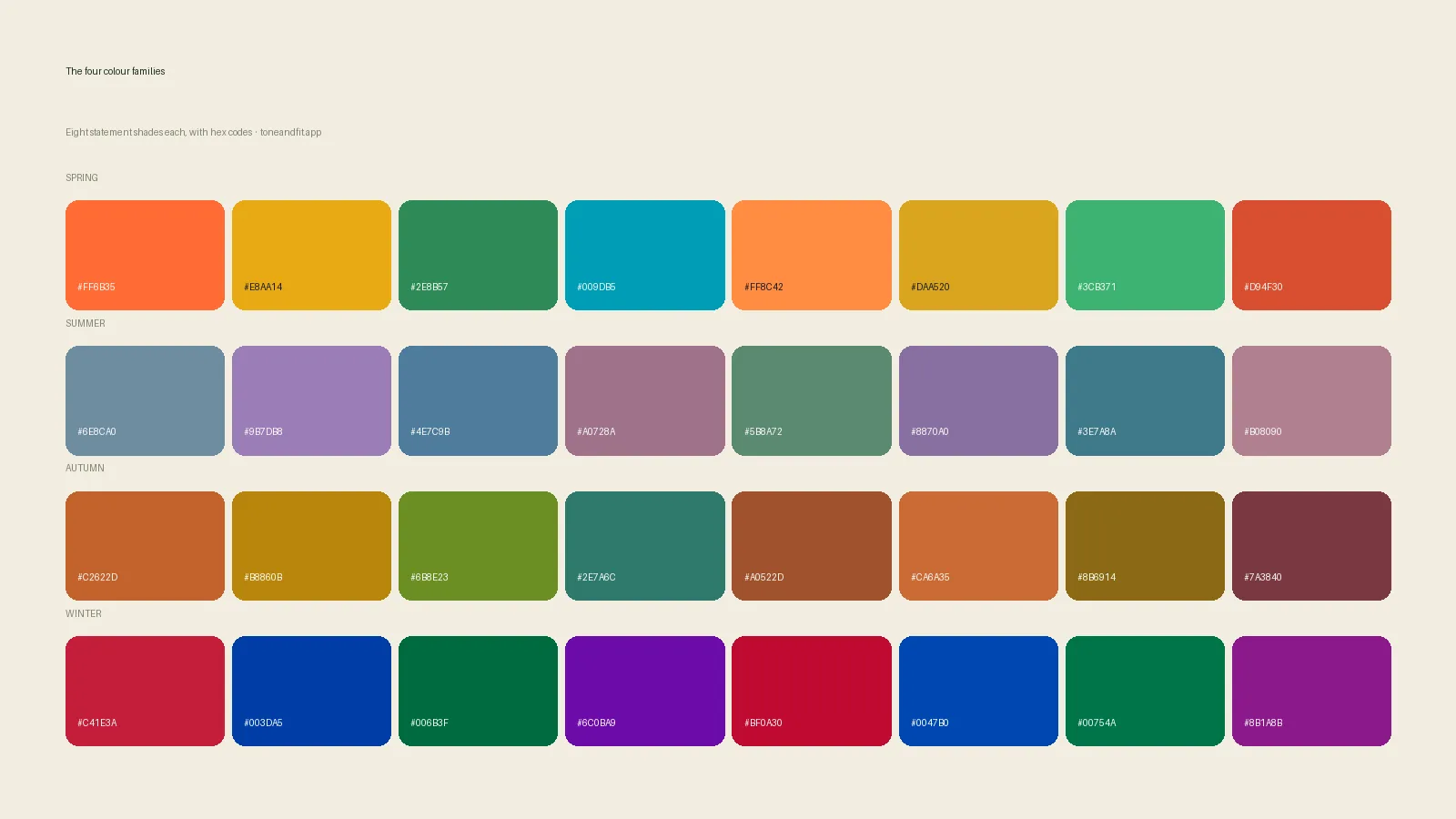
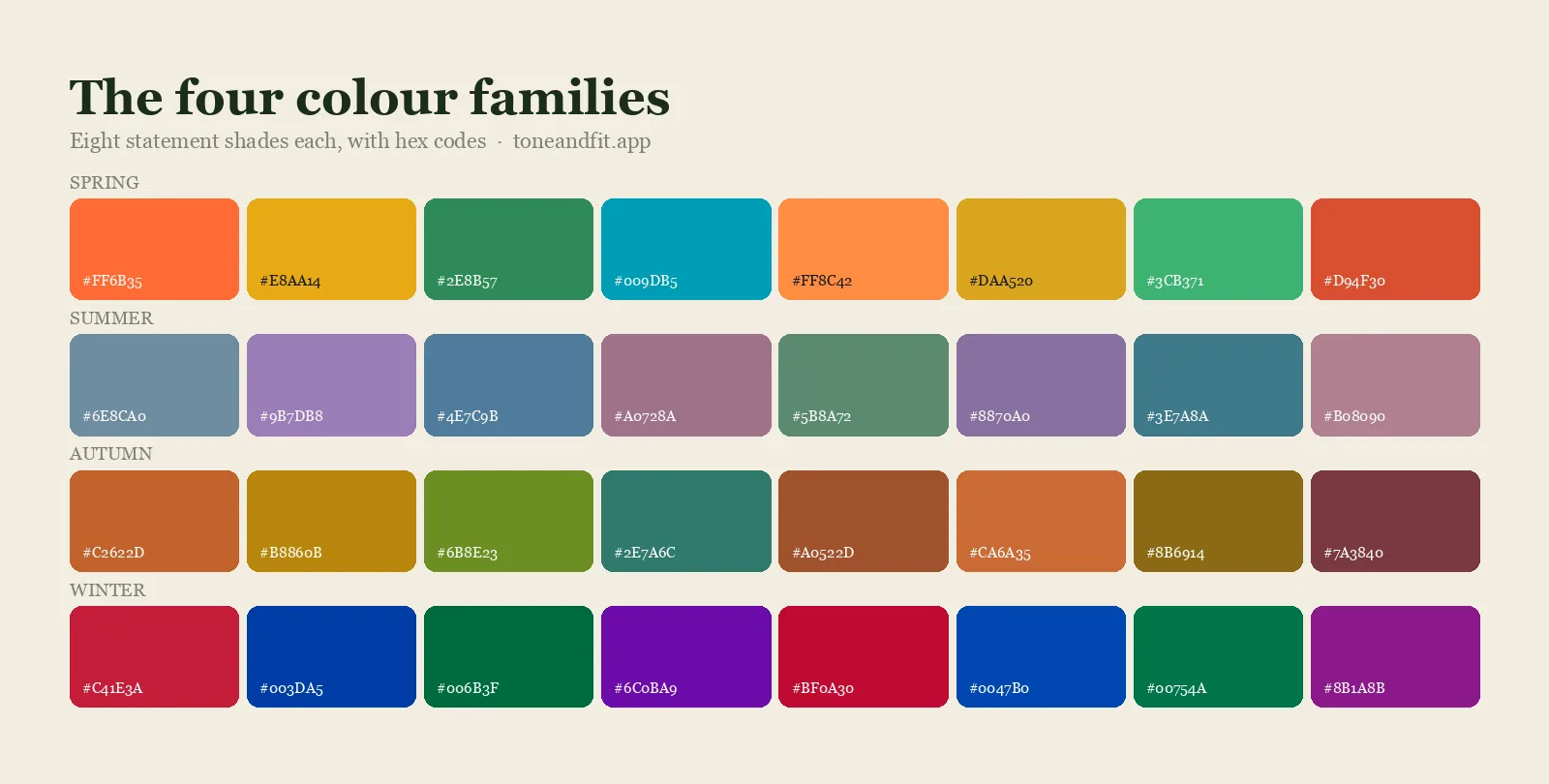
Warm, light and clear. Hazel eyes here tend to be bright and gold-forward. Your best shades are coral, warm peach, golden camel, clear warm green and a warm violet for the times you want the green to show. Avoid heavy dark neutrals that swallow the light in the eye. See Light Spring and Warm Spring for the full sets.
Hazel eyes in the Summer family
Cool, soft and light. Hazel here is usually the green-grey kind, gentle rather than golden. Rose, mauve, lavender, soft plum and a muted teal give the best result. Bright copper and orange rust are too hot for this coloring, so take the gold effect down to a soft rose-beige instead. Light Summer and Soft Summer cover the range.
Hazel eyes in the Autumn family
Warm, deep and muted. This is the most common home for hazel eyes, and the easiest combination on the list. Rust, terracotta, olive, mustard, bronze and aubergine work as your season's colors and as tools for steering the eye. Warm Autumn and Deep Autumn show the complete palettes.
Hazel eyes in the Winter family
Cool, deep and bright. Hazel eyes on a Winter are usually ringed and high contrast against dark hair. Wear true red, magenta, royal purple, pure white, black and icy pink, and let plum do the work of pulling green forward. Cool Winter and Deep Winter narrow it further, and every full list is on the season palette pages.
Makeup, glasses and hair
Eyeshadow and liner
- To show green: plum, aubergine, burgundy and mauve shadows. Plum liner is the highest-impact small change for green-dominant hazel.
- To show gold: copper, bronze, rose gold and warm brown. The best pick for gold-dominant and ringed hazel.
- Everyday: taupe and soft brown for enough separation without a statement.
- Watch out for: a mid brown shadow that matches the brown ring exactly. It removes the contrast and the eye flattens.
The shades that flatter you depend on your season as much as your eyes, and eyeshadow by color season maps them across all twelve. For lips, keep the temperature matched to your skin, and use the best lipstick colors for your undertone as the guide.
Glasses
Frames sit closer to your eyes than anything else you wear. Tortoiseshell and warm bronze frames echo the gold ring, while plum and burgundy frames pull the green out. Our guide to picking glasses for your undertone covers the frame-by-frame options.
Hair
Hair color also changes how hazel eyes read. Warm brown and copper tones echo the gold, and deep espresso or cool dark brown gives the green more room. If you are considering a change, the best hair color for your skin tone starts from your undertone rather than your eyes, which is the safer order.
Colors to be careful with
Very little is off-limits for hazel. These are the ones that reliably underperform.
- A flat mid brown that matches your ring exactly. It swallows the eye. Go warmer or darker.
- Muddy khaki and greige near the face. They mute the green and the gold together.
- A bright green that matches the green in your iris. The two merge and the eye stops standing out.
- Anything your skin rejects. The eye rule never outranks the skin rule. The colors that wash you out are decided at the face, not at the iris.
One last reframe: "making your eyes pop" is a narrower goal than looking well put together. Coherence across your whole face beats one bright feature. The complete method, in the order that matters, is in our personal color analysis guide, and if you would rather work it out from a photo than a mirror, the color analysis app guide explains how that works.
Find the plum, copper or olive that is yours
One selfie, your 12-season result, and the exact shades that go with it. Free to try, no sign-up.
Find your season free ↗FAQ
What colors make hazel eyes pop?
It depends on which tone you want to show. Plum, purple, burgundy and wine bring out the green in hazel eyes because red-violet sits opposite green on the color wheel. Copper, rust, bronze, olive and warm brown bring out the gold and amber. Cream and deep teal keep both without pushing either way. Check that the shade suits your undertone before anything else, since your skin covers a far bigger area than your irises.
Are hazel eyes warm or cool?
Hazel eyes appear on warm, cool and neutral complexions alike, so the eye color does not decide the question by itself. Hazel with a strong gold or amber ring tends to sit with warmer coloring, and hazel with a grey or green edge tends to sit with cooler coloring, but there are many exceptions. Your skin undertone decides whether your wardrobe leans warm or cool, and your eyes decide which shades inside that range to favor.
What colors should hazel eyes avoid?
Avoid a flat mid brown that matches the brown ring exactly, muddy khaki and greige that dull both the green and the gold, and a bright green that copies the green in your iris. Beyond those, the colors that suit you badly are set by your skin rather than your eyes, so a shade that flatters your irises but fights your undertone will still look wrong.
What eyeshadow is best for hazel eyes?
Plum, aubergine, mauve and burgundy bring out the green, and copper, bronze, rose gold and warm brown bring out the gold. Taupe and soft brown work for everyday use. Plum liner is a strong small change if your eyes lean green. Avoid a brown shadow that matches your ring exactly, because it removes the contrast that makes the eye stand out.
Do hazel eyes change color?
Hazel eyes look as if they change color because the iris contains green, gold and brown together, and lighting and nearby colors change which one your brain notices. The pigment itself does not change. Wearing purple or plum tends to make hazel look greener, while wearing brown, copper or olive tends to make it look more golden or brown.
Should I wear green if I have hazel eyes?
Yes, with care. A green that is clearly darker, lighter or muddier than the green in your iris works well, such as forest, deep olive or moss. A green that matches the green in your eye can merge with it and flatten the eye. Olive is often a safe choice because it echoes both the green and the brown in a hazel iris.
What is the difference between hazel and green eyes for choosing colors?
Green eyes usually have a single dominant tone, so the advice is to contrast against it. Hazel has two or three tones, so you can choose which one to emphasize. Green-dominant hazel behaves like green eyes, brown-dominant hazel behaves like brown eyes, and gold-dominant or ringed hazel gets the widest range of choices.