How to Find Your Undertone With Acne: A Step-by-Step Guide
To find your undertone with acne, skip the blemished areas and test calm skin in daylight: use the inner arm, the neck below the jaw and the chest, then run the jewelry, white-versus-cream, vein and sun-reaction checks together. Acne, post-acne marks and redness change how skin looks on the surface, but they do not change the underlying warm, cool or neutral undertone.
The short version: acne adds red, pink or brown marks on top of your skin, and those marks are what fool undertone tests. If you test on a breakout or a healing spot, red looks like cool and brown looks like warm, and you end up with the wrong answer. The fix is to read the skin that acne leaves alone and to use signals that do not depend on your face at all. This guide walks through that process step by step, and it sits under our skin tone analyzer guide, which explains the wider method.
Nothing here is medical advice. It is a color guide only, and if your skin concerns you, a dermatologist or pharmacist is the right person to ask.
What's in this guide
- Why acne throws off undertone tests
- Step 1: Pick the right day and the right skin
- Step 2: Choose test sites away from breakouts
- Step 3: Set up daylight and a neutral background
- Step 4: Run four tests that work around acne
- Step 5: Use cues that acne cannot change
- Step 6: Read the marks acne leaves behind
- Step 7: Read your results together
- Step 8: Check with a selfie tool, carefully
- Common mistakes with acne-prone skin
- Choosing colors once you know
- Makeup that works with acne-prone skin
- FAQ
Why acne throws off undertone tests
Undertone is the stable, underlying temperature of your skin: warm (golden, peachy), cool (pink, rosy, blue-leaning) or neutral (a mix). It is separate from surface color, which changes with sun, blushing, products and breakouts. Our guide to undertone versus overtone explains the difference in detail.
Acne interferes in three ways. First, active spots are red or pink, which pushes any nearby skin toward a cool look. Second, healed spots often leave flat marks that are pink, red or brown, which can read as warm or cool depending on the mark. Third, skin that is inflamed or irritated tends to look uniformly pinker than your baseline. Every one of these lives on the surface, so the way to the answer is to test skin and signals that are not affected.
The good news is that acne rarely covers all of your skin. The inner arm, the upper chest and the area below the jaw are usually calm, and they carry the same undertone as your face. The universal method in our guide to finding your skin undertone at home still works, with a few changes that this article spells out.
Step 1: Pick the right day and the right skin
Test when your skin is at its calmest. If you have just had a flare, wait a few days. Do not test straight after cleansing with something that leaves the skin flushed, after a hot shower, after exercise, or right after a facial or exfoliation, because all of these add temporary pinkness that has nothing to do with undertone.
Remove makeup first. Foundation and concealer, even when they match well, sit on top of the skin and change what a test shows. If you must wear something, a thin layer of plain moisturizer is fine. Avoid tinted products and anything shimmery.
Step 2: Choose test sites away from breakouts
Instead of testing the cheek or chin, use body areas that acne rarely touches and that see less sun than your face.
- Inner forearm: the best single site. It is thin, usually even in color and protected from most sun.
- Neck below the jawline: close to the face, though note that some people breakout here, so skip any active area.
- Upper chest: works well if you do not tan the area heavily.
- Inner upper arm: the least sun-exposed spot, and a good check if your forearm is tanned.
If you also tan, our guide to finding your undertone with a tan shows how to separate sun color from undertone. If you want to compare the process with another surface-color issue, see how it works with redness or with freckles.
Let the app read the whole picture
Tone & Fit looks at skin, hair and eyes together and returns your season and a full palette from one selfie.
Try Tone & Fit free ↗Step 3: Set up daylight and a neutral background
Light is the biggest source of error after the acne itself. Stand near a window in natural daylight, ideally in the morning or late afternoon on a bright day, with the light falling on you rather than behind you. Avoid warm lamps, colored bulbs and bathroom lighting, which all tint skin.
Use a neutral background such as a white wall, and take off colored clothing near the area you are testing. A bright pink or green top will bounce color onto the skin and nudge the result. For more on why light matters, see our explainer on how color season changes in different lighting.
Step 4: Run four tests that work around acne
Test 1: The white versus cream paper test
Hold a pure white sheet of paper and then a cream sheet next to your bare inner forearm or neck. Look at which one makes the skin look clearer, brighter and healthier. If white looks better, you lean cool. If cream looks better, you lean warm. If both are fine, you may be neutral. Run this on calm skin only, never on an active spot.
Test 2: The jewelry test
Hold a silver piece and a gold piece against the inner arm or neck. Silver tends to look clean and sharp on cool undertones, gold looks rich and glowing on warm undertones, and both can work on neutral. The method is explained step by step in our gold or silver jewelry guide.
Test 3: The vein check
Look at the veins on the inside of your wrist in daylight. Blue or purple veins suggest a cool undertone, green veins suggest warm, and a mix of both suggests neutral. This test never touches your face, which is why it is useful for acne-prone skin, but it is also the least reliable, so treat it as a tie-breaker. See what blue or green veins mean for the limits.
Test 4: The sun reaction
Think about how your skin behaves in the sun, without taking any risks. If you tend to burn or turn pink before tanning, that often points cool. If you tan to gold or bronze easily, that often points warm. Sun reaction is a clue, not a rule, and it is only useful when you remember it accurately.
Write down the result of each test. One test on its own is weak, but three or four pointing the same way is a solid answer.
Step 5: Use cues that acne cannot change
Some of the best evidence has nothing to do with your skin surface. Your hair and eyes are unaffected by breakouts, and they carry undertone information.
- Natural hair color: golden, auburn or warm brown glints lean warm. Ash, blue-black or cool brown tones lean cool. Dyed hair does not count.
- Eye color: amber, golden brown and warm hazel lean warm, while steel blue, grey and cool dark brown lean cool.
- Colors you already love: if you consistently get compliments in a certain family of colors, that is real evidence.
Hair and eyes also help set your depth and contrast, which matter just as much as undertone for the palette that suits you. Our guide to finding your contrast level shows how to read them.
Step 6: Read the marks acne leaves behind
Healed breakouts often leave flat discoloration, and it is useful to know what each type does to a test.
- Pink or red marks: these look cool, so they bias tests toward cool if you include them. Leave them out of the area you compare.
- Brown or dark marks: these can look warm or just darker, and they can muddy the test. If darker patches are the main issue, see how to find your undertone with hyperpigmentation.
- Texture and shadow: raised scars and uneven texture create shadows that can read as dullness. That is a lighting effect, not an undertone, so use a soft, even light and avoid strong side light.
The principle is the same in every case: compare clear skin with clear skin, and ignore the marks. If your whole face is covered, rely on the arm, chest and the non-skin cues in Step 5.
Step 7: Read your results together
Add up what you found, and weigh the stronger tests more heavily.
| What you saw | What it points to |
|---|---|
| White paper flatters, silver flatters, veins look blue or purple | Cool undertone |
| Cream paper flatters, gold flatters, veins look green | Warm undertone |
| Both paper colors and both metals work, veins look mixed | Neutral undertone |
| Green-gold cast, olive-looking skin, results split | Neutral or olive undertone |
If your results split down the middle, you are likely neutral or olive, and that is a genuine answer rather than a failed test. Read the neutral undertone guide and the olive undertone explainer for what to wear. For a quick refresher on the terms, our guide to how to determine skin undertone covers the basics.
Step 8: Check with a selfie tool, carefully
A selfie-based tool can be a useful cross-check, because it reads skin, hair and eyes together instead of relying on a single patch of skin. With acne, take the photo in soft daylight, with no filters, no makeup if possible and no colored light on your face. Compare the result with what your own tests suggested. If they agree, you can be fairly confident. If they disagree, run your tests again on a calmer day.
The Tone & Fit app does this from one selfie and returns a season and a palette. Our find my color season guide explains how to go from undertone to a full season, and the broader color analysis app guide covers what to expect from a photo-based tool. Treat any app result as a starting point to confirm with a mirror, since lighting and photo quality still matter.
Common mistakes with acne-prone skin
- Testing on the blemished cheek. Active spots and healing marks are surface color, not undertone.
- Testing right after a flare or a treatment. Irritated skin is pinker than your baseline, so give it time to settle.
- Judging in bathroom or warm light. The wrong bulb can make any skin look warmer or pinker.
- Judging with foundation or concealer on. Even a perfect match hides what you are trying to read.
- Trusting one test. Veins alone or jewelry alone is not enough. Combine at least three signals.
- Mistaking a mark for a mood. A bad skin day can make you doubt a result that is actually correct. Retest on a good day before you change your palette.
Choosing colors once you know
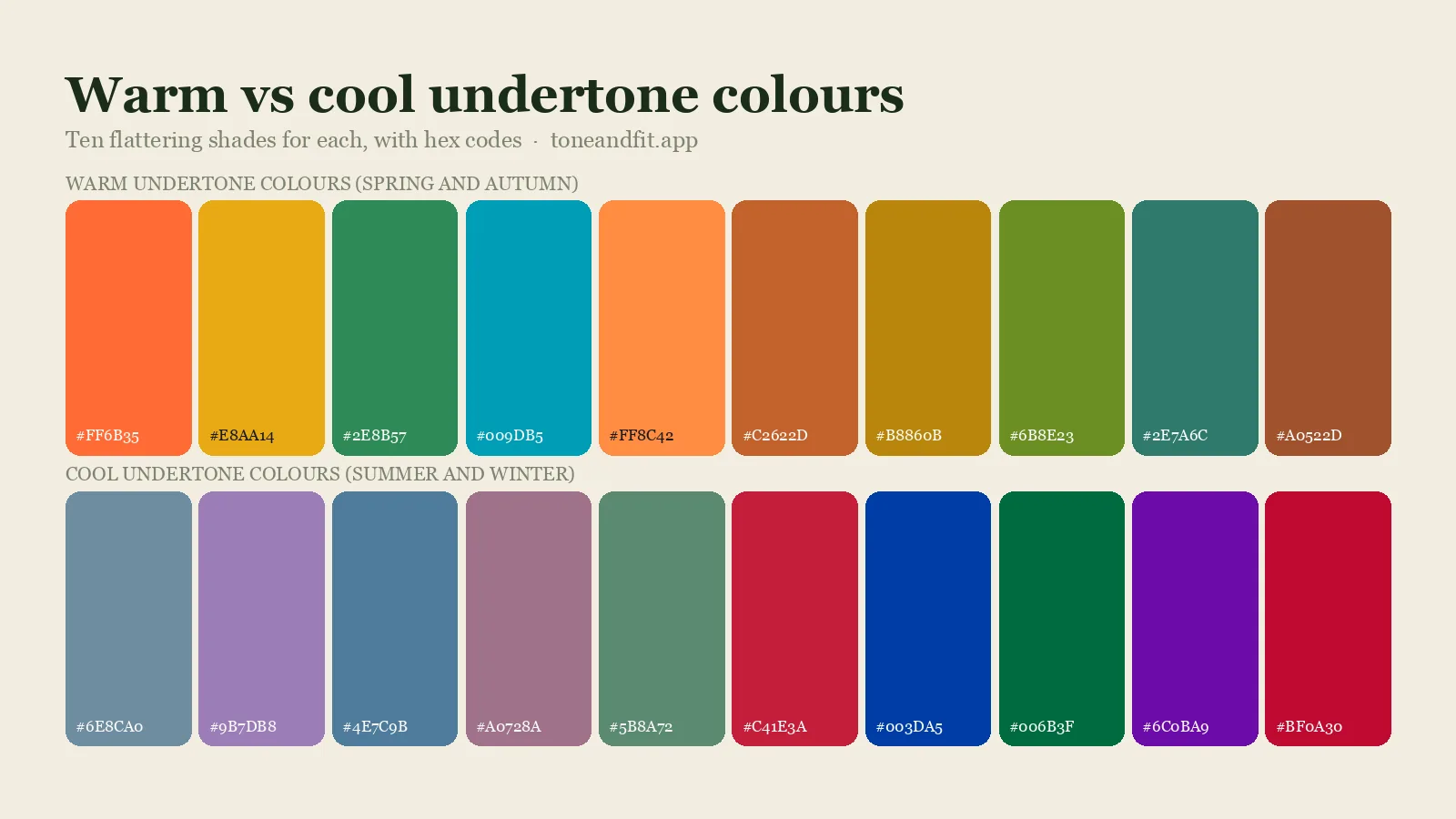
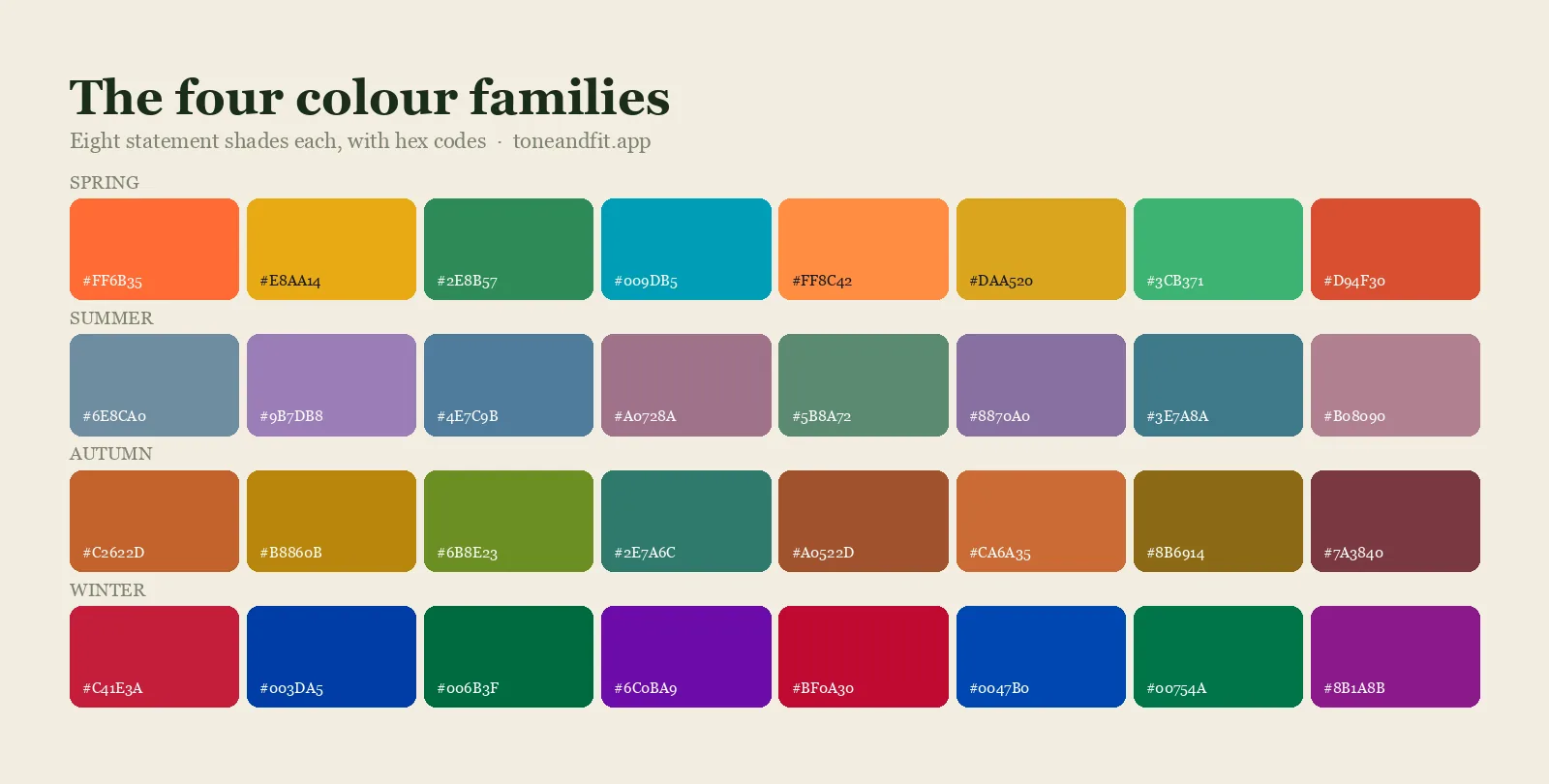
Once you know your undertone, use it to pick colors that make skin look even. Warm undertones usually look best in rust, olive, camel and cream. Cool undertones usually look best in navy, emerald, raspberry and crisp white. Neutral undertones can use jade, burgundy, dusty rose and soft white.
One benefit of the right color is that it can make skin look more even, which is welcome when you are dealing with redness or marks. Colors near the face that match your undertone tend to calm surface variation, while the wrong temperature can emphasize it. A few shades are also worth avoiding when your skin is reactive: bright red or hot pink close to the face can add to a flushed look, so keep very vivid pinks and reds further away or choose softer versions.
For the full method, our guide to what colors look good on me shows how to turn your undertone into a wardrobe. If you want the bigger picture of how this fits into a season, the 12 color seasons overview and the seasonal color analysis explainer are good next reads, and the personal color analysis guide ties it all together.
Makeup that works with acne-prone skin
Undertone also decides which makeup shades look natural. If you wear foundation or concealer, matching undertone matters as much as matching depth, and our guide to how to find your foundation undertone and the best foundation undertone match guide cover the details. Matching the temperature of a concealer to your undertone is what stops it from looking grey or orange.
For color, choose lip and blush shades by undertone using the best lipstick color for your undertone and blush by undertone guides. Keep in mind that any product is a personal choice, and it is worth choosing formulas that suit your skin rather than just your palette.
Skip the guesswork
Get your 12-season result and palette from a single photo. Free to try, no sign-up.
Find your season free ↗FAQ
How do you find your undertone if you have acne?
Test calm skin away from breakouts, such as the inner forearm, the neck below the jaw or the upper chest, in daylight with no makeup. Then combine the white versus cream paper test, the jewelry test, the vein check and your sun reaction. Three or four signals pointing the same way give a reliable answer.
Does acne change your skin undertone?
No. Acne and the marks it leaves change surface color, mostly adding red, pink or brown, but they do not change your underlying warm, cool or neutral undertone. That is why testing on clear skin or non-facial areas gives a truer result.
Can I find my undertone if my whole face is covered in acne?
Yes. Use the inner arm, chest and upper arm instead of the face, and add cues that acne cannot affect, such as your natural hair color, your eye color and the colors that have always flattered you. A selfie tool can also be a cross-check.
Why does my skin look cool when I have breakouts?
Active spots and inflamed skin look red or pink, and red reads as cool. That is a temporary surface effect, so wait for the skin to calm and test an area without breakouts before deciding you are cool-toned.
What do pink or red acne marks mean for undertone?
Pink or red marks are surface discoloration and say little about undertone. They can bias a test toward cool if you include them, so compare only the clear skin around them.
Does a concealer or foundation affect undertone tests?
Yes. Even a well-matched product sits on the skin and changes what a test shows, so remove makeup before testing. Once you know your undertone, use it to choose a foundation and concealer with the same temperature.
What if my undertone tests disagree?
That usually means you are neutral or olive. A mix of results is a genuine answer, and neutral undertones can wear moderate shades that are neither icy nor orange. Retest in daylight on a calm day to confirm.
Can I check my color season from a photo?
Yes. The free Tone & Fit web tool reads your color season from one selfie in about 30 seconds, with no sign-up and no photo stored by us. The Tone & Fit app for iPhone and Android then builds your full palette of 38 named shades.