Best Bridesmaid Dress Colors for Your Skin Tone
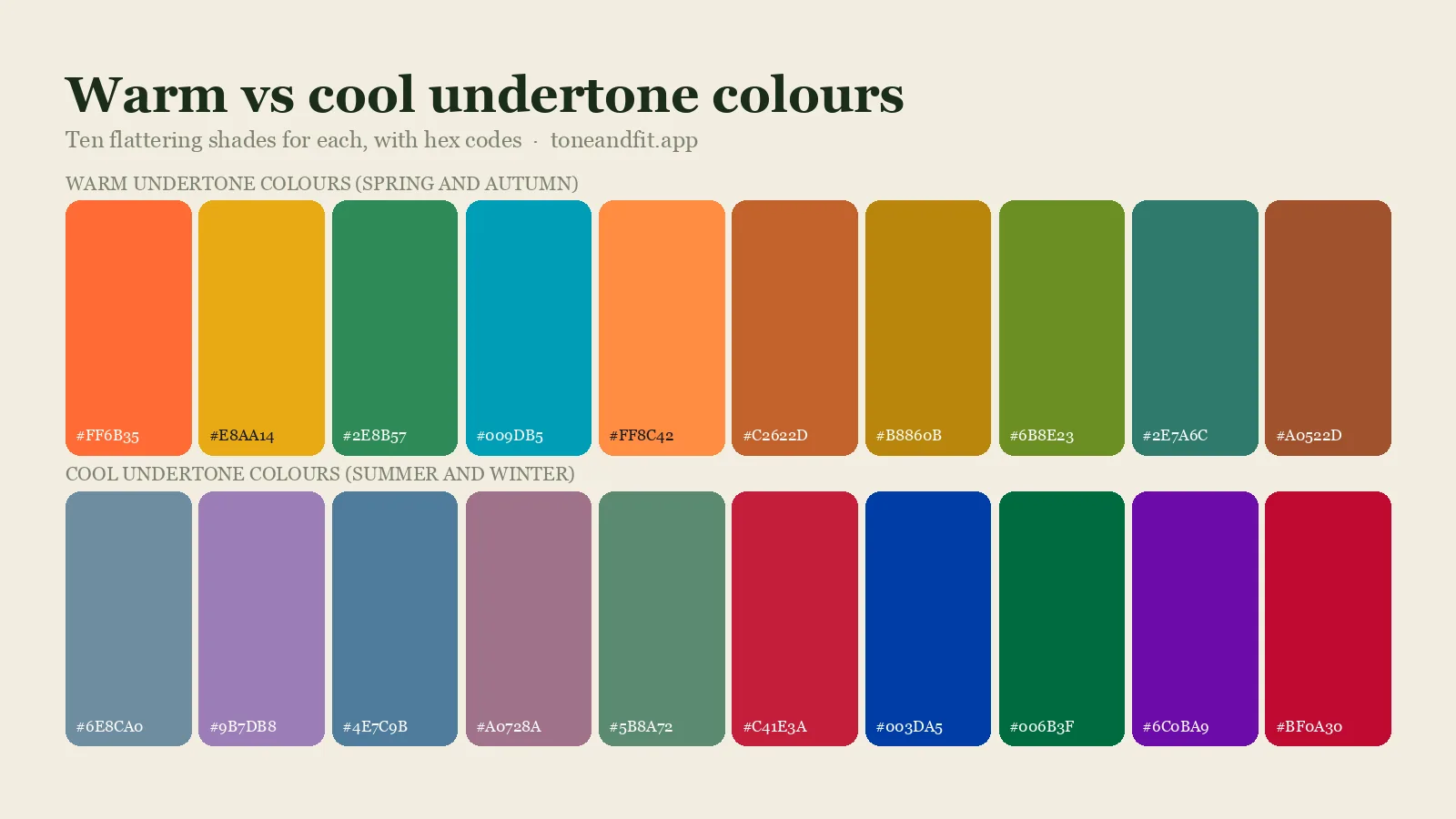
Your bridesmaid dress should make your skin look even, rested and bright, not tired. The deciding factor is undertone: warm skin looks best in golden, earthy shades and cool skin looks best in blue-based, rosy ones.
What's in this guide
The short answer: pick a color family, then match the shade to each person
The best bridesmaid dress color for your skin tone is the one whose temperature agrees with your undertone and whose depth agrees with your coloring. Warm undertones look best in dresses that lean golden, peachy or earthy, such as terracotta, sage, dusty gold and warm burgundy. Cool undertones look best in dresses that lean blue, pink or violet, such as dusty blue, slate, plum and cool rose. Neutral undertones can borrow from both sides and do especially well in soft, muted mid-tones.
That is the answer for one person. The harder question is the one most brides actually have: how do you dress four, six or eight bridesmaids with different skin tones in a single wedding color, without anyone looking washed out in the photos? The fix is not to hunt for a magic shade that flatters everyone, because none exists. The fix is to choose one color family and let each bridesmaid wear the shade of it that suits her. This guide shows you how, using the same seasonal color framework we use across Tone & Fit and covered in our guide to what colors look good on you.
Why one dress color never flatters every bridesmaid
Walk into any bridal shop and you will hear that a certain color "looks good on everyone." Be careful with that sentence. Every color has a temperature (warm or cool), a depth (light or deep) and an intensity (soft or vivid). Your skin has the same three properties. When a dress agrees with those properties, your skin looks even and rested. When it disagrees, the dress pulls attention away from your face, or makes your skin look sallow, flat or red.
A bridesmaid's dress also sits closer to the face than most other clothes. A neckline of a strong color works like a reflector in a photo studio: it bounces its hue onto the chin and cheeks. That is why a dress that looks lovely on the hanger can look wrong in the fitting room. If you have never mapped your own coloring, the system behind this is explained in seasonal color analysis explained, and the full list of twelve types is in the 12 color seasons and how to tell which one you are.
The good news for a bridal party is that a single color name usually has many shades. "Blue" covers icy periwinkle, dusty blue, navy and teal. "Green" covers sage, olive, emerald and forest. Once you accept that the color name is the theme and the shade is a personal choice, the problem becomes easy to solve.
Step 1: Find each bridesmaid's undertone
Undertone is the quiet hue under the surface of your skin, and it does not change with a tan or a blush. It decides whether warm or cool colors flatter you, and it matters far more than how light or deep your skin is. If you are not sure what yours is, run through four simple at-home undertone tests before you shop. A quick version for the group chat:
- Warm: gold jewelry looks better than silver, skin has a yellow, peach or golden cast, and veins look greenish in daylight.
- Cool: silver looks better than gold, skin has a pink, rosy or bluish cast, and veins look blue or purple.
- Neutral: both metals work and the veins look like a mix. Olive skin often lands here or leans warm or cool depending on the person, which is covered in best colors for olive skin.
The fastest way to remove the guesswork is to have everyone upload a daylight selfie to the free photo color analysis tool, which returns an undertone and a season for each person. Send the group a screenshot of your results with the wedding palette and ask them to compare. It turns an awkward debate into a two minute task.
Step 2: Best bridesmaid dress colors by color season
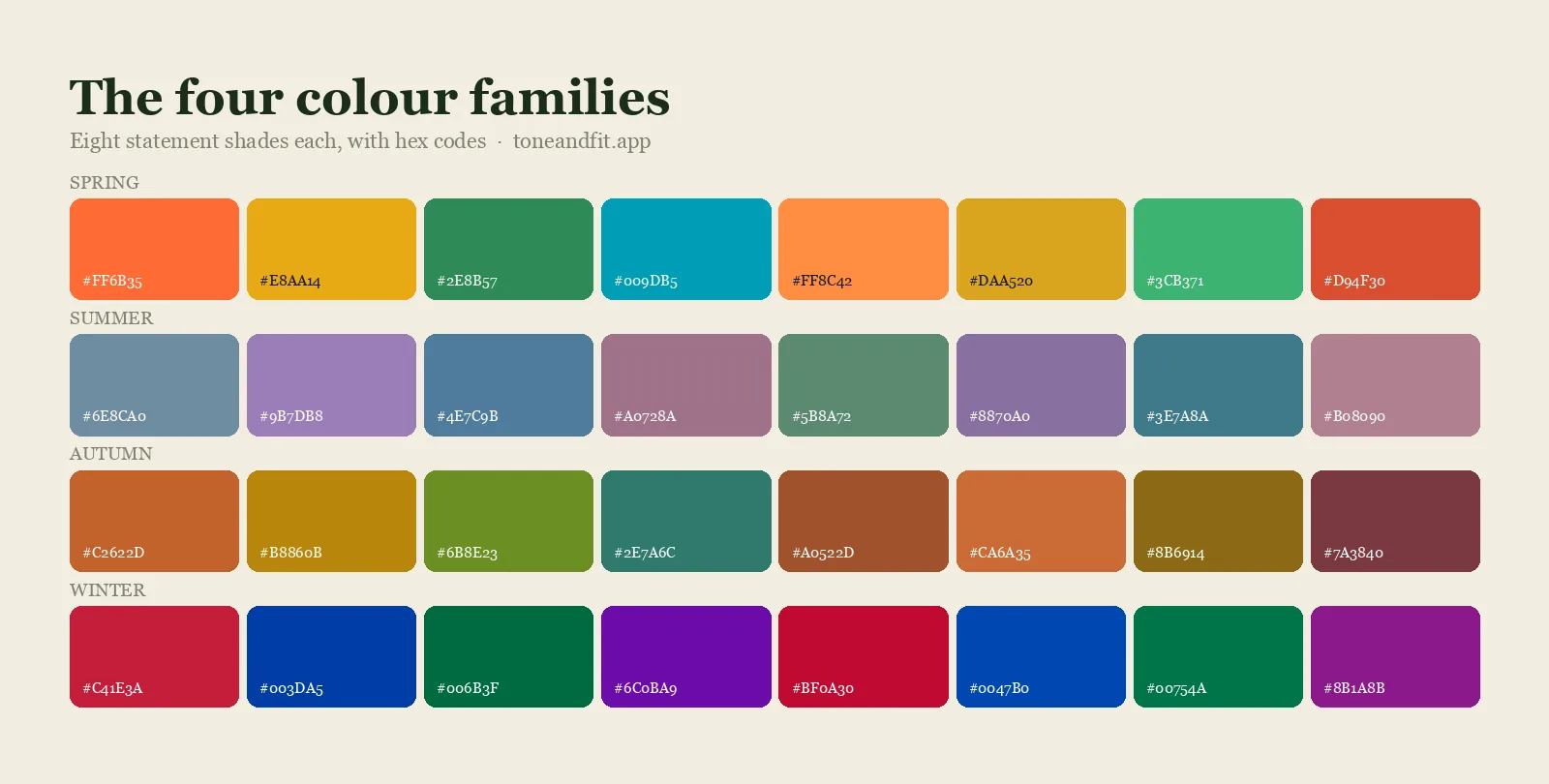
Your season is your undertone combined with your depth and your intensity. If you already know your season, this table gives you a shortlist of dress shades to try. If you do not, the short list in the next section covers the safest mixed-group choices. For the full palette of any season, open the season palettes page.
| Season family | Best dress shades | Shades to skip |
|---|---|---|
| Spring (warm, light or bright) | Coral, peach, warm turquoise, light teal, apricot, fresh moss green | Dusty mauve, charcoal, icy pastels, black |
| Summer (cool, light or soft) | Dusty blue, soft lavender, rose, slate, soft plum, blue-green | Orange, rust, mustard, very stark black or white |
| Autumn (warm, deep or soft) | Terracotta, olive, burnt orange, warm teal, mustard, deep burgundy | Icy pink, silver-gray, bright fuchsia, cool navy |
| Winter (cool, deep or bright) | Emerald, sapphire, wine, true red, cool plum, crisp navy | Peach, camel, mustard, soft warm khaki |
Spring bridesmaids
Springs have warm, clear coloring, often with light eyes and a golden or peachy glow. Fresh, slightly warm shades keep that glow alive. Think coral, apricot, buttery yellow, warm turquoise and a fresh leaf green. A Spring in dusty mauve or gray often looks tired, because those colors are cooler and quieter than her skin. If a Spring is also on the lighter side, the Light Spring profile shows how pale, warm shades suit her best, and Bright Spring shows why she can carry bolder tones.
Summer bridesmaids
Summers have cool, soft coloring. The dresses that suit them are cool and slightly dusty: dusty blue, lavender, rose, slate and soft plum. These are also some of the most popular wedding colors, which is useful, because a dusty blue or soft mauve theme tends to suit Summers without any compromise. The risk for a Summer is warmth, so a rust or mustard dress will fight her skin. Soft Summer and Cool Summer are the two profiles most likely to appear in a bridal party.
Autumn bridesmaids
Autumns have warm, rich or muted coloring. Terracotta, olive, burnt orange, warm teal and deep burgundy suit them, which is why autumn and fall weddings are so forgiving for this group. Be careful with icy pastels and cool pinks, which wash a warm complexion out. A Deep Autumn can take the deepest versions of these shades, while a Soft Autumn looks best in the dustier, quieter ones.
Winter bridesmaids
Winters have cool, high-contrast coloring. Jewel tones work well because they match the clarity of a Winter's skin and eyes: emerald, sapphire, wine and cool plum. True red and crisp navy are also reliable. Soft warm shades such as peach, camel and mustard sit awkwardly against cool skin. If you are working with Deep Winter bridesmaids, deeper jewel tones are the safest bet.
Step 3: The safest colors for a mixed group of skin tones
Most bridal parties include at least two different undertones, and often all four seasons. When that is the case, choose a color family whose shades span warm and cool, and then pick a shade per person. These families work most often, and the note beside each one tells you who needs which version.
| Color family | Warm undertones wear | Cool undertones wear |
|---|---|---|
| Green | Olive, moss, warm sage | Emerald, blue-green, cool sage |
| Blue | Teal, turquoise, petrol | Dusty blue, slate, sapphire, navy |
| Red and wine | Brick, terracotta, warm burgundy | Raspberry, wine, cool burgundy |
| Pink and blush | Peach blush, coral pink, salmon | Rose, cool blush, dusty pink |
| Neutral | Champagne, taupe, warm gray | Cool gray, mauve, silver-gray |
Green and burgundy are the two families that stretch furthest. A bridal party in "green" can include olive for the warm bridesmaids and emerald for the cool ones, and the photo still reads as one theme because the depth and the fabric match. A bridal party in "burgundy" can include brick-leaning versions and plum-leaning versions in the same way. Colors that are harder to stretch are very pale yellow, bright orange and stark white, because each has a strong temperature that few other undertones can absorb.
Match depth, fabric and finish before you match the hue
When bridesmaids wear slightly different shades, three things keep the group looking coordinated: the same level of depth (all mid-tone, or all deep), the same fabric (all chiffon, or all satin), and the same finish (all matte, or all shiny). Shiny fabrics reflect more light than matte ones and read as a lighter, brighter color in a photo. If the fabric is different, the same dye lot can look like two different colors.
Step 4: Adjust for skin depth, not just undertone
Undertone sets the temperature, and depth sets how strong the color can be. A rich, deep complexion can carry intense jewel tones and bright colors, because the contrast between skin and dress is high. A pale complexion tends to look best in colors that are not so saturated that they overpower the skin. Our guides to the best colors for pale skin and the best colors for dark skin tones cover the details, including which pastels disappear and which brights shine on each depth.
A practical rule: if a bridesmaid's natural contrast between hair, skin and eyes is high, she can wear a high-contrast color without trouble. If her contrast is low, a softer, closer-to-skin shade usually looks better than a stark one. You can read more about how to measure this in how to find your contrast level.
Know every bridesmaid's season before you order
One selfie each, an undertone and a season in about a minute. Free to try on iPhone.
Try Tone & Fit free ↗Step 5: Choose the shade by wedding season and time of day
The calendar helps you narrow the field. A spring or summer wedding in daylight suits lighter, clearer shades, and an autumn or winter wedding suits deeper, richer ones. A wedding in strong sun makes pale colors look paler and bright colors look louder. An evening reception under warm bulbs makes cool colors look slightly muted and warm colors look richer. If you are planning a fall wedding, our fall color palette by season shows how each season should read the autumn shades before you commit to a theme.
- Spring and early summer: dusty blue, sage, blush, peach and lavender are common. Cool and warm versions of sage and blush both exist, so ask for samples of each.
- Late summer and early fall: terracotta, mustard, olive and rust suit warm skin, while plum, dusty rose and slate suit cool skin.
- Late fall and winter: burgundy, forest green, navy and deep plum are flattering on most deep and cool colorings, with warm versions of burgundy and green available for warm skin.
Step 6: Run a swatch test before ordering anyone's dress
Ordering fabric swatches costs a few dollars and can save the whole group from a color mistake. Here is a short process that works well, even with bridesmaids in different cities:
- Ask each bridesmaid to order swatches in the two or three shades you are considering.
- Have her hold each swatch under her chin near a window in natural daylight, with no makeup filter and no phone beauty mode.
- Take a photo with each swatch and compare them side by side. Look for the one where her skin looks even, her eyes look clear and the dark circles under her eyes look softer.
- Send everyone's winning swatch photo to the group so the bride can confirm that the shades read as one family.
This is the same method used in a draping session, which we explain in how to do color draping at home. The point is to judge the color against skin, not against the bridesmaid's idea of herself.
Step 7: Match makeup, hair and jewelry to the dress
A good dress color can still look wrong with the wrong accessories, so plan the details too. Metal tones matter: warm undertones usually look best in yellow gold and rose gold, and cool undertones in silver and white gold, which we cover in gold or silver jewelry by skin undertone. A bridal party can wear different metals without looking mismatched if the dress color stays consistent. Lipstick is the other high-impact detail, and the best lipstick colors for your undertone explains how to choose one that agrees with both the skin and the dress. Hair color matters as well. If a bridesmaid is changing her color for the wedding, our hair color guide by skin tone will help her avoid a shade that fights her dress.
What about the bride's dress and the bridesmaids' contrast with it?
The bride's white or ivory dress is a color decision too. Stark white suits some complexions and looks harsh on others, and soft ivory or champagne suits others best. We explain the difference in white vs cream: which suits you. Bridesmaids' dresses should sit comfortably next to the bride's. A bride in warm ivory looks best beside warm-leaning dress shades, while a bride in bright white looks cleaner beside cool and clear shades. If the party's shades do not match the bride's, add a neutral in common, such as champagne or taupe, in the bouquets or accessories.
What to do when a bridesmaid cannot wear the chosen color
Sometimes the wedding theme is fixed and one bridesmaid's skin simply does not agree with it. You have a few options, none of which involve rebuilding the whole party:
- Offer a different shade of the same color. Moving from a warm olive to a cool emerald, or from a brick red to a raspberry, usually fixes the problem while keeping the theme.
- Change the neckline. A higher neckline puts more dress color near the face, and a lower one puts more skin there. If the shade is slightly off, a deep V or scoop reduces its effect.
- Add a buffer. A wrap, jacket or statement necklace in a flattering color can sit between the dress and the face. The same trick is covered in how to wear colors outside your palette.
- Let makeup do some of the work. A well-chosen lipstick and blush can bring life back to a shade that is a few degrees off.
Where to go next
If you are also a guest at someone else's wedding, our guide to wedding guest colors by season covers the flip side of this question. If you want the full method behind all of this, the personal color analysis guide walks through draping, undertone and season step by step. And if you want the quickest route to a result, run a selfie through the free photo tool and read your season off the screen.
Dress the whole wedding party with confidence
Find each bridesmaid's undertone and season, then pick her shade of your wedding color. Free, no sign-up.
Find your season free ↗FAQ
What is the best bridesmaid dress color for a mixed group of skin tones?
Choose a color family with both warm and cool versions, such as green, burgundy or blue, and let each bridesmaid wear the shade that suits her. Keep the depth, fabric and finish the same so the group still looks coordinated in photos.
What bridesmaid dress colors look good on warm undertones?
Warm undertones usually look best in terracotta, olive, warm sage, coral, peach, mustard, brick red and warm teal. These shades share the golden or peachy cast of the skin, so they make it look even rather than sallow.
What bridesmaid dress colors look good on cool undertones?
Cool undertones usually look best in dusty blue, slate, lavender, rose, wine, plum, emerald and navy. These shades share the pink or blue cast of the skin and keep the complexion looking clear.
Are dusty blue and sage green really safe for every skin tone?
They are among the most flexible choices, but not perfect for everyone. Dusty blue leans cool and suits cool and neutral undertones best, while sage comes in warm and cool versions, so check each bridesmaid's swatch in daylight before ordering.
How do I choose a bridesmaid dress color for olive skin?
First decide whether the olive skin leans warm or cool. Warm olive tends to suit olive, terracotta, warm teal and burgundy. Cool olive tends to suit emerald, plum, slate and cool wine. Muted finishes usually look better than very shiny ones.
Can bridesmaids wear different shades of the same color?
Yes, and it is often the best solution. Keep the same color family, the same depth, the same fabric and the same finish, and the shades will read as one theme in photos while each person looks better in her own version.
Should the bridesmaid dress color match the season of the wedding?
It helps but it is not a rule. Lighter, clearer shades suit spring and summer daylight weddings and deeper, richer shades suit autumn and winter ones. Skin undertone should still decide the final shade, because a flattering color is more important than a seasonal one.