Best Colors for Red Hair: What to Wear by Undertone and Season
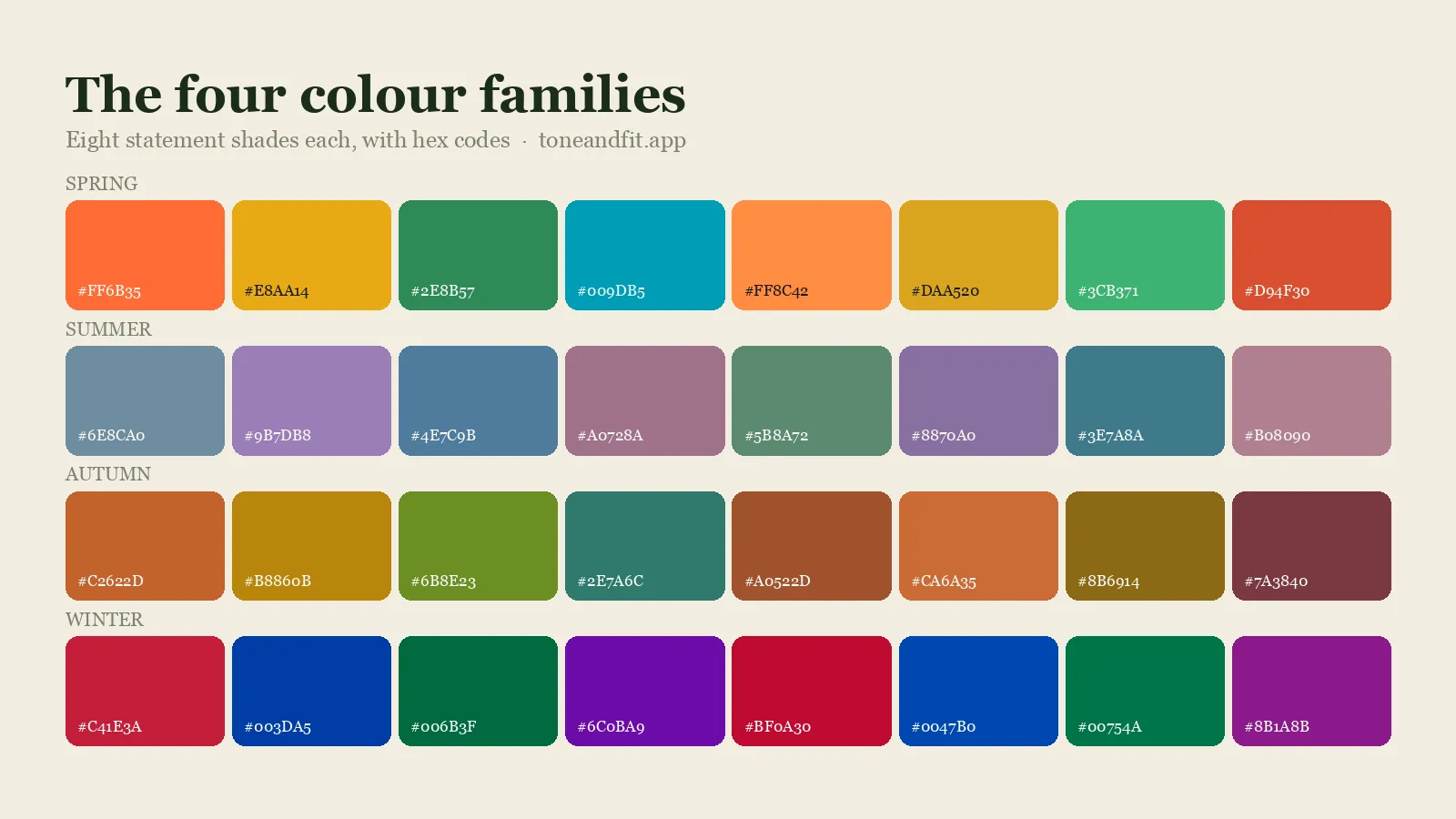
The best colors for red hair are the ones that sit in the same warm family as your hair without copying it exactly: forest and olive green, teal, deep navy, cream, camel, chocolate brown and warm coral for most redheads, with softer versions of each for strawberry blonde and richer versions for deep auburn. Pure red hair is a strong warm color, so your clothes either frame it or fight it.
The short version: your hair is only one of three things that decide your best colors. Your skin undertone and your eyes matter just as much, and some redheads have cool, pink-toned skin that wants a different palette from the copper-and-freckles stereotype. Read this guide with our what colors look good on me guide open in another tab if you want the full framework, then use the shade-by-shade lists below to build a palette that suits your exact red.
What's in this guide
- The quick answer by shade of red
- Why red hair needs its own color rules
- Step one: check your skin undertone, not just your hair
- The best colors for red hair, family by family
- Best colors for red hair by color season
- Let your eyes pick the accent color
- Can redheads wear red, pink and orange?
- Colors that tend to work against red hair
- Makeup and metals that go with red hair
- What if your red hair is dyed?
- Pale skin and freckles
- How to build a redhead wardrobe in four steps
- FAQ
The quick answer by shade of red
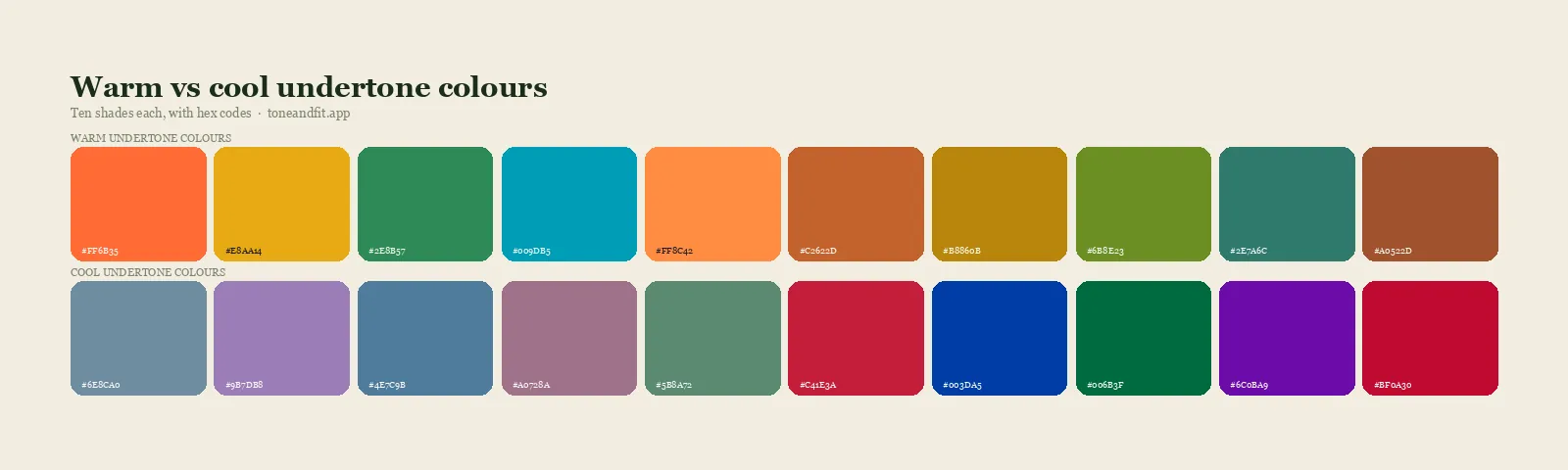
"Red hair" covers a wide range, from pale strawberry blonde to near-black burgundy. The same green or navy will not look identical on all of them, so start by finding your shade in the table, then read on for why these colors work.
| Your red hair shade | Best colors to wear | Colors to handle with care |
|---|---|---|
| Strawberry blonde (light, golden or pinkish red) | Soft teal, sage, warm cream, light camel, peach, dusty rose, periwinkle, soft navy | Heavy black, stark optic white, neon orange |
| Copper or ginger (bright orange-red) | Forest green, turquoise, teal, deep navy, chocolate, cream, olive, mustard, warm coral | Bright orange, hot pink, true red |
| Auburn (red-brown) | Emerald, bottle green, plum, burgundy, camel, rust, cobalt blue, warm ivory | Muddy brown close to your hair, cool grey |
| Deep red or burgundy-red | Dark teal, forest, espresso, deep plum, ink navy, warm charcoal, jewel red-browns | Pastels that look chalky, beige that washes you out |
| Cool or rosy red (pink-toned red, or a dyed red with cool skin) | Soft navy, blue-green, dusty rose, mauve, taupe, soft white | Orange, mustard, tomato red |
Treat the table as a starting point, not a verdict. The tone of your skin and the lighting you stand in will move these suggestions, which is why the sections below walk through how to check them yourself.
Why red hair needs its own color rules
Brown and black hair are low-saturation colors, so clothes mostly take the lead. Red is the opposite. It is a high-saturation, high-attention color sitting right beside your face, and it competes with whatever you wear on top. A top that is too close to your hair color can make everything look like one orange blur. A top that is far from it on the wrong side of the color wheel can make your hair look brassy or your skin look flushed.
That is why redheads are often told to avoid red, pink and orange, and why they are also told, correctly, that green is their friend. Green sits opposite red on the color wheel, so it makes red hair look richer by contrast. The advice is a useful shortcut, but it is not the full picture. The real question is whether the color agrees with your undertone and depth, the way seasonal color analysis explained sets out: undertone (warm, cool or neutral), depth (light to deep) and clarity (soft to bright).
Red hair almost always signals warmth in the hair itself, but the skin underneath can be warm, neutral or cool. A redhead with peachy, golden skin and a redhead with pale pink skin and a few freckles can sit in different seasons, and they will not look best in exactly the same blues or the same whites.
Step one: check your skin undertone, not just your hair
If you only match your hair, you will end up with a palette that flatters your hair and flattens your face. Check your undertone separately, using the methods in how to find your skin undertone at home. For redheads, three of the checks are particularly useful.
The white versus cream test
Hold a sheet of pure white paper and a sheet of cream paper under your chin in daylight. If the white makes your skin look clean and bright, you lean cool or neutral. If the cream makes your skin glow and the white looks stark, you lean warm. Many redheads are surprised that stark white is the worse choice, which is explained in detail in white versus cream: which suits you.
The gold and silver test
Hold a gold chain or ring and a silver one against bare skin. If gold looks luminous and silver looks grey, you are warm. If silver looks crisp and gold looks yellow, you lean cool. If both are fine, you are probably neutral, which is more common than people expect and is covered in neutral undertone skin.
Freckles and flush
Freckles are not an undertone clue on their own. They can be golden brown, tan or light copper on warm skin, and soft grey-brown on cooler skin. Look at the skin between them instead. If it is yellow, peach or ivory, lean warm. If it is pink, rosy or slightly blue-white, lean cool. If your skin flushes easily, avoid very warm oranges near your face, because they will emphasize redness.
If you would rather not guess, a phone-based tool reads undertone from a selfie. Our skin tone analyzer guide explains how that works and what its limits are.
The best colors for red hair, family by family
Greens
Green is the classic answer, and it is the right one. Forest green, bottle green, emerald, olive and moss all make red hair look deeper and glossier. Warm greens such as olive and moss suit warm skin. Blue-leaning greens such as emerald and deep teal suit neutral and slightly cooler skin. Very bright lime and neon green are rarely flattering because they compete with the hair for attention.
Blues and teals
Blue sits across the wheel from orange, so it also makes copper and ginger hair pop. Deep navy, ink blue, cobalt, turquoise and teal all work, and they are often easier to wear than green for people who find green too bold. Pick a navy with a warm or neutral base rather than one that reads almost black, and favor teal over icy blue if your skin is warm. If you have blue eyes, our guide to the best colors for blue eyes shows how to push the blue further.
Neutrals
Cream, ivory, camel, tan, chocolate brown, olive and warm taupe are the redhead's wardrobe backbone. They are warm enough to agree with your hair and quiet enough to let it lead. Steer clear of cold, blue-based greys unless you are a cool-skinned redhead, and use soft charcoal or a deep brown instead of black. The reasons are laid out in black and your color season.
Purples and plums
Plum, aubergine, deep violet and warm purples are underrated on auburn and deep red hair. They are rich enough to hold their own and different enough from red to avoid a clash. Lavender and pale lilac suit strawberry blonde and light red hair, especially with fair, cool-leaning skin.
Warm accent colors
Mustard, rust, terracotta, burnt orange, coral and golden yellow can all look wonderful on redheads, but they work as a different type of color: they sit in the same warm family as the hair, so the effect is harmonious rather than contrasting. Use them when your hair is deep, such as auburn, and when your skin is clearly warm. Use them away from the face, as a skirt, a scarf or a bag, if you are not sure.
Pinks and reds
The old rule that redheads cannot wear pink is only half true. Salmon, peach, dusty rose and warm coral pink are lovely. Bubblegum and cool magenta tend to clash. A true red is the hardest, and it is covered in its own section below.
Best colors for red hair by color season
Red hair appears in several seasons, so there is no single redhead palette. The usual landing places are shown below. If you do not know your season yet, the 12 color seasons guide explains all of them, and the find my color season guide walks through how to work yours out.
| Season | Typical redhead look | Best colors |
|---|---|---|
| Warm Spring | Strawberry blonde to bright copper, golden freckles, light eyes | Coral, peach, turquoise, warm green, cream, light camel |
| Warm Autumn | Copper, ginger or auburn, warm ivory or golden skin | Olive, rust, forest, mustard, teal, chocolate, cream |
| Deep Autumn | Dark auburn or deep red-brown, warm medium skin, dark eyes | Bottle green, burgundy, espresso, deep teal, dark olive |
| Soft Autumn | Muted, dusty red-blonde or light auburn, low contrast | Sage, soft teal, taupe, dusty coral, warm stone |
| Light Spring | Very light strawberry blonde, fair skin, light eyes | Peach, aqua, light warm green, soft yellow, ivory |
You can read the full palettes and see celebrity examples in warm autumn celebrities, warm spring celebrities and deep autumn celebrities. A fun comparison point is the way Julianne Moore's color season is analyzed, because it shows how a famous redhead's palette is worked out from skin and eyes instead of from hair alone.
One honest caveat: hair color is the least reliable input to a color analysis, because hair can be dyed, lightened by sun or changed by age. Season analysis weighs skin and eyes more heavily. That is also why two redheads can be in different seasons, which is why the personal color analysis guide treats hair as a supporting clue rather than the deciding one.
Find your exact palette in one selfie
Tone & Fit reads your skin, hair and eyes and returns your season and a full color palette.
Try Tone & Fit free ↗Let your eyes pick the accent color
Hair sets the mood, but eyes give you the most reliable accent. A color that echoes your eye color brings the eyes forward and calms the hair down. Matching does not need to be exact; a shade in the same family is enough.
- Green or hazel eyes: olive, moss, forest, bronze and warm gold. See the best colors for green eyes.
- Blue eyes: navy, teal, turquoise and soft warm blues. See the best colors for blue eyes.
- Brown eyes: chocolate, camel, rust, deep green and burgundy. See the best colors for brown eyes.
Can redheads wear red, pink and orange?
Yes, with conditions. The rule that redheads must avoid red comes from a time when the choice was between a clashing pillar-box red and nothing. Today you have more shades, and a few work well.
- Red clothing: choose a deep, brick or wine red rather than a bright true red, and wear it away from your face first. A red coat, red skirt or red shoes are easier than a red top.
- Red lipstick: warm redhead-friendly reds lean brick, tomato or brown-red. Bright blue-reds can look harsh against orange hair but suit cooler, pink-toned redheads. The shade guide in red lipstick for every undertone goes shade by shade.
- Pink: go for coral, salmon, peach or dusty rose. Avoid cool, blue-based pinks and hot magenta.
- Orange: use burnt orange and rust as accents, away from the face. Bright orange next to bright orange hair is the one combination that almost always overwhelms.
Colors that tend to work against red hair
None of these are forbidden. They are simply the ones most likely to make your coloring look tired, flushed or washed out. The broader pattern is described in colors that wash you out.
- Stark optic white. It can make fair, freckled skin look pale and show up every flush. Warm ivory or cream is kinder.
- Pure black near the face. It adds harsh contrast against light red hair and makes skin look sallow on some people. A deep chocolate or navy usually does the same job more gently.
- Neon and electric colors. They fight the hair for attention.
- Cool, icy pastels. Baby blue, ice pink and icy lilac can make warm redheads look tired. Soft warm versions work instead.
- Beige that matches your skin. A nude that sits close to fair skin can make you look drained. Choose camel, caramel or a richer tan.
- Colors that match your hair exactly. A copper sweater with copper hair merges into a single block, so go darker, lighter or more muted instead.
Makeup and metals that go with red hair
Clothes are only part of the picture. Whatever you wear near the face follows the same rule: stay in your undertone family and avoid copying the hair.
- Lipstick: warm peach, coral, terracotta and brick for warm skin; dusty rose, mauve and berry for cool skin. The undertone-based picks are in the best lipstick color for your undertone.
- Blush: peach and warm apricot for warm skin; soft rose for cool skin. See blush by undertone.
- Eyeshadow: bronze, copper, olive and plum make green and blue eyes stand out.
- Metals: warm skin usually looks best in yellow gold, rose gold and bronze. Cool-skinned redheads often look best in rose gold and soft silver. The test is in gold or silver jewelry by skin undertone.
What if your red hair is dyed?
Dyed red hair changes your frame but not your skin, so your season is better judged by skin and eyes. If you chose a red that fights your undertone, your hair will look flat or brassy no matter what you wear. A warm copper suits warm skin, a cool burgundy or violet-red suits cool skin, and a deep auburn is the easiest red to wear on neutral skin. The ideas in how to find your color season with dyed hair show how to separate hair from skin when you analyze your coloring, and hair color by season lists the reds that match each palette. If you are weighing a change, the picks in the best hair color for your skin tone help you compare.
Pale skin and freckles
Many redheads have very fair skin, which makes color intensity a bigger factor. The same navy that looks elegant on one person can look heavy on a very pale complexion. If that sounds like you, the principles in the best colors for pale skin apply, and the practical rule is simple: choose medium-depth, medium-saturation colors close to your face, and put the boldest darks or brights lower down, such as trousers, shoes or a bag.
How to build a redhead wardrobe in four steps
- Pick two or three neutrals from cream, camel, chocolate, olive and warm charcoal. These are your foundation.
- Pick two main colors from the green and blue families that suit your skin undertone.
- Choose one or two warm accents such as rust, mustard or coral, and use them away from the face.
- Test everything in daylight. Hold each item up at a window with no makeup on, and keep what makes your skin look even and your hair look glossy.
Once your palette is clear, shopping gets easier, and the approach in how to shop your color palette keeps you from buying one-off colors that never get worn.
Skip the guesswork
Get your 12-season result and palette from a single photo. Free to try, no sign-up.
Find your season free ↗FAQ
What colors look best on red hair?
Most redheads look best in forest and olive green, teal, deep navy, cream, camel, chocolate brown and warm coral. Strawberry blonde hair suits softer versions of these, and deep auburn suits richer ones. Your skin undertone decides the finer details, so a cool-skinned redhead may prefer soft navy, dusty rose and mauve.
What colors should redheads avoid?
Redheads usually do best avoiding neon colors, stark optic white, cold icy pastels and any shade that matches the hair exactly. Bright orange, hot pink and true red can compete with the hair near the face. They are not forbidden, but they work better as accents away from the face.
Can redheads wear red?
Yes, with some care. Choose a deep brick, wine or brown-red rather than a bright true red, and wear it away from your face first, as a coat, skirt or shoes. Warm brick and tomato lipsticks usually suit warm redheads, while cooler berry reds can suit pink-toned redheads.
What color should a redhead wear to look good in photos?
Solid mid-depth colors in your palette work best near the face. Forest green, teal, navy and cream photograph well on most redheads. Avoid very bright white and neon colors, which can wash out fair skin and fight the hair for attention.
Is green really the best color for red hair?
Green is a reliable choice because it sits opposite red on the color wheel and makes red hair look richer. Warm greens such as olive and moss suit warm skin, and blue-leaning greens such as emerald and teal suit neutral or slightly cooler skin. It is a good starting point, not the only option.
Do all redheads have the same color season?
No. Red hair appears in several seasons, including Warm Spring, Warm Autumn, Deep Autumn and Soft Autumn, depending on skin undertone, depth and eye color. Hair is the least reliable input in a color analysis, because it can be dyed or change with age, so skin and eyes are weighed more heavily.
What colors suit red hair with blue or green eyes?
Echo the eyes. Green eyes look best against olive, moss, forest and bronze, and blue eyes against navy, teal and turquoise. A shade in the same family as your eye color is enough to bring the eyes forward and calm the hair down.