Deep Autumn Winter Outfits: How to Wear Your Palette When It Gets Cold
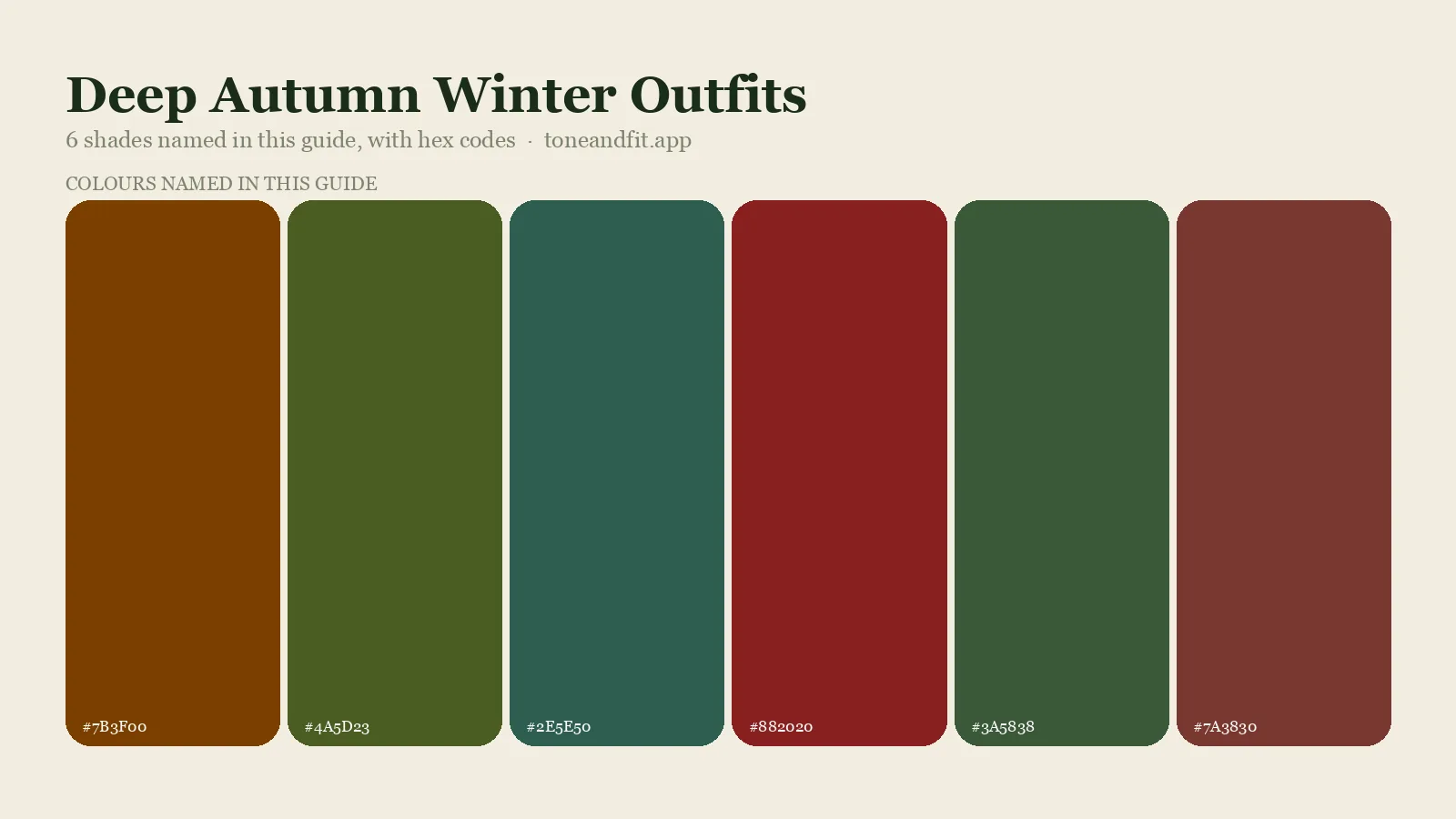
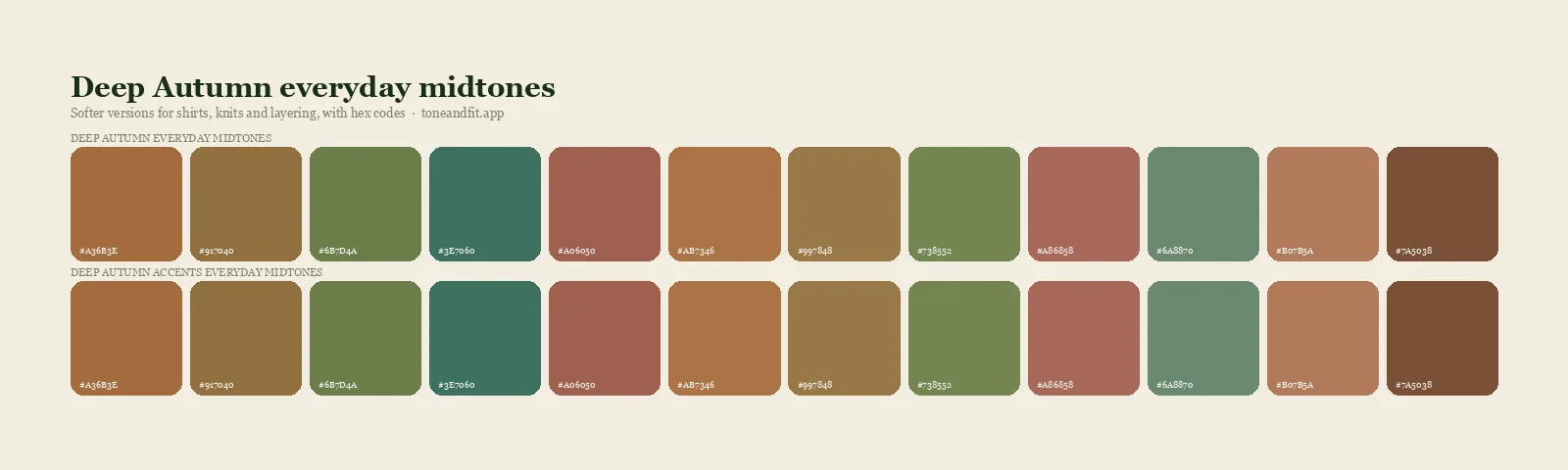
Short answer: A Deep Autumn dresses for winter by keeping the warmth and swapping the light. Build cold weather outfits on chocolate brown, espresso, dark olive and warm charcoal, then add one rich accent such as deep warm teal, burgundy, rust red or forest green. Choose camel or chocolate coats over black, cream knits over stark white, and gold or bronze over silver. The rest of this guide shows how, with seven outfit formulas you can copy.
Deep Autumn is often described as the season of falling leaves, which makes some people feel they should pack their palette away in December. The opposite is true. Your colors are dark, warm and rich, which is exactly what winter fabrics, heavy wool and low light reward. The trick is knowing which winter staples work against you and which ones quietly do the job better.
What's in this guide
Why Deep Autumn suits winter
Every color season is a mix of three measurements: undertone, value and chroma. Deep Autumn is warm leaning neutral in undertone, deep in value and moderately rich in chroma. If those terms are new, our explainer on seasonal color analysis walks through each one, and the 12 color seasons shows where Deep Autumn sits next to its neighbours.
Winter clothing is naturally deep. Shops fill up with dark coats, heavy knits and saturated party fabrics, which means a Deep Autumn has more options in November than a Light Spring or a Light Summer does. The only problem is temperature. Much of the winter high street is cool: black coats, icy gray knits, silver sequins and blue-red lipstick. Those pieces are built for the Winter seasons, and on warm skin they can look heavy, flat or slightly gray.
So the job is not to find dark clothes. It is to find dark clothes with warmth in them. If you are still not sure your undertone is warm, start with our guide to finding your skin undertone at home, and if your skin looks paler and pinker in the colder months, read how to find your undertone in winter before you shop. Pale winter skin can fool you into thinking you are cool when you are not.
Deep Autumn winter core: chocolate brown, dark olive, deep warm teal, deep warm burgundy, deep forest green, deep rust red.
Four rules for cold weather dressing
1. Replace black with a warm dark
Black is the default winter neutral, and it is the single biggest swap a Deep Autumn can make. Pure black is cool and very high contrast, so it tends to sit on top of warm skin rather than blending with it. Chocolate brown, espresso, dark olive and a warm near black with a brown cast give the same depth and the same slimming effect, but they echo the warmth in your face. We go deeper into this in black and your color season.
2. Swap stark white for cream, toast and dark sand
Winter whites are popular for knits and coats. On a Deep Autumn, optical white can look harsh and make the skin look sallow by comparison. Cream, ivory, toast (#CABBA2) and dark sand (#C4B39A) give you the light, cosy look without the glare. Our post on white versus cream has a quick test.
3. Keep one rich accent near the face
Dark neutrals from head to toe can look heavy on anyone. Deep Autumn has a strong range of accents, and one of them near the face, in a scarf, a knit or a lip, does most of the work. Deep warm teal, burgundy, rust red, forest green and dark bronze are the best winter choices.
4. Choose texture over brightness
When the light is low, texture adds interest that a brighter color would otherwise provide. Brushed wool, suede, corduroy, cable knit, leather and velvet all suit the rich, slightly muted quality of the Deep Autumn palette. Shiny, icy fabrics such as silver lamé or high gloss black vinyl are harder to wear.
Coats and outerwear
A coat is the most visible thing you wear for four months, so it is the best place to spend your color effort. Our guide to the best coat color for your season covers every season, but here is the Deep Autumn shortlist.
| Coat color | Why it works | Pair it with |
|---|---|---|
| Chocolate brown | The Deep Autumn answer to black, deep and warm | Cream knit, rust scarf, gold hoops |
| Deep camel | Classic and warm, works with every accent | Espresso trousers, teal scarf |
| Dark olive | Earthy and modern, flatters golden skin | Burgundy knit, brown boots |
| Deep forest green | A rich statement that still reads as a neutral | Camel, cream and bronze jewelry |
| Rust or deep terracotta | Warm and bold, lights up the face | Chocolate, olive or dark denim |
| Warm charcoal | For those who want gray, choose a brown-gray | Burgundy or deep teal accents |
Coats to approach with care include pure black, icy gray, navy with a blue cast, and pastel wool in blush or powder blue. If you love a black coat already, keep it and wear a warm scarf in rust, camel or teal between the coat and your face. That one layer changes how the whole outfit reads.
Knitwear, layers and textures
Sweaters are where a Deep Autumn winter wardrobe really comes alive, because knitwear dye houses love the colors in this palette. Our guide to the best sweater colors for your skin tone covers the theory. For Deep Autumn, these are the shades to look for in wool, cashmere and cotton blends:
- Cream and oatmeal. The light layer that replaces white, ideal for cable knits.
- Camel and deep camel. A soft neutral that works under any coat.
- Burgundy and deep wine. Your most festive knit, pick the brown-red version over a purple-red.
- Deep warm teal. One of the most flattering colors in the palette and rare in other seasons' wardrobes.
- Rust and burnt orange. Warm and energising on gray winter days.
- Mustard and dark bronze. Good for chunky knits and turtlenecks, keep them deep rather than lemon.
- Forest green and dark olive. Easy everyday colors that pair with every brown.
Layering works best when you stay within one temperature family. A cream turtleneck under a chocolate cardigan with a camel coat is a three-tone outfit that looks deliberate. A gray hoodie under a black coat with an icy blue scarf mixes cool pieces that each pull a little color out of your skin. For the bigger picture of how neutrals combine, our guide to neutrals by color season has a full Deep Autumn section.
Seven Deep Autumn winter outfit formulas
These formulas are built from the Deep Autumn palette and tested against the most common winter situations. Swap any piece for one you already own in the same color family.
1. The everyday commute
Deep camel wool coat, cream crew neck sweater, dark brown straight leg trousers, cognac leather boots and a deep warm teal scarf. Gold stud earrings. The teal near the face is the accent; everything else is warm and calm.
2. The weekend walk
Dark olive quilted jacket, rust cable knit, dark indigo jeans, chocolate suede boots and a mustard beanie. If you want help choosing the right denim, see denim wash by color season.
3. The office in December
Chocolate brown tailored blazer, ivory silk blouse, espresso wide leg trousers and bronze or gold jewelry. Swap the blouse for a burgundy fine knit on colder days. Our office outfit colors by season guide has more options.
4. The monochrome brown
Toast turtleneck, walnut wool trousers, chocolate long coat, dark brown boots. Tonal brown is one of the most expensive looking outfits a Deep Autumn can wear, and it only works because your skin carries the same warmth.
5. The forest green statement
Deep forest green coat, dark sand knit, dark olive trousers and a burgundy scarf. Green and burgundy are a classic winter pairing, and the warm versions are made for this season.
6. The cosy night in, dressed up
Deep rust red velvet top, dark chocolate trousers, gold hoops and a brick red lip. It feels festive without any sparkle, which suits a palette that prefers glow over glitter.
7. The snow day
Dark bronze puffer, cream fleece, olive thermal leggings, brown waterproof boots and a teal knit hat. Technical outerwear often comes in black or neon, so look for bronze, olive, brown or deep teal when you shop.
If you want these looks to work together as a set, our Deep Autumn capsule wardrobe shows how to build a small mix-and-match wardrobe, and our broader Deep Autumn outfit ideas cover the rest of the year.
Not sure you are a Deep Autumn?
The free web tool names your season from one selfie, with no sign-up. The app's scan is free too and shows your undertone, best metals and starter colors; your season and full palette in the app are an optional upgrade.
Find my season free → Get the app ↗Holiday and party dressing
Party season is where Deep Autumns are most often pushed into the wrong colors, because so much eveningwear is black, silver or icy jewel tones. You do not need any of them. A few rules help:
Pick warm metallics. Antique gold, bronze and copper sequins or lamé look rich on warm skin. Silver and gunmetal tend to look cold.
Choose warm jewel tones. Deep warm burgundy, deep teal, forest green and a brown-based wine are your party colors. Fuchsia, icy sapphire and royal purple belong to the Winters, so leave those to them.
Try velvet and satin in rich browns. A chocolate velvet dress or a bronze satin shirt feels luxurious and very few people at the party will be wearing it.
For every season's party picks side by side, see our guide to holiday party colors by season. If you are dressing for a family dinner rather than a party, Thanksgiving outfit colors covers the more relaxed end of the season.
Scarves, boots, metals and makeup
Scarves. A scarf is the easiest way to fix a wrong color coat. Keep two or three in your best accents: deep warm teal, rust and a camel or chocolate check. Wool, cashmere and brushed blends hold the depth of these colors better than shiny synthetics.
Boots and bags. Cognac, chocolate, dark tan and olive leather all suit Deep Autumn. Black boots are fine with dark trousers, but brown boots usually make the outfit look more finished on you.
Metals. Yellow gold, antique gold, bronze and copper are your best metals all year, and they look particularly warm against winter wool. Our guide to Deep Autumn jewelry and metals goes piece by piece, and the general gold or silver test explains why.
Makeup. Winter skin can look paler and a little dull, so warmth in your makeup matters more than usual. A brick, terracotta or brown-red lip, a warm bronze or olive eye, and a terracotta blush keep the face from looking washed out against dark clothing. See the Deep Autumn makeup guide and Deep Autumn lipstick and blush for specific shades, and Deep Autumn eyeshadow colors for eye looks.
Hair. If you color your hair, winter is a good time to deepen it slightly. Rich chocolate, mahogany and auburn tones balance heavy coats and dark knits. Our guide to Deep Autumn hair color has the full list.
Winter mistakes Deep Autumns make
Wearing Cool Winter colors because they look seasonal. Icy blue, pure white, fuchsia and silver are marketed as winter colors, but they are built for cool skin. If your results have flipped between these two seasons, our guide to Cool Winter vs Deep Autumn settles it, and the Cool Winter color palette shows exactly which shades to leave on the rail.
Confusing Deep Autumn with Deep Winter. Both seasons look great in dark colors, but Deep Winter can wear black and icy accents while Deep Autumn cannot. If you are unsure which one you are, read Deep Autumn vs Deep Winter.
Going too light and bright for the holidays. Clear, sunny warm colors such as coral, golden yellow and bright turquoise belong to the Springs. They suit warm skin too, but on a Deep Autumn they can look young and thin rather than rich. The Warm Spring color palette shows the difference: same warmth, much lighter and clearer.
Dressing every outfit in the darkest shades only. Deep does not mean black-dark. A whole outfit in espresso, walnut and forest green with no lighter layer can look heavy in low winter light. Add cream, toast or camel to break it up. Our list of Deep Autumn colors to avoid covers the full set of pitfalls.
Judging colors under warm indoor bulbs. Winter means less daylight and more artificial light, which can make cool colors look warmer than they are. Check new purchases by a window in daylight. If you keep second-guessing your undertone, compare the signs in our guide to warm vs cool skin undertones.
If you have run the tests and still feel caught between Deep Autumn and its warmer or softer neighbours, read Deep Autumn vs Warm Autumn and Deep Autumn vs Soft Autumn. For a confident answer, our guide to personal color analysis compares the DIY, app and professional routes, or you can start with the free color season quiz.
Dress for winter in your real colors.
The free web tool names your season from one selfie, with no sign-up. The app's scan is free too and shows your undertone, best metals and starter colors; your season and full palette in the app are an optional upgrade.
Find my season free → Get the app ↗FAQ
What colors should a Deep Autumn wear in winter?
Build on warm darks such as chocolate brown, espresso, dark olive and warm charcoal, then add one rich accent like deep warm teal, burgundy, rust red, forest green or dark bronze. Use cream, toast and camel as your light layers instead of stark white.
Can a Deep Autumn wear black in winter?
Black is not a Deep Autumn neutral, and it can make warm skin look flat. If you already own a black coat or dress, keep it away from the face with a warm scarf, a gold necklace or a cream collar. For new purchases, choose chocolate brown or espresso instead.
What coat color is best for Deep Autumn?
Chocolate brown, deep camel, dark olive and deep forest green are the strongest choices. Rust or deep terracotta works as a statement coat. Pure black, icy gray and pastel coats are the hardest to wear.
What should a Deep Autumn wear to a holiday party?
Warm jewel tones and warm metallics. Deep burgundy, deep teal, forest green, chocolate velvet and antique gold or bronze sequins all look rich. Silver, fuchsia and icy sapphire are better left to the Winter seasons.
Does my color season change in winter?
No. Your season is set by your natural undertone, value and contrast, which do not change with the weather. Skin can look paler in winter, which sometimes makes warm people think they are cool, so check your undertone in daylight before you change your wardrobe.
Is Deep Autumn the same as Dark Autumn?
Yes. Deep Autumn and Dark Autumn are two names for the same sub-season in the 12-season system: warm leaning neutral, deep in value and rich in chroma.
Can I check my color season from a photo?
Yes. The free Tone & Fit web tool reads your color season from one selfie in about 30 seconds, with no sign-up and no photo stored by us. It also tells you whether you land in Deep Autumn or a neighbouring season. The Tone & Fit app for iPhone and Android then builds your full palette of 38 named shades.