How to Find Your Undertone With Dark Circles
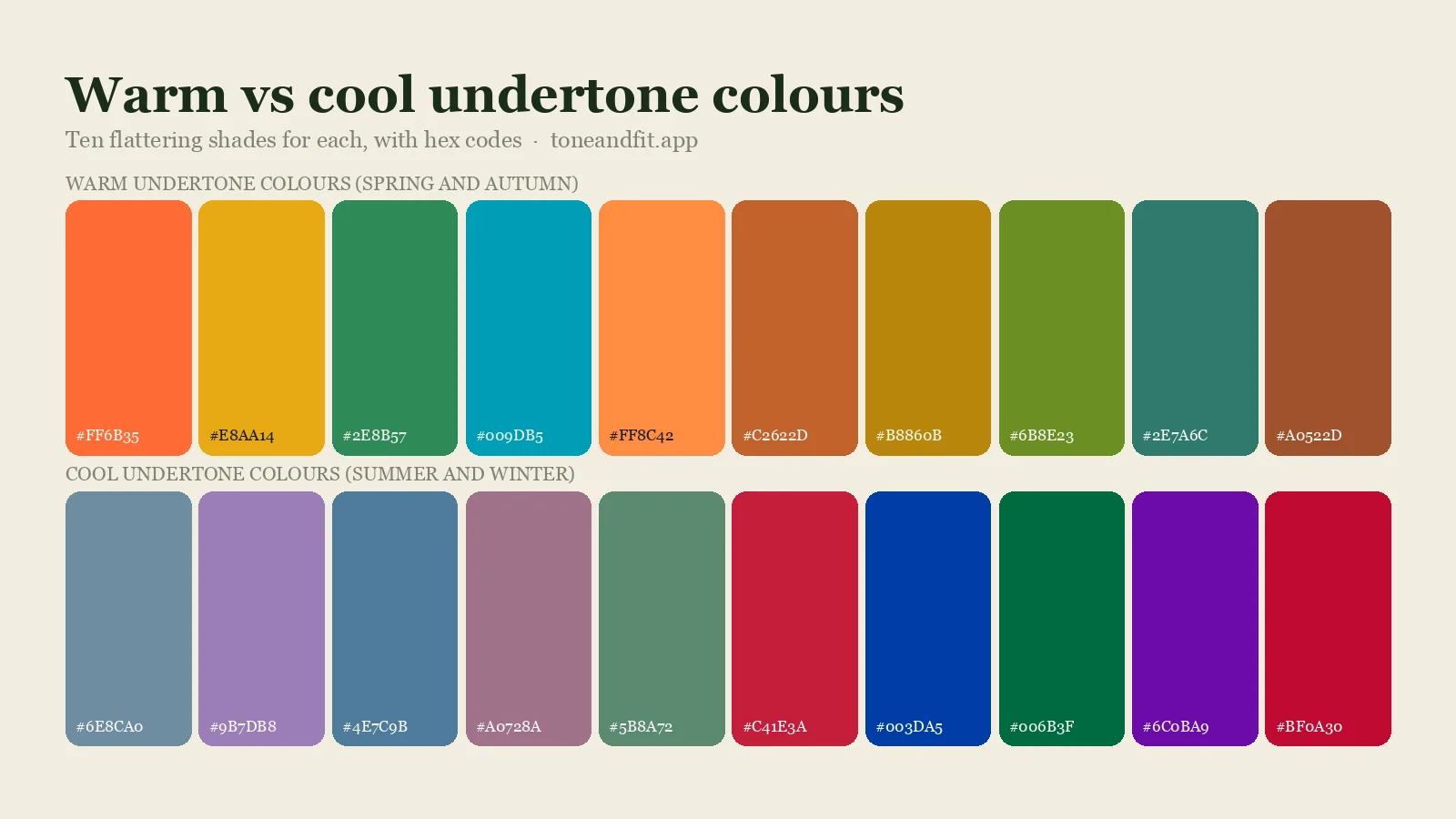
To find your undertone with dark circles, ignore the skin under your eyes and test your jawline, neck, chest and inner arm in soft daylight, using gold against silver and white paper against cream. Dark circles show vessels, pigment and shadow, not your undertone, so they should never decide the result.
The short version: under-eye color is the least reliable thing on your face to read, so the fix is to move your tests to thicker, steadier skin and to use large areas of color that your eye cannot confuse with shadow. This guide is part of our wider walkthrough in the skin tone analyzer guide.
What's in this guide
- The quick answer
- Why dark circles confuse an undertone test
- Blue-purple, brown or shadow: what the color of your circles means
- Where to test instead
- Set up the conditions
- The jewelry test, done on the right skin
- The white versus cream test, from the neck down
- The sun-reaction question
- What your dark circles can still tell you
- Concealer, color correcting and undertone
- Photos and apps when dark circles are strong
- How to read mixed results
- After you know your undertone
- Common mistakes
- FAQ
The quick answer
You do not need to test the skin under your eyes at all, and you should not. The thin skin there shows blood vessels, shadow and pigment, so it reads darker, bluer or browner than the rest of you whatever your undertone is. Test the skin around it and away from it instead, then use the dark circles as a side note and not as evidence.
- Skip the under-eye area. Judge undertone from your cheeks, jawline, neck, chest and inner arm.
- Use soft daylight. Stand beside a window in indirect light, with no direct sun on your face and no warm bulbs overhead.
- Run three tests. Gold against silver, white paper against cream paper, and the sun-reaction question. Look for agreement.
- Compare, do not copy. If your dark circles look purple-blue, brown or both, that describes the circles and says very little about the color your skin leans.
- Confirm with a second source. A selfie read, taken with a rested, bare face, is a useful cross-check.
The rest of this guide explains why under-eye skin misleads, what to use instead, and how to read the result if your dark circles are strong.
Why dark circles confuse an undertone test
Undertone is the steady cool, warm, neutral or olive base beneath the surface of your skin. It does not change with a late night or a season. Dark circles are a different kind of color: a local, surface-level effect on the thinnest skin of your face. When you look in the mirror and see a blue-purple shadow under your eyes, you are looking at something that sits on top of your undertone and sometimes pulls in a different direction.
That matters because undertone tests all work by comparison. You hold a reference against your skin and judge the contrast. If part of the skin you are judging is darker, bluer or browner than the rest, your eye gets pulled toward it and the whole face starts to look cooler or muddier than it is. Many people with warm undertones decide they are cool because their under-eyes look blue, and many people with cool undertones decide they are warm because their circles look brown.
This guide is part of our wider walkthrough in the skin tone analyzer guide, and it builds on the basics in how to find your skin undertone at home. It is a color guide and not medical advice. If dark circles are new, sudden or worrying, that is a question for a doctor and not for a palette.
Blue-purple, brown or shadow: what the color of your circles means
People describe dark circles in three broad ways, and it helps to know which one you are looking at before you decide how much to trust it.
- Blue or purple circles. The skin is thin enough that the vessels beneath show through. These often look more obvious on lighter skin and on tired days. The color comes from visibility and not from your undertone.
- Brown or tan circles. This is surface pigment, a darker patch of skin. It looks the same in every light and does not change much when you press on it. It is a pigment effect and sits on top of the undertone, much like the way a tan does in how to find your undertone with a tan.
- Shadow circles. The darkness comes from the shape of the face: a hollow under the eye or a puffy lid that casts a shadow. Change the light or tilt your head and it shifts or disappears. This one is about light and structure and not skin color at all.
Many people have a mix of the three. A quick check is to pull the skin gently sideways while looking in a mirror, and to tilt your face toward the window. If the dark area fades with the tilt, shadow is doing a lot of the work. If it stays put and looks brown, it is pigment. If it looks bluer when you are tired and fades when you are rested, vessels are showing. In all three cases the same rule applies: do not use the under-eye as a test site.
Where to test instead
The best test sites are places that match the rest of your skin and are not shadowed or thin. These are the ones to use.
- The jawline and the area just below your cheekbone. This skin is thicker, rarely shadowed, and matches the undertone of your face.
- The neck and upper chest. These areas are away from the eyes entirely. Sun exposure can deepen them, but it does not change the undertone.
- The inner forearm and inner wrist. They see less sun, so they are closer to your natural base.
- Behind the ear. Protected from the sun and from most products.
If you wear concealer, wipe the product off the area you plan to use, or skip the face and use the neck, chest and arm. The same logic is covered for foundation in how to find your undertone with makeup on.
Set up the conditions
Dark circles look worse in poor light, and poor light also distorts every undertone test, so a good setup does double duty.
- Light: soft daylight beside a window, in indirect light. Overhead bulbs create shadows exactly where you do not want them. Our piece on why your color season seems to change in different lighting shows how much light moves color.
- Face height: hold a mirror at chin level and tilt it slightly down. Light that comes from above deepens the under-eye hollow.
- Surroundings: wear a plain white or grey top and keep colorful walls out of view.
- Timing: late morning, after you have been up for a while. Puffiness and dark circles are often strongest right after waking, and your skin is pink after exercise, a hot shower or alcohol.
- Mirror: avoid lighted makeup mirrors, which are built to flatter and often tint skin.
The jewelry test, done on the right skin
Hold a piece of yellow gold and a piece of silver against your jawline, neck and chest. If gold makes the skin glow and silver looks gray or flat, you lean warm. If silver looks crisp and gold looks sallow, you lean cool. If both look fine, you may be neutral or olive. Keep the metal away from your eyes, because the shadows there will skew your judgment.
Our guide to gold or silver jewelry for your undertone explains how to read the result, and the best watch metal for your skin tone shows the same test on your wrist, which is a handy dark-circle-free site.
Let a selfie do the comparison
Tone & Fit reads your skin, hair and eyes together and returns your season and a full color palette.
Try Tone & Fit free ↗The white versus cream test, from the neck down
Hold a sheet of stark white paper under your chin, covering your neck and chest, then a sheet of cream or ivory. Stark white that makes you look fresh and cream that makes you look yellow suggests cool. Cream that looks warm and healthy while white looks harsh suggests warm. Because the paper fills the lower half of the frame, your eye lands on the neck and jaw and not on the eyes, which is what you want.
Take a quick photo of each comparison and look at both together on your phone. Seeing the two side by side makes the difference far easier to judge than flipping between two mirror views. If you have fabric at home, you can extend the idea: our guide to color draping at home shows how to compare cool and warm colors under the chin.
The sun-reaction question
This test uses history and not appearance, so dark circles cannot touch it. Think about how your skin behaves in the sun without protection. Skin that burns or pinks first and tans slowly often leans cool. Skin that goes golden or bronze easily often leans warm. Skin that does a bit of both is often neutral or olive. It is a hint and not a diagnosis, and sun safety matters far more than any color test.
If the answer disagrees with the jewelry and paper tests, do not panic. One test out of three disagreeing is common, and the section on mixed results below explains what to do.
What your dark circles can still tell you
Under-eye color is a poor test, but it is not useless. Used carefully it adds a little context.
- Compare the circles to the cheek beside them. If the under-eye is a slightly deeper version of the same hue as the cheek, the area is consistent with your undertone. If it is a distinctly different hue, such as violet against a golden cheek, it is vessels or shadow.
- Look at the contrast. A strong gap between circles and cheek tells you your contrast is fairly high in that area, which is a useful input when you later work out whether you suit soft or bright colors. See how to find your contrast level for the full method.
- Notice what flatters the area. Colors near the face reflect onto the under-eye. A soft warm coral can make a blue-purple shadow look less stark, while an icy shade can sharpen it. This is a clue about which direction suits you, not a test on its own.
Treat these as supporting notes and write them down alongside your three main tests. The decision should still come from the neck, jaw, chest and arm.
Concealer, color correcting and undertone
If you cover your dark circles, the product you choose sends a signal about undertone, so it is worth getting it right. Peach and orange correctors counteract blue-purple, while a slightly yellow concealer brightens and blends brown. None of these tell you your undertone, but they should not fight it either.
- If your concealer looks gray or ashy under the eye, it may be too cool or too light for your skin.
- If it looks orange or pasted on, it may be too warm or too deep, or the corrector is too strong for your depth of color.
- If it blends into your cheek and brightens the area without a visible edge, the shade and undertone are probably close.
Once you know your undertone from the neck, chest and arm, the shade choice gets easier. Our guides on how to find your foundation undertone and foundation shade by undertone cover the matching step, and the same logic works for concealer.
Photos and apps when dark circles are strong
Phone cameras make dark circles look worse. They adjust white balance automatically, boost contrast and, in many cases, smooth skin, which shifts color in unpredictable ways. Our article on why your phone camera lies about skin tone explains the problem, and the at-home phone camera tutorial shows how to take a better picture.
For a photo-based result, use soft daylight, turn off beauty filters and portrait smoothing, face the window, and keep your hair out of the way. Take it after you have been awake a while, with a bare, rested face. The Tone & Fit app reads skin, hair and eyes together from a selfie, so a single shadowed area counts for less than it would in a purely visual test. Our color analysis app guide explains what these tools measure and where they have limits.
How to read mixed results
Mixed results are common and usually informative.
- Mostly cool answers: you probably lean cool. The cool skin tones explainer covers what that means.
- Mostly warm answers: you probably lean warm. See the warm skin tones explainer.
- An even split: you are likely neutral, covered in neutral undertone skin.
- A greenish gold cast with no clear pattern: you may be olive. Read olive undertone explained and how to tell if olive skin is warm or cool.
If you are still stuck, do not force a decision. Wear colors from the neutral range for a few weeks and notice how they look in daylight. Our guide to determining skin undertone compares the tests by reliability, and the personal color analysis guide explains how undertone connects to the rest of the system. Also keep in mind the difference between undertone and surface color, explained in undertone versus overtone.
After you know your undertone
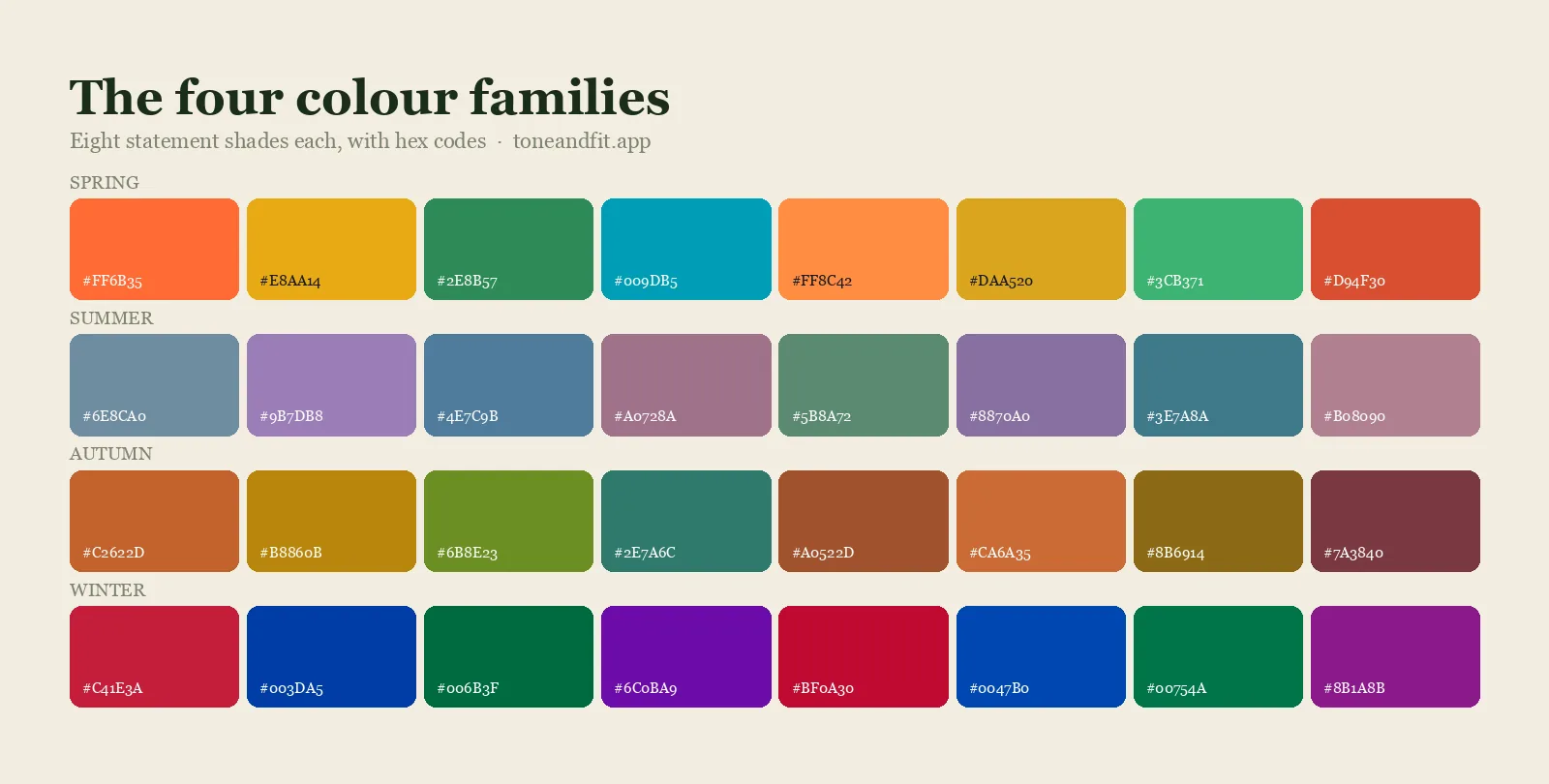
Once you have an answer, it connects to a season and a palette. If the system is new to you, start with the seasonal color analysis explainer and the overview of the 12 color seasons, then use the find my color season guide to narrow it down. For clothing, the guide to what colors look good on you turns your result into a wardrobe.
Colors worn near the face can also change how tired you look. A shade that suits your undertone tends to lift the area around the eyes, and a shade that fights it tends to deepen the shadows. If dark circles are a concern, our piece on colors that wash you out shows which shades usually do the damage, and eyeshadow by color season helps you choose shades that draw attention to the eyes in a flattering way.
Common mistakes
- Testing the under-eye. It is the thinnest, most shadowed skin on your face. Use the jaw, neck, chest and arm.
- Deciding you are cool because the circles look blue. Visible vessels are not an undertone.
- Deciding you are warm because the circles look brown. That is pigment and sits on top of your undertone.
- Testing right after waking or a late night. Puffiness and shadow are at their worst, and your eye gets pulled to them.
- Using overhead or warm indoor light. Both deepen the under-eye hollow and tint everything.
- Relying on one test. Each test has a weakness. Look for agreement across at least three.
Skip the guesswork
Get your 12-season result and palette from a single photo. Free to try, no sign-up.
Find your season free ↗FAQ
Can I find my undertone if I have dark circles?
Yes. Test the jawline, neck, chest and inner arm in soft daylight with the jewelry, white-versus-cream and sun-reaction tests, and ignore the under-eye skin, which is too thin and shadowed to judge.
Do dark circles mean I have a cool undertone?
No. Blue or purple circles come from thin skin showing the vessels beneath it, and brown circles come from surface pigment. Neither one tells you whether your base is cool, warm, neutral or olive.
Why do my under-eyes look blue or purple?
The skin there is very thin, so vessels and shadow show through. Tiredness, light direction and your natural contrast can all make it look stronger. This is a color description and not a medical opinion, so see a doctor if it is new or worrying.
Does concealer change my undertone?
No. Concealer and color correctors change how the area looks on the surface and do not change your base undertone. They can make a test harder to read, so test bare skin on your neck, chest and arm.
What is the best undertone test if my dark circles are strong?
The white-versus-cream paper test under your chin and the jewelry test on your neck and chest. Both use large areas of color away from the eyes, so the circles cannot skew the result.
Can brown dark circles make me look warmer than I am?
They can pull your eye toward a warm, muddy tone. Compare the neck and inner arm with the cheek, and use the jewelry test on those areas to see whether warmth shows up beyond the circles.
Can an app find my undertone if I have dark circles?
A selfie-based app reads skin, hair and eyes together, so one shadowed area has less influence than it does on a visual check. Take the photo in soft daylight, rested and bare-faced, and compare the result with the manual tests.
Can I check my color season from a photo?
Yes. The free Tone & Fit web tool reads your color season from one selfie in about 30 seconds, with no sign-up and no photo stored by us. The Tone & Fit app for iPhone and Android then builds your full palette of 38 named shades.