Best Colors for Cool Undertones
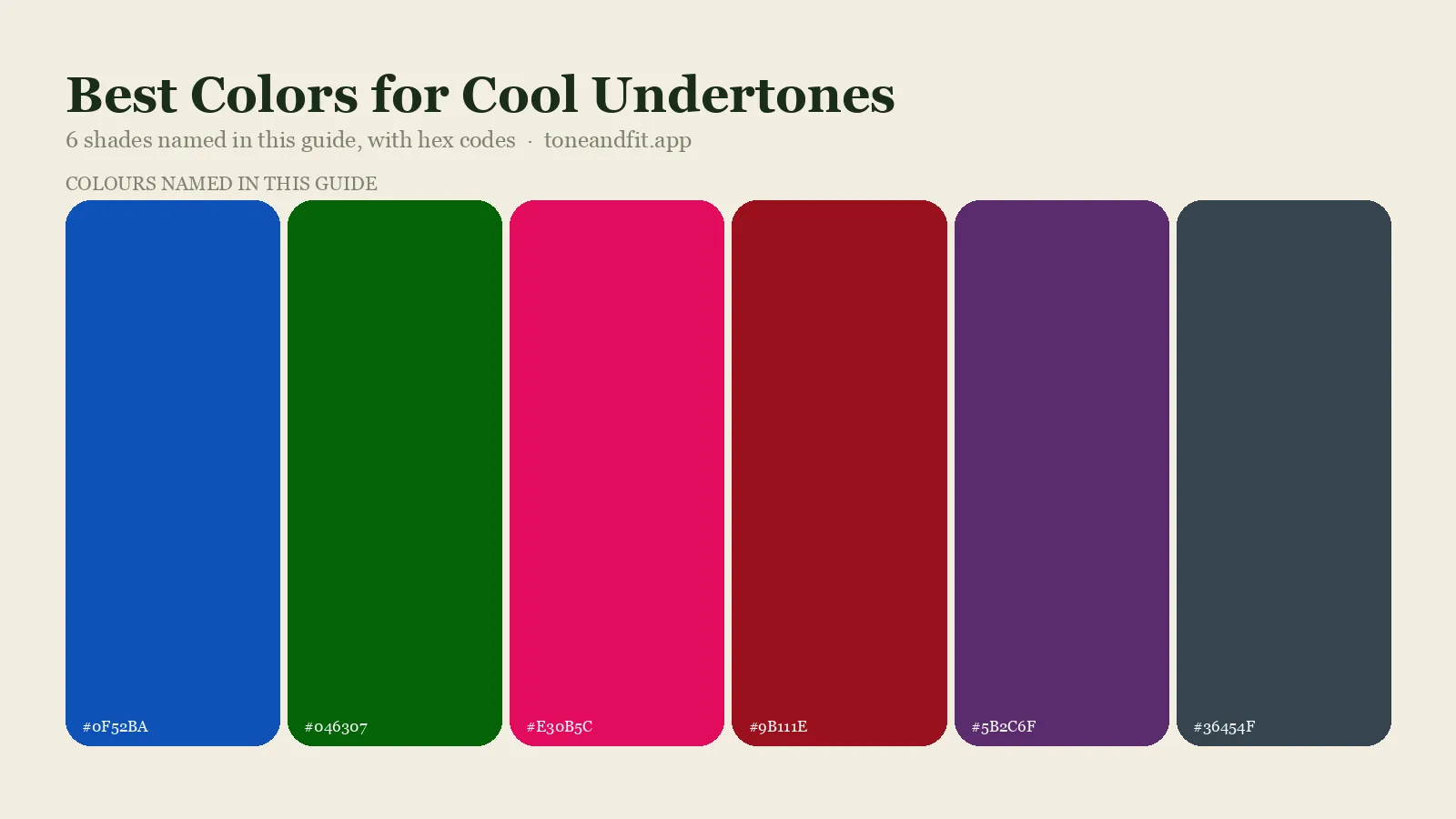
The best colors for cool undertones are the ones with blue underneath: emerald, sapphire, royal blue, raspberry, plum, true red, icy pastels and charcoal. Warm, yellow-based colors such as mustard, orange and golden beige tend to look sallow, so skip or soften them. Cool undertone describes your skin, not how light or dark you are, so it applies at every depth.
The short version: cool undertones look best in blue-based, clear or deep colors, and in silver-toned metals. This post sits under our guide to what colors look good on you and gives named colors, outfit ideas and the mistakes to avoid.
What's in this guide
- The quick answer
- What a cool undertone actually is
- Signs you have a cool undertone
- Best colors for cool undertones at a glance
- Blues and greens
- Pinks, reds and purples
- Neutrals that work
- Pastels and bright colors
- Colors to avoid or soften
- Cool undertones at different depths
- Which color seasons are cool
- Makeup, metals and hair
- Common mistakes
- Checking your result with an app
- FAQ
The quick answer
If your skin has a pink, rosy, red or bluish cast rather than a golden or peachy one, you most likely have a cool undertone. Your best colors echo that cool base. Use this order when you shop.
- Start with blue-based colors. Royal blue, sapphire, cobalt, emerald, teal and navy all sit well against cool skin.
- Choose cool reds and pinks. Raspberry, fuchsia, wine, cherry red and cool rose look clearer than orange-toned reds.
- Pick cool neutrals. Charcoal, navy, slate, stone gray and true white are safer than camel, cream and olive.
- Test near the face. Hold the color under your chin in daylight. If your skin looks even and your eyes look brighter, keep it.
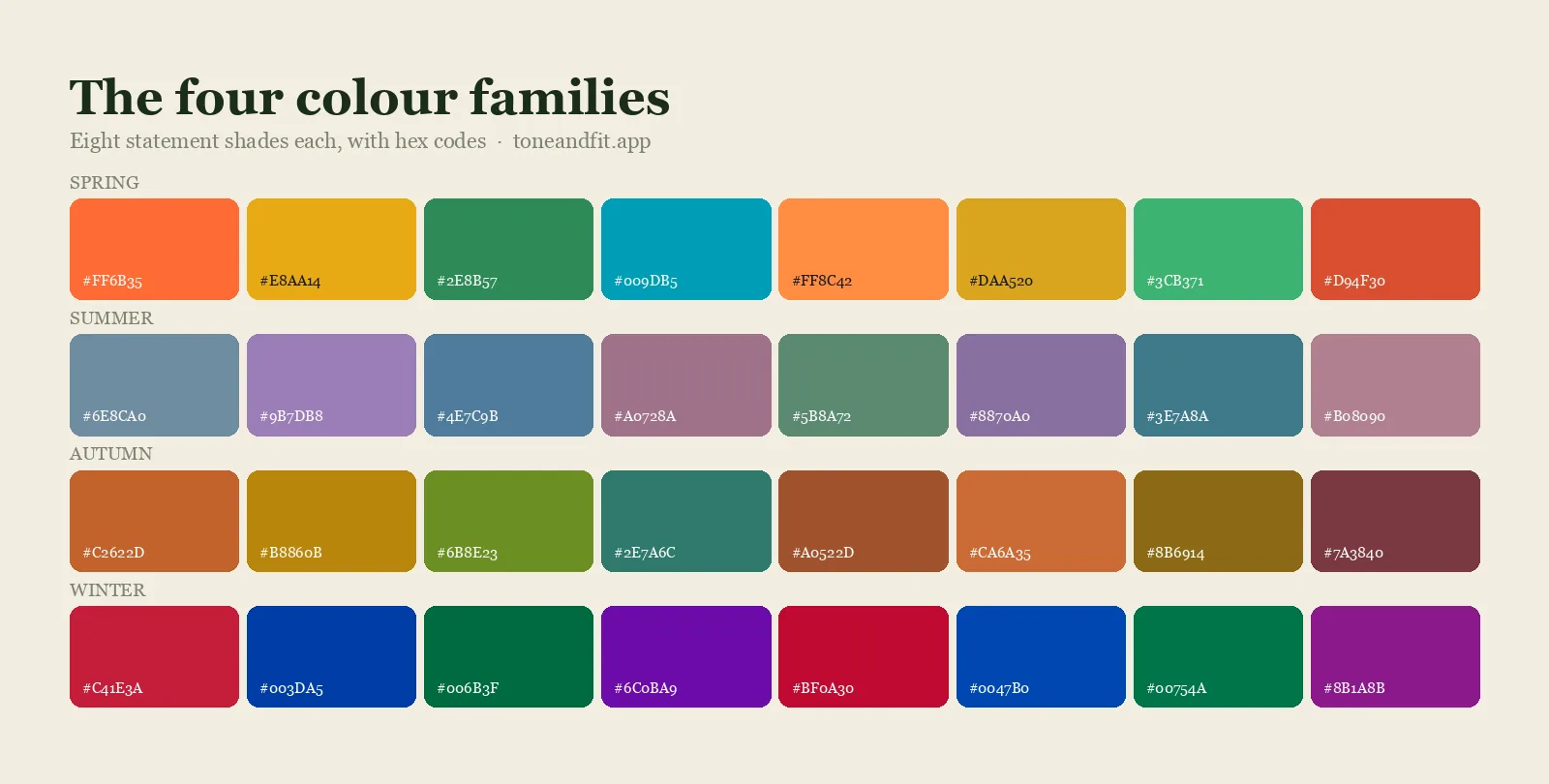
The sections below give named colors by family, then cover depth, color seasons, makeup and the mistakes people make most often. If you have not confirmed your undertone yet, do that first with our guide on how to find your skin undertone at home. Cool undertones sit in the Summer and Winter families; depth and clarity decide which.
What a cool undertone actually is
Undertone is the subtle tint beneath the surface of your skin. It is different from the color you see on top, which changes with sun, redness, tanning and makeup. Undertones are usually grouped as warm, cool, neutral and, in some people, olive. A cool undertone leans pink, red or blue. A warm undertone leans yellow, golden or peach. The seasonal color analysis explainer shows how undertone, depth and contrast combine into the 12 seasons.
A common mix-up is thinking cool means fair. It does not. Cool undertones appear in very light skin, medium skin and deep skin, and our posts on dark skin tones and pale skin show how the same undertone looks at each end of the range. Another mix-up is that cool people look pale or washed out in color. The opposite is true when the colors are right. Cool skin often looks its best in strong, clear colors, because they match its clarity.
It also helps to know what cool is not. It is not the same as "bad in warm weather" or "looks good only in winter". Cool describes the pigment mix in your skin, hair and eyes, and you can wear cool colors in any season. If you want the other side of the picture, read cool skin tones explained and compare it with warm skin tones.
Signs you have a cool undertone
No single test is perfect, so use several and look for agreement. These are the checks we trust most.
- Jewelry test. Hold silver and gold against your bare neck in daylight. If silver looks cleaner and gold looks brassy or flat, you lean cool. Our page on gold or silver jewelry for your undertone explains how to run it properly.
- White versus cream. Put a sheet of stark white and a sheet of cream under your chin. If stark white looks fresh and cream makes you look yellow, you lean cool.
- Sun reaction. Cool skin often burns or flushes pink before it tans, and the tan can look rosy. This is a hint, not a rule, because sun history varies.
- Veins. Veins that look blue or purple often point cool. Veins that look green point warm. Lighting and depth make this unreliable on its own.
- Best everyday colors. If you keep reaching for blue-based clothes and warm shades never feel right, that is a clue.
Surface color can fool you. Redness from rosacea, irritation or a flush can make a neutral or even warm person look cool for a moment, and a deep tan can hide a cool base. Our articles on undertone versus overtone, finding undertone with redness and finding it with a tan cover those traps.
Best colors for cool undertones at a glance
Use the swatches as starting points. Depth decides how bright or soft to go inside each family.
| Family | Colors that work | Why they work |
|---|---|---|
| Blues | Royal blue, sapphire, cobalt, navy, icy blue | Blue-based colors share the cool base of your skin. |
| Greens | Emerald, pine, cool teal, mint | Greens with some blue in them stay clean next to pink tones. |
| Pinks | Raspberry, fuchsia, cool rose, orchid | Blue-pinks bring out your natural flush. |
| Reds | Cherry, ruby, wine, burgundy | Reds with a blue base look rich, not orange. |
| Purples | Plum, violet, amethyst, lavender | Purples sit between blue and red, matching cool skin. |
| Neutrals | Charcoal, navy, slate, stone gray, true white, black | Cool neutrals keep the face clear instead of yellow. |
Blues and greens
Blue is the most reliable family for a cool undertone. Royal blue and sapphire are the classics because they are clear and strong, and cobalt is brighter again. Navy is a good everyday swap for black near the face. Icy blue and powder blue work well if your coloring is light. For greens, choose the ones with blue underneath: emerald, pine, cool teal, spruce and mint. Yellow-greens such as chartreuse, moss and olive pull the wrong way and can make cool skin look tired.
Teal deserves a note. Cool teal, which leans blue, is excellent. Warm teal, which leans green-yellow, is better for warm skin. When you shop, hold the item against your face and look at whether your skin goes pink and even or flat and gray. If you like blues, our posts on the cool summer and cool winter palettes show the exact shades those seasons wear.
Pinks, reds and purples
Cool undertones look especially good in blue-pinks and blue-reds. Raspberry, fuchsia, magenta, cool rose and orchid are flattering and lively. For reds, think cherry, ruby and wine rather than tomato, brick or rust. A true red with a hint of blue usually works on cool skin, and a very orange red can fight with the skin. Burgundy and plum are rich choices for evening and cooler months.
Purples are almost a signature for cool coloring. Violet, amethyst, plum and soft lavender all work, with depth deciding how rich to go. If you want to see how reds vary by undertone, read red lipstick for every undertone, which applies the same logic to makeup.
Neutrals that work
Neutrals are the base of most wardrobes, so getting them right matters more than any single bright piece. For cool undertones the strongest neutrals are charcoal, navy, slate, stone gray, cool taupe, black and true white. These keep the skin looking clear. Camel, cream, khaki and warm beige can make cool skin look sallow, especially near the face.
That does not mean you can never wear them. Use them lower on the body, such as trousers or shoes, and put a cool color near your face. Our guide to neutrals by color season lists the exact ones for each season, and the post on white versus cream helps you choose between the two most common whites.
Pastels and bright colors
Cool undertones usually wear icy pastels well: baby blue, soft lavender, cool pink, mint and pale lilac. They keep the freshness of the skin. Warm pastels such as peach, butter yellow and apricot are harder to carry. If you have low contrast, meaning your skin, hair and eyes are close in depth, soft pastels and muted cool tones suit you best. If you have high contrast, clear and saturated colors will look sharper. You can check with our guide to how to find your contrast level.
Bright colors work when they are the cool kind. Fuchsia, cobalt, emerald and bright violet are all strong picks. Neon yellow, bright orange and lime lean warm, so test them before you commit.
See your own palette
The free web tool names your season from one selfie, with no sign-up. The app's scan is free too and shows your undertone, best metals and starter colors; your season and full palette in the app are an optional upgrade.
Find my season free → Get the app ↗Colors to avoid or soften
Avoid is a strong word, because you can wear any color if you handle it well. These are the ones that most often work against cool undertones, with a way to soften each.
- Mustard and golden yellow. They add yellow to skin that already has pink. If you love them, wear them away from the face or pick a lemon with some blue in it.
- Orange and rust. They can make cool skin look flushed or sallow. Try coral-pink or watermelon instead.
- Camel and warm beige. Swap for taupe, stone or soft gray near the face.
- Olive and moss. Swap for pine or emerald.
- Cream and ivory. Swap for true white or soft white.
If you want the reverse list, our post on best colors for warm undertones shows the shades that suit the other side, and the page on neutral undertone helps if you find both lists work for you.
Cool undertones at different depths
Depth changes how bright or soft the best version of a color is. Undertone decides the family. Depth decides the intensity.
- Light cool skin. Soft and clear mid-tones work best. Icy pastels are lovely, and very dark colors near the face can look heavy if contrast is low.
- Medium cool skin. This depth handles the widest range. Emerald, raspberry, cobalt and plum all work, and it can go soft or bold.
- Deep cool skin. Saturated jewel tones look striking: ruby, emerald, sapphire, fuchsia and royal purple. Crisp white and icy colors can also look sharp. Dusty gray-beige can look flat, so add richness. Our post on deep skin undertone covers the testing side.
Which color seasons are cool
In the 12-season system, the cool seasons are the summers and the winters, plus the cool ends of some neighboring types. Cool summer, light summer and soft summer lean cool with lower to medium contrast. Cool winter, deep winter and bright winter lean cool with higher contrast or higher clarity. The page on the 12 color seasons compares all of them side by side.
To narrow it down, start with the individual pages: cool winter, cool summer, deep winter and light summer. If you are stuck between two, the comparison post on cool winter versus cool summer is the most useful. The full method is in our personal color analysis guide, and the find my color season guide gives a step-by-step route.
Makeup, metals and hair
The same undertone logic carries beyond clothes. For makeup, cool undertones suit blue-pink blushes, berry and raspberry lipsticks, cool rose and plum, and taupe, gray, silver and navy eyeshadows. Our guide to the best lipstick color for your undertone and the best nail colors for your undertone give named shades.
For metals, silver, white gold and platinum usually look cleanest. Rose gold is a good bridge if you want warmth without yellow. If you wear a watch daily, see the best watch metal for your skin tone. For hair, cool-toned shades such as ash brown, blue-black, platinum and cool burgundy keep the skin consistent. A strongly golden or copper shade can clash with a cool base, a theme we cover in the best hair color for your skin tone.
Common mistakes
- Assuming cool means pale. Cool undertones appear at every depth. Check undertone, not just lightness.
- Wearing black everywhere. Black is cool, but it can be harsh on low-contrast coloring. Navy or charcoal is often softer.
- Mistaking redness for undertone. A flush or rosacea can make you look cool temporarily. Test in calm skin and soft daylight.
- Testing under yellow indoor light. It makes every color look warmer. Test by a window. More traps are listed in common color analysis mistakes.
- Throwing out all warm clothes. You do not have to. Move them away from your face or pair them with a cool piece next to the skin.
Checking your result with an app
If you want an outside check, the Tone & Fit app reads skin, hair and eyes from a selfie and returns a season with a palette of named shades. Take the photo in soft daylight with filters off, and compare the result with your manual tests. If the two disagree, trust the one taken in better light. Our color analysis app guide explains what these tools measure and where they have limits, and the comparison of the best color analysis apps lists the options.
Skip the guesswork
The free web tool names your season from one selfie, with no sign-up. The app's scan is free too and shows your undertone, best metals and starter colors; your season and full palette in the app are an optional upgrade.
Find my season free → Get the app ↗FAQ
What colors look best on cool undertones?
Blue-based colors: emerald, sapphire, royal blue, raspberry, plum, wine, true red, icy pastels and cool neutrals such as charcoal, navy and stone gray. Silver-toned metals usually look cleanest.
What colors should cool undertones avoid?
Yellow-based and orange-based colors tend to look sallow: mustard, orange, rust, camel, warm beige and olive. You can wear them away from the face or choose a cooler version.
What is the best neutral color for a cool undertone?
Charcoal, navy, slate, stone gray, cool taupe and true white are the safest neutrals. Black works too, though navy or charcoal is softer on low-contrast coloring.
Do cool undertones look good in black?
Often, yes, especially with higher contrast. If your coloring is soft, black can look harsh near the face, and navy or charcoal may flatter more.
Can you have a cool undertone with olive or dark skin?
Yes. Undertone and depth are separate. Deep skin can be cool, and so can medium and light skin. Olive skin has a green-gold cast, so test it separately before assuming cool or warm.
Does gold or silver suit a cool undertone?
Silver, white gold and platinum usually look cleanest on cool undertones. Rose gold often works as a bridge, and yellow gold can look brassy. Test both against your bare neck in daylight.
How do I know if I have a cool or neutral undertone?
If both warm and cool colors seem to work, you may be neutral. If cool shades clearly look cleaner and warm shades look yellow or flat across several tests, you lean cool.
Can I check my color season from a photo?
Yes. The free Tone & Fit web tool reads your color season from one selfie in about 30 seconds, with no sign-up and no photo stored by us. The Tone & Fit app for iPhone and Android then builds your full palette of 38 named shades.