Best Colors for Asian Skin Tones by Undertone
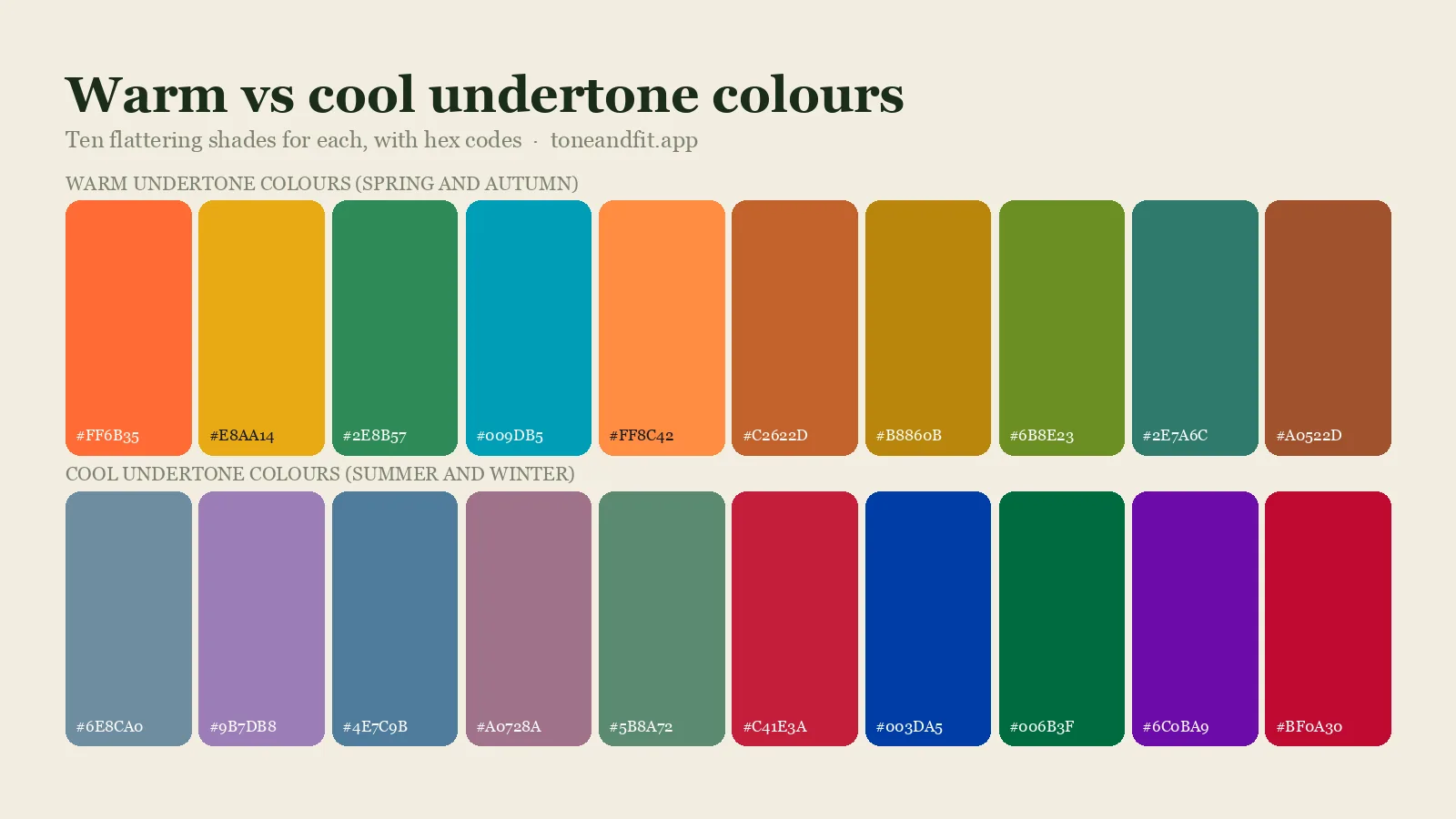
The best colors for Asian skin tones depend on your undertone and contrast, not on your heritage, because Asian skin spans cool, warm, neutral and olive undertones at every depth. Cool undertones suit emerald, sapphire and raspberry, warm undertones suit coral, apricot and terracotta, neutral undertones suit jade and dusty rose, and olive undertones suit forest green, burgundy and rust.
The short version: there is no single palette for a group as varied as this one, so the reliable method is to find your own undertone, then judge your depth and contrast, then choose colors that match both. This guide walks through that process and gives color families for each undertone. It sits under our guide to what colors look good on you, which explains the full method for any skin tone.
What's in this guide
- The quick answer
- Why there is no single answer for Asian skin
- Step one: find your undertone
- Step two: judge depth and contrast
- Best colors at a glance
- Best colors for cool undertones
- Best colors for warm undertones
- Best colors for neutral undertones
- Best colors for olive undertones
- How hair and eye color change the picture
- Light, medium and deep skin
- Connecting it to a color season
- Makeup that follows your undertone
- Common mistakes to avoid
- Using an app to check your answer
- FAQ
The quick answer
Asian skin tones cover an enormous range, so no single list of colors can be right for everyone. What works is matching colors to two things you can actually observe: your undertone (cool, warm, neutral or olive) and your depth and contrast (how light or deep your skin, hair and eyes are, and how much they differ from one another). Here is the short version, which the rest of this guide unpacks.
- Cool undertone: blue-based colors such as emerald, sapphire, raspberry, cool rose and true red.
- Warm undertone: golden and earthy colors such as coral, apricot, olive, terracotta and warm teal.
- Neutral undertone: soft, balanced colors such as dusty rose, jade, muted teal and warm taupe, with room to borrow from both sides.
- Olive undertone: deep, slightly muted greens, burgundy, rust and mustard-leaning golds, while very icy or very orange shades can look harsh.
If you want to confirm your own undertone first, the Tone & Fit app reads it from a selfie, and the at-home tests later in this guide give you a manual cross-check.
Why there is no single answer for Asian skin
The word "Asian" describes people from dozens of countries and thousands of family backgrounds. Skin can be very fair or very deep. Hair can be jet black, dark brown, auburn-tinged or dyed. Eyes are usually dark brown, but not always, and the shade of brown varies from near black to warm amber. Undertones run across the whole spectrum too: some people are clearly cool and pink-leaning, some are golden and warm, many are neutral, and a good number are olive.
That is why advice such as "Asian skin is always yellow-toned" is both inaccurate and unhelpful. The yellow cast some people notice is a surface effect that can come from many things, including lighting, a tan, or how a camera processes skin. It does not tell you whether the underlying undertone is cool, warm, neutral or olive. We cover the difference between surface color and undertone in our piece on undertone versus overtone.
The useful way to approach this is to treat your own coloring as the starting point and ignore the stereotype. Your palette comes from your undertone and contrast, not from your heritage. Two people with the same background can belong to completely different color seasons, and two people from very different backgrounds can share one. This guide is part of our broader walkthrough in the guide to what colors look good on you, which explains the method step by step.
Step one: find your undertone
Undertone is the steady base color beneath the surface of your skin. It is the single most useful piece of information for choosing colors, and it is also the most commonly misjudged. Before you pick any shade from this article, spend a few minutes on it.
The most reliable manual method is a combination of three tests, done in soft daylight with no makeup. First, hold a piece of gold jewelry and a piece of silver jewelry against your jawline and see which makes your skin look clearer and healthier. Second, hold a sheet of pure white paper and a sheet of cream paper beside your face and notice which one flatters. Third, think about how your skin behaves in the sun: pink and burning first suggests cool, golden and tanning easily suggests warm, a bit of both suggests neutral or olive. Our guide to finding your skin undertone at home walks through each test in detail, and how to determine skin undertone compares the tests by reliability.
If your skin has some golden cast but also a greenish or grey quality, or if the tests disagree, you may be olive. Olive is often mistaken for warm, but the right colors for olive skin are different. Our explainer on olive undertone and the guide on telling whether olive skin is warm or cool will help you sort that out. If you cannot get a clear answer, a neutral result is entirely normal, and neutral undertone skin explains what it means.
Try not to rely on the vein test alone. Blue or green veins are a weak signal, and they are particularly hard to read on deeper or tanned skin. See what blue or green veins actually mean for the caveats.
Step two: judge depth and contrast
Undertone sets the temperature of your palette. Depth and contrast set how bold, light or soft the colors should be. Depth is how light or deep your coloring is overall. Contrast is the difference between your skin, hair and eyes.
Many people with black or very dark brown hair and dark eyes have high contrast if their skin is fairly light, because the difference between the skin and the hair is large. Others have deep skin as well as dark hair and eyes, which gives a lower contrast but a deep overall look. Both situations suit rich, saturated colors, but they differ in how much lightness you can wear near the face. Our guide to how to find your contrast level shows how to measure this with a simple photo exercise.
A quick rule of thumb: high contrast and deep coloring can carry bold, clear colors and strong contrasts between garments. Lower contrast and softer coloring usually look better in blended, muted shades. Light coloring tends to suit lighter, clearer or softer tones, and very pale or pastel shades look best when they are tied to your undertone rather than chosen at random.
Best colors at a glance
This table summarizes the colors that tend to work for each undertone. Treat the swatches as starting points, not rules. Your depth and contrast decide how bright or soft to go within each family.
| Undertone | Colors that flatter | Colors to handle with care |
|---|---|---|
| Cool | Emerald Sapphire Raspberry Cool rose | Orange, mustard and warm khaki can look sallow |
| Warm | Coral Apricot Olive Terracotta | Icy pastels and stark blue-pinks can wash you out |
| Neutral | Dusty rose Jade Muted teal Warm taupe | Extremes at either end of the temperature range |
| Olive | Forest green Burgundy Rust Antique gold | Very icy or very bright orange tones can look harsh |
Best colors for cool undertones
If your skin leans cool, you will look best in colors with a blue base. These are shades that look as if a little blue or grey has been added: emerald green, sapphire and cobalt blue, plum, raspberry, cool rose, true red, charcoal and navy. Silver, white gold and platinum jewelry tend to flatter. For neutrals, choose charcoal, slate, navy, soft white and cool taupe rather than camel or cream.
Cool undertones with high contrast, which is common for people with fairly light skin and very dark hair, can pull off crisp contrasts: a white shirt under a navy blazer, or black with a bright blue. Our winter color palette by season shows how the cool, high-contrast end of the system looks in practice. Cooler undertones with lower contrast fit the summer palettes better, with softer blue-based shades such as dusty rose, lavender and soft teal.
The cool skin tones explainer goes into the logic, and the cool winter colors to avoid page is a handy list of what tends to fail.
Best colors for warm undertones
If your skin leans warm, golden and earthy colors will look natural. Think coral, peach, apricot, warm teal, olive, mustard, terracotta, camel and warm brown. Gold jewelry and rose gold usually flatter. For neutrals, use cream, camel, chocolate and warm khaki instead of stark white and grey.
Warm undertones with deep coloring suit rich autumn shades such as rust, deep teal and burnt orange, which you can see in the fall color palette by season. Warm undertones with lighter coloring suit brighter, clearer spring shades such as coral, turquoise and fresh green. See the warm skin tones explainer for more on how this works and how to avoid mistaking a tan for a warm undertone.
Best colors for neutral undertones
Neutral undertones sit in the middle, so you have more freedom than most people realize. The best colors are soft and balanced rather than extreme: dusty rose, jade, muted teal, soft plum, warm taupe, stone and soft navy. Both gold and silver tend to work, and mixed metals can look especially good.
The main risk for neutrals is going too far in either direction. Very icy colors and very warm orange colors both tend to overpower neutral skin. Instead, choose the middle ground of each family, such as a teal that is neither blue nor green, or a rose that is neither pink nor peach. Our guide to neutrals by color season shows which neutral wardrobe basics suit each palette.
Best colors for olive undertones
Olive skin has a greenish or grey-gold base that sits between warm and cool. It is common across many backgrounds, including many Asian ones, and it behaves differently from a simple warm undertone. The best colors are deep, rich and slightly muted: forest green, burgundy, rust, antique gold, deep teal, aubergine and warm brown. These pick up the greenish gold in the skin without competing with it.
Very bright orange, very icy pastels and stark lemon yellow often look harsh on olive skin, because they either clash with the green undertone or drain the color from the face. Our dedicated guides to the best colors for olive skin tone and color analysis for olive skin tone go deeper into how to pick shades.
See your own palette, not a generic one
Tone & Fit reads your skin, hair and eyes from one selfie and returns your color season and a full palette.
Try Tone & Fit free ↗How hair and eye color change the picture
Many people with Asian heritage have very dark hair and dark brown eyes, and that coloring does matter. Very dark hair adds contrast and depth, which means you can usually wear stronger, more saturated colors than someone with lighter hair. It also means pastel and very pale colors can look flat against the face unless they match your undertone closely.
If you dye your hair, treat the dyed color as a styling choice and the natural color as your reference for analysis. Our guide to finding your color season with dyed hair explains how to do this. The best colors for black hair also depend on undertone, as we explain in best colors for black hair by undertone, and the advice on the best colors for brown eyes applies to the most common eye color in this group. If you are choosing a new hair shade, the best hair color for your skin tone shows how to match it to your undertone.
Light, medium and deep skin
Depth changes how you apply all of the advice above.
Lighter skin
Lighter skin can look washed out in very pale or very dark extremes. The best colors keep a medium-to-bright level of saturation. Cool undertones suit rose, cool blue and clear red, and warm undertones suit coral, peach and fresh green. Our best colors for pale skin guide covers this range.
Medium skin
Medium skin has the widest range, and it is where undertone matters most, because depth alone does not narrow the choices. Our best colors for medium skin tone guide and the best colors for tan skin page are useful companions.
Deeper skin
Deeper skin handles bold, rich and high-saturation colors well, such as emerald, cobalt, fuchsia and deep red. Pale pastels can look chalky unless they carry some warmth or depth. See best colors for dark skin tones and deep skin undertone for how undertone shows up in deeper complexions.
Connecting it to a color season
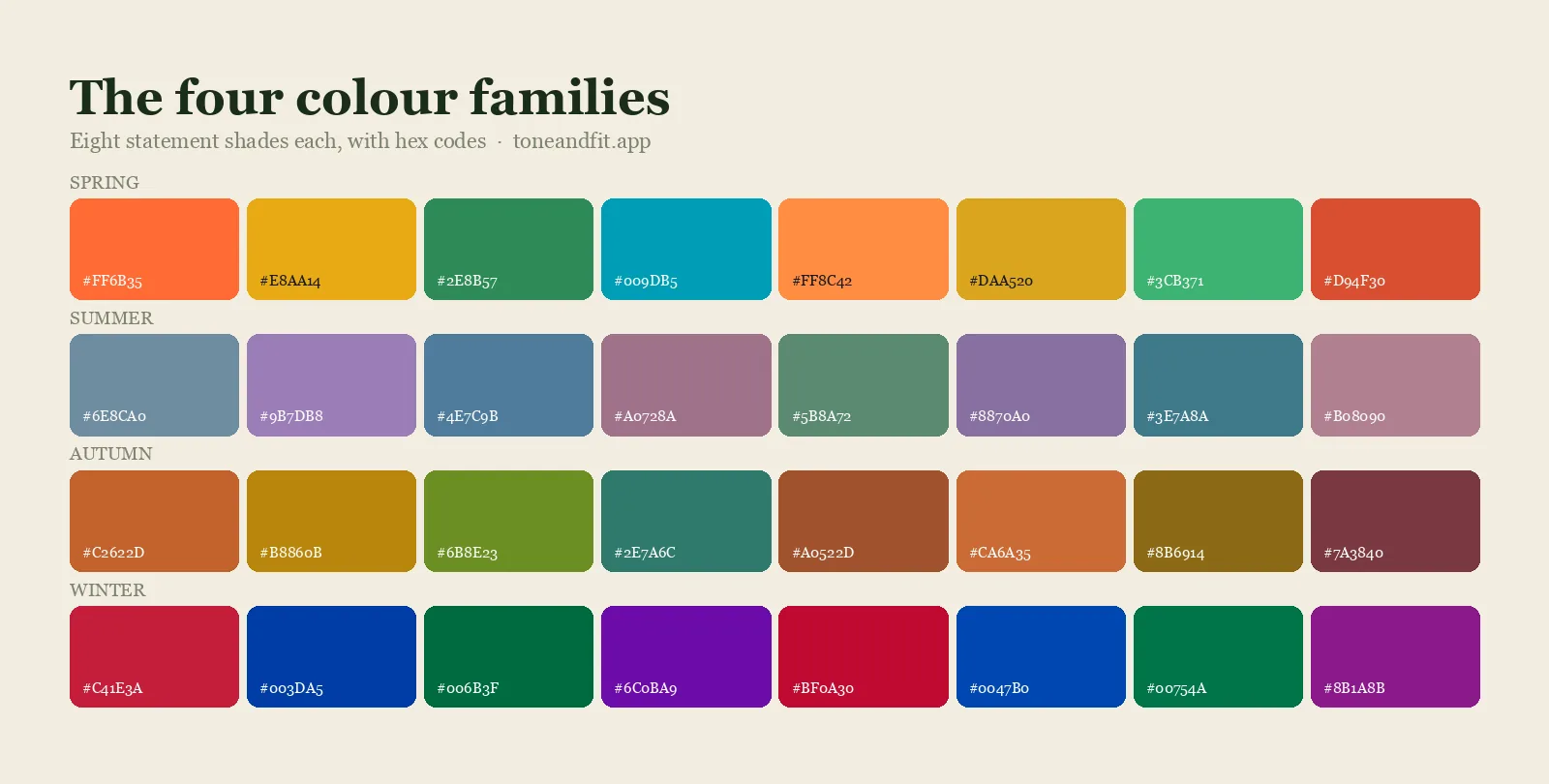
The seasonal color system turns undertone, depth and contrast into a palette you can use. It splits people into twelve seasons, such as Light Spring, Soft Autumn, True Winter and Deep Winter, each with its own colors. If the idea is new, start with the seasonal color analysis explainer and the overview of the 12 color seasons.
Many people with very dark hair and dark eyes land in the deeper seasons, such as Deep Winter, Deep Autumn or True Winter, but that is a tendency and not a rule. Plenty of people with dark hair are Soft Summer, Light Spring or Warm Autumn, once skin undertone and overall contrast are measured. If you are curious about a specific one, the pages on whether you are a Deep Winter and whether you are a Soft Summer list the signs to check. For the full process, our personal color analysis guide and the find my color season guide explain how to reach a confident answer.
Korean personal color analysis is a popular way of doing this, with its own tone-on-tone styling approach. If you are curious about that tradition, read about Korean color analysis for how it differs from the Western seasonal system.
Makeup that follows your undertone
The same principles apply to cosmetics. Match foundation to your undertone first and your depth second, which our guides on foundation shade by undertone and the best foundation undertone match explain. Choose blush and lipstick with the same temperature as your skin: blush by undertone and the best lipstick color for your undertone have shade ideas. For metals, silver suits cool, gold suits warm, and either works for neutral and olive.
Common mistakes to avoid
- Assuming your heritage decides your palette. Undertone and contrast decide it. Test your own coloring.
- Mistaking surface yellow for a warm undertone. Lighting, tanning and cameras can add a golden cast to any undertone.
- Defaulting to black. Black works for some people, but it can be harsh near the face for softer coloring. See black and your color season for how to judge it.
- Choosing pastels without checking undertone. A pastel that does not match your undertone can look chalky or flat, especially with very dark hair.
- Testing in warm indoor light. Bulbs change every color. Use soft daylight, as explained in why your color season seems to change in different lighting.
- Judging from one photo. Phone cameras shift skin color automatically, as why your phone camera lies about skin tone explains.
Using an app to check your answer
A manual test is a good start, but you can also get a second opinion from a photo-based tool. Tone & Fit reads your skin, hair and eyes together from a selfie and returns your color season and a palette, and you can compare the result with your manual tests. As with any photo method, lighting affects the outcome, so use soft daylight and turn off beauty filters. Our color analysis app guide explains what these tools measure and where they have limits, and the comparison of the best color analysis apps helps you choose one. For a free photo check, you can also try the free photo analysis tool on this site.
Find the colors that suit you
Get your 12-season result and palette from a single photo. Free to try, no sign-up.
Find your season free ↗FAQ
What colors look best on Asian skin?
It depends on undertone. Cool undertones suit emerald, sapphire, raspberry and cool rose. Warm undertones suit coral, apricot, olive and terracotta. Neutral undertones suit dusty rose, jade and muted teal, and olive undertones suit forest green, burgundy and rust. Heritage alone does not decide the palette.
Is Asian skin always warm or yellow-toned?
No. Asian skin includes cool, warm, neutral and olive undertones. A yellow cast can come from lighting, a tan or camera processing, and it does not prove a warm undertone. Test your own skin in daylight with the jewelry, white-paper and sun-reaction tests.
What colors suit olive Asian skin?
Olive undertones usually look best in deep, slightly muted colors such as forest green, burgundy, rust, antique gold and deep teal. Very icy pastels and bright orange can look harsh, because they clash with the greenish gold base of the skin.
Can I wear pastels with very dark hair and dark eyes?
Yes, if the pastel matches your undertone. Very dark hair adds contrast, so a pastel that is wrong for your undertone can look chalky or flat. Choose a soft shade with the right temperature, such as a dusty rose for cool or a peach for warm.
Does black suit Asian skin tones?
It depends on your contrast and undertone. Black can look sharp on high-contrast, cool or deep coloring and harsh on softer, warmer coloring. Try it near your face in daylight, and compare it with navy, charcoal or deep brown.
How do I find my undertone if my skin is deep or tanned?
Use clear skin that sees less sun, such as the inner arm or behind the ear, and run the jewelry, white-paper and sun-reaction tests in soft daylight. The vein test is the least reliable. If the tests disagree, you may be neutral or olive.
Which color season is most common for Asian skin tones?
No season belongs to a group. Many people with very dark hair and eyes land in deeper seasons such as Deep Winter or Deep Autumn, but others are Soft Summer, Light Spring or Warm Autumn. Measure your own undertone and contrast to find yours.
Can I check my color season from a photo?
Yes. The free Tone & Fit web tool reads your color season from one selfie in about 30 seconds, with no sign-up and no photo stored by us. The Tone & Fit app for iPhone and Android then builds your full palette of 38 named shades.