Best Colors for Black Hair: What Flatters It, by Undertone
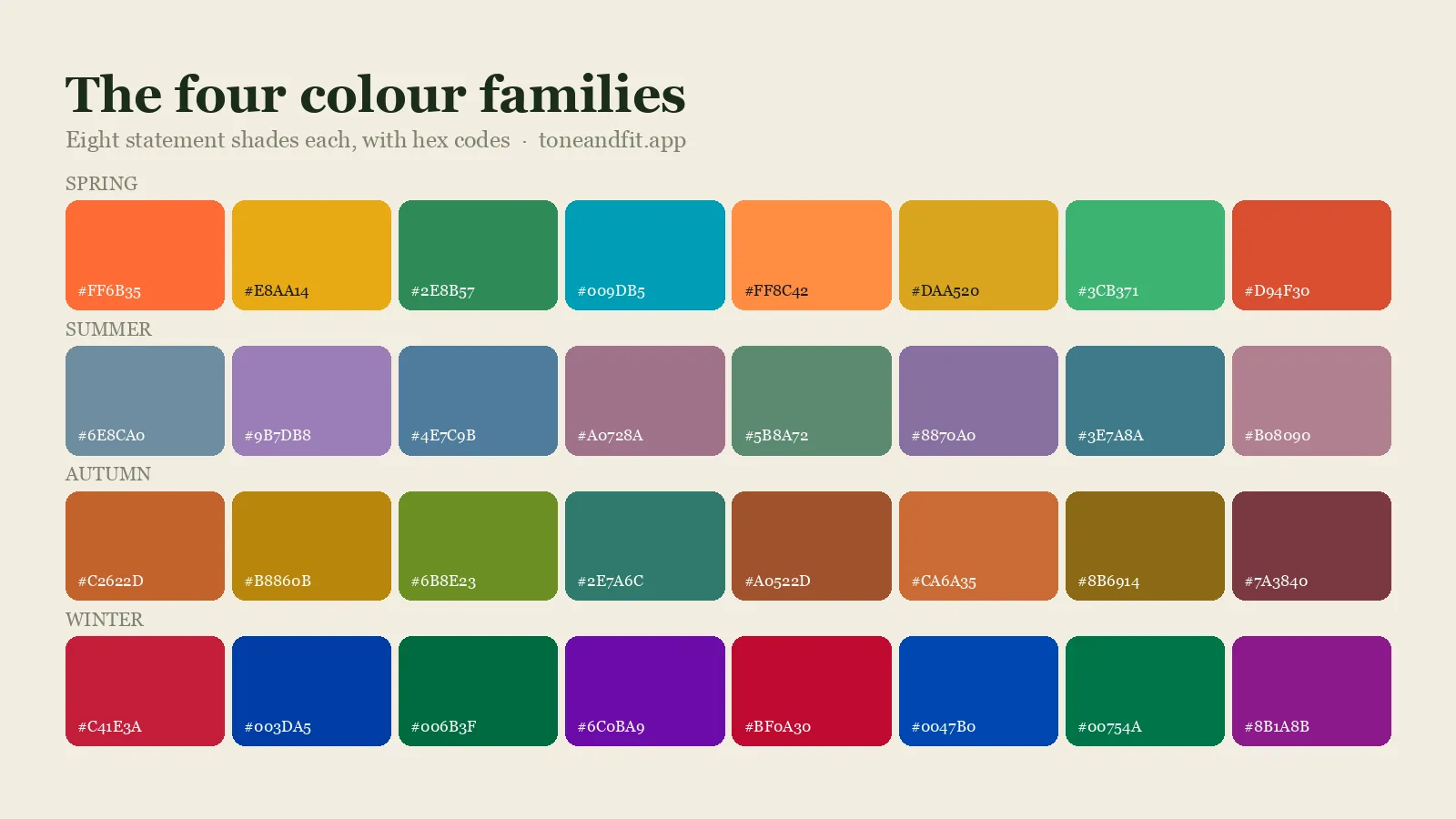
The best colors for black hair depend on your skin, not your hair: cool undertones look sharpest in emerald, sapphire, true red and crisp white, warm undertones glow in rust, olive, camel and warm teal, and neutral undertones suit jade, burgundy and soft coral. Black hair simply raises the contrast, so you can wear stronger color than most people.
The short version: black hair acts like a dark frame around your face. It gives you high contrast, which means bold and saturated colors tend to look balanced instead of loud. What black hair does not do is tell you whether to wear warm or cool shades. That comes from your skin undertone, and this guide shows how to find it and then pick colors that work with a black-haired frame. If you are new to the idea, our full guide to what colors look good on you covers the whole method.
What's in this guide
- The quick answer by undertone
- Why black hair changes how color looks
- Find your undertone first, not your hair color
- Best colors for black hair with cool skin
- Best colors for black hair with warm skin
- Best colors for black hair with neutral or olive skin
- How skin depth changes the choice
- Which color seasons often have black hair
- Wearing black when your hair is black
- White, cream and light colors
- Blue-black versus soft black hair
- Eye color as the tie-breaker
- Makeup, nails and metals
- Colors that tend to work against you
- Build a black-hair wardrobe in four steps
- FAQ
The quick answer by undertone
Find the row that sounds most like your skin, then read the matching section below for the reasoning.
| Your skin undertone | Colors that usually flatter | Usually works against you |
|---|---|---|
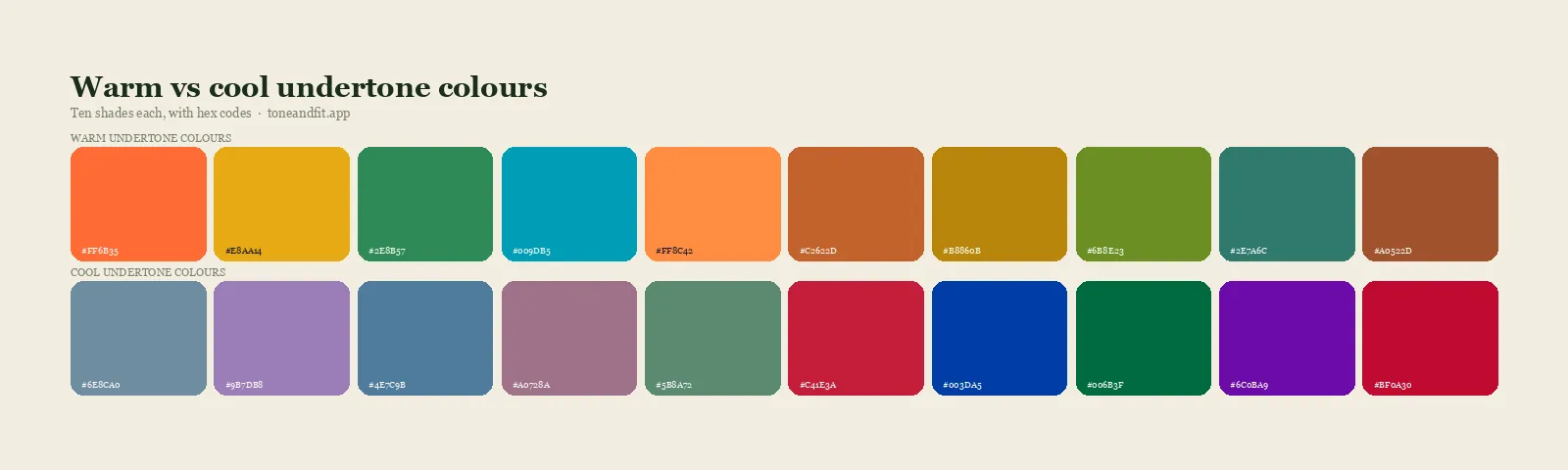
| Cool (pink, rosy or blue-leaning) | emerald, cobalt, raspberry, true red, crisp white | Orange, mustard and warm beige that turn the skin sallow |
| Warm (golden, peachy or yellow-leaning) | rust, olive, camel, warm teal, cream | Icy pastels and stark blue-white that look cold |
| Neutral or olive (a mix, or a green-gold cast) | jade, burgundy, sage, soft coral, soft white | Neon shades and very orange or very icy colors at the extremes |
These are tendencies, not laws. They describe how colors usually behave next to certain skin, and the sections below explain why so you can adjust the lists to your own face.
Why black hair changes how color looks
Color analysis looks at three things together: the temperature of your skin (undertone), how light or deep your coloring is, and how strong the contrast is between your hair, skin and eyes. Black hair sits at the far end of the depth scale, so it nearly always means high contrast, especially against fair or medium skin. Our explainer on how to find your contrast level shows how to measure this yourself.
High contrast changes the rules in your favor. Soft, low-saturation colors that blend into the skin can look washed out beside a strong dark frame, while clear and saturated colors hold their own. That is why people with black hair so often look good in jewel tones, true reds and crisp white, and why muted beiges and faded pastels can feel flat on them.
The second thing black hair does is hide information. Because the hair is so dark, it is easy to assume it points to a cool or a warm palette. It does not. Two people with identical black hair can have opposite undertones, which is why we always start from skin. The broader logic is laid out in our seasonal color analysis explainer.
Find your undertone first, not your hair color
Undertone is the part of your coloring that stays the same when you tan, flush or change makeup. It is the single most useful fact for choosing color, and it is easiest to read in daylight with no makeup on. Our step-by-step guide to finding your skin undertone at home covers four reliable tests, and the short versions are:
- Jewelry test: if gold looks richer on you, you lean warm. If silver looks cleaner, you lean cool. If both work, you may be neutral. The gold or silver guide explains how to run it properly.
- White paper test: hold a pure white sheet and then a cream sheet against your bare face. Whichever makes your skin look clearer and healthier points to your side.
- Vein check: blue or purple veins on the inner wrist suggest cool, green suggests warm, and a mix suggests neutral. This is the least reliable test, so treat it as a tie-breaker.
- Sun reaction: skin that burns or turns pink first often leans cool, while skin that goes golden or bronze easily often leans warm.
If the tests disagree, you are probably neutral or olive, and that is a real answer, not a failure. The neutral undertone guide and the olive undertone explainer cover what that means in practice. If you would rather skip the tests, the Tone & Fit app reads skin, hair and eyes together from a selfie and returns a season and a palette.
Find your exact palette in one selfie
Tone & Fit reads your skin, hair and eyes and returns your season and a full color palette.
Try Tone & Fit free ↗Best colors for black hair with cool skin
Cool skin with black hair is the classic high-contrast combination. The skin has a pink, rosy or blue-leaning base, the hair is a deep blue-black or soft black, and nothing in the face is competing with the color you put near it. Clear, cool and saturated shades make this coloring look sharp and polished.
Jewel tones
Emerald, sapphire, amethyst, ruby and deep magenta are the natural territory. They are saturated enough to match the weight of the hair and cool enough to keep the skin looking clear. A single emerald sweater or sapphire dress rarely needs any other statement.
True reds and berries
A blue-based red, meaning a red that leans toward cherry rather than orange, is one of the strongest colors for cool skin with black hair. Raspberry, fuchsia, plum and deep wine follow the same logic. Our guide to red lipstick for every undertone shows how to find the right red for your face.
Cool blues, greys and white
Cobalt, royal blue, steel blue, charcoal and icy grey sit well against cool skin, and navy is a more interesting neutral than black for daily wear. Crisp white is a standout here, because the contrast with black hair is nearly the strongest a wardrobe can offer.
Soft pastels, with a caveat
Pastels work if they are cool and clear: rose, lavender, periwinkle and icy mint. Skip dusty or yellow-based pastels, which can look chalky next to the stark frame of black hair. If this coloring sounds like you, you may find yourself in one of the winter seasons, which our winter color palette by season breaks down.
Best colors for black hair with warm skin
Warm skin with black hair is less common than the cool pairing, and it is often misread. The skin has a golden, peachy or olive-gold base, but the hair is dark, so people assume cool colors will be right. Usually the opposite is true: the skin still needs warm color to look healthy.
Earth tones and spice
Rust, terracotta, cinnamon, burnt orange and warm brown flatter golden skin, and the depth of black hair lets you wear the richest versions without looking heavy. Use them as sweaters, shirts and scarves close to the face.
Warm greens and teals
Olive, moss, forest, peacock and warm teal are strong, and they echo golden skin without competing with the hair. If you have hazel or green eyes, our guides to the best colors for hazel eyes and the best colors for green eyes show how to pull the eye color forward.
Golds, camels and creams
Camel, caramel, mustard with enough depth, and warm cream are quiet, expensive-looking choices. Cream is better than optic white for most warm skin, because stark blue-white can read cold. Warm skin with deep coloring often lands in the deeper autumn palettes, described in our fall color palette by season.
Best colors for black hair with neutral or olive skin
If your skin is neutral or olive, you sit between warm and cool. The reliable approach is to choose colors that are moderate in temperature, neither icy nor orange, and let the high contrast of black hair carry the saturation.
- Greens: jade, sage, teal and deep pine harmonize with the green-gold cast of olive skin. See the best colors for olive skin tone for the longer list.
- Reds and wines: burgundy, cranberry, brick and soft tomato red make neutral skin look warm and alive. Avoid the extremes of very blue or very orange reds.
- Corals and dusty pinks: soft coral and rosewood add color without pulling the face in one direction.
- Neutrals: charcoal, chocolate and deep navy are more flexible than black, and soft white is easier than optic white.
The practical test is to hold a color under your chin in daylight. If your skin looks clearer and your eyes look brighter, keep it. If shadows appear or the skin looks sallow, move on.
How skin depth changes the choice
Black hair appears on every skin depth, and the same color behaves differently depending on how light or deep the skin is.
Fair skin with black hair
This is the highest-contrast version. Skin and hair are at opposite ends of the scale, so clear, saturated colors look best and soft, low-contrast outfits can look washed out. If you are fair, our guide to the best colors for pale skin lists the shades that suit light coloring.
Medium and tan skin with black hair
Contrast is still strong but a little softer, which gives you the widest range. Rich mid-tones and jewel tones both work. The medium skin tone guide and the tan skin guide go deeper on these depths.
Deep skin with black hair
Skin and hair are close in depth, so contrast between them is lower, and the color you wear provides the contrast. Bright, saturated and light colors stand out beautifully: cobalt, fuchsia, emerald, golden yellow, ivory and icy tones. Our guide to the best colors for dark skin tones and the piece on deep skin undertone cover this in detail.
Which color seasons often have black hair
Seasonal color analysis sorts people into twelve palettes by undertone, depth and intensity. Black hair is common in several of them, which is why the season is a more precise answer than the hair color alone. If the system is new to you, start with the overview of the 12 color seasons.
- Cool and high contrast: often True Winter or Cool Winter. See how to tell if you are a True Winter and a Cool Winter.
- Deep and cool-leaning: often Deep Winter, as in our Deep Winter guide.
- Deep and warm-leaning: often Deep Autumn, covered in how to tell if you are a Deep Autumn.
- Clear and bright: sometimes Bright Spring, whose palette is vivid, as in the Bright Spring guide.
Use the season as a shortcut to a tested palette, not as a box. Our personal color analysis guide walks through how the whole process works, and if you want an answer fast, the find my color season guide is the place to start.
Wearing black when your hair is black
Many people with black hair default to black clothing, and for some of them it works. For others it flattens the face. The difference is mostly skin.
Black near the face is strongest on cool, high-contrast coloring, where it creates a dramatic frame. On warm or soft coloring, black can drain the skin, particularly when it is a faded black or a sweater that has gone slightly grey. The fix is usually not to abandon black but to move it away from the face and put a color or a lighter neutral nearby, such as a scarf, collar or necklace. We cover this in black and your color season.
When you want a dark neutral that is easier on the skin, try deep navy for cool coloring, chocolate or espresso for warm coloring, and charcoal for neutral coloring. These give you the same sophisticated weight with less risk of washing out the face.
White, cream and light colors
White behaves differently depending on temperature. Crisp optic white is a high-contrast choice that suits cool skin and most deep skin, and it can look striking against black hair. On warm skin, cream, ivory or warm white is kinder. Neutral skin can wear either, so test both in daylight. The question of which light neutral suits you is explored in white versus cream.
Light colors beyond white, such as pale blue, blush and lilac, work best when the temperature matches your undertone. Against black hair, a very pale shade in the wrong temperature can look chalky, so keep it clear and clean rather than dusty.
Blue-black versus soft black hair
Not all black hair is the same shade. Some black hair has a cool, blue sheen in sunlight, while other black hair is closer to a very dark brown with warm brown glints. The first tends to read cooler and the second warmer, but this is a small effect compared with skin undertone.
It is worth noticing in two cases. First, if your hair is dyed black, treat the hair as a styling choice and rely on your skin and eyes for the palette. Our piece on finding your color season with dyed hair explains how. Second, if you are choosing a hair color to go with your wardrobe, the best hair color for your skin tone guide and the hair color by season overview connect the two choices. If your hair is a very dark brown rather than true black, the best colors for brown hair guide covers the shades in between.
Eye color as the tie-breaker
Once undertone and depth point to a family of colors, your eyes help you pick which ones to put at the center of your wardrobe. Echoing the eye color near the face is a simple trick that works at any depth.
- Dark brown eyes are flexible and pair with rich warm or cool shades. See the best colors for brown eyes for ways to make them look deeper.
- Blue eyes with black hair are striking, and blues, silvers and warm contrasting tones such as coral can make them stand out. See the best colors for blue eyes.
- Green or hazel eyes respond to greens, plums and warm golds, with the details in the green and hazel eye guides linked above.
Makeup, nails and metals
For metals, follow undertone: silver and white gold for cool, yellow gold and bronze for warm, and either for neutral. For makeup, black hair supports stronger lip and eye color than lighter hair does, because the frame can carry it.
- Lips: cool skin suits blue-red, berry and plum, warm skin suits brick, terracotta and warm red, and neutral skin suits rosewood and soft coral. Our best lipstick color for your undertone guide gives specific shades.
- Blush: follow the same temperature logic, as in blush by undertone.
- Nails: deep wine, true red and navy are classic with black hair, and the best nail colors for your undertone guide expands the list.
Colors that tend to work against you
Any color can be made to work with the right fit and placement, but these cause the most trouble next to black hair:
- Muddy beige that matches the skin. A sweater the color of your face removes definition, and black hair makes the flatness more obvious.
- Dusty or faded pastels. Low-contrast softness can look washed out against a strong dark frame.
- The wrong temperature near the face. Orange-leaning colors on cool skin and icy colors on warm skin are the most common mismatches.
- Faded black. A black that has gone slightly grey from washing can look tired, so replace it or move it away from the face.
Our guide to colors that wash you out explains how to spot the effect in a mirror.
Build a black-hair wardrobe in four steps
- Decide your undertone. Use daylight and at least two tests, or a selfie-based tool, and settle on warm, cool or neutral.
- Choose two or three core neutrals. Navy, charcoal and white for cool, chocolate, camel and cream for warm, charcoal, deep green and soft white for neutral.
- Add three accent colors. Pick them from the lists above, with one that echoes your eyes and one you would wear as a statement.
- Test near the face. Hold each item under your chin in daylight and keep what makes your skin look clearer.
When you are ready to buy, how to shop your color palette shows how to turn the list into purchases without overbuying. If you want a ready palette instead, the color analysis app guide explains how selfie-based analysis works.
Skip the guesswork
Get your 12-season result and palette from a single photo. Free to try, no sign-up.
Find your season free ↗FAQ
What colors look best on black hair?
It depends on your skin undertone. Cool skin with black hair looks best in emerald, sapphire, raspberry, true red and crisp white. Warm skin suits rust, olive, camel and warm teal. Neutral or olive skin suits jade, burgundy, sage and soft coral. Black hair adds contrast, so saturated colors usually look balanced.
Does black hair mean a cool color palette?
No. Hair color alone does not decide your palette. People with black hair can have warm, cool or neutral undertones, and the skin is what determines which colors flatter. Check your undertone in daylight with a few simple tests before you commit to a palette.
Should I wear black if I have black hair?
Sometimes. Black is strongest on cool, high-contrast coloring. On warm or soft coloring it can drain the skin, so many people do better with deep navy, chocolate or charcoal near the face, and black lower down in trousers or shoes.
What pastel colors suit black hair?
Clear, temperature-matched pastels work best. Cool skin suits rose, lavender, periwinkle and icy mint. Warm skin suits peach, warm coral and soft apricot. Very dusty or faded pastels tend to look flat against black hair.
What color season has black hair?
Black hair appears in many seasons, most often the winter seasons such as True Winter, Cool Winter and Deep Winter, and also in Deep Autumn and Bright Spring. The season depends on undertone, depth and contrast together, not hair alone.
Does dyed black hair change my color palette?
No. Your palette comes from your skin undertone and natural coloring. If your hair is dyed black, treat it as a styling choice and rely on your skin and eyes to choose colors.
What is the best color to wear with black hair and brown eyes?
Rich colors usually look good, such as emerald, burgundy, cobalt or deep teal, with the temperature chosen by your skin undertone. Brown eyes are flexible, so the undertone of your skin matters more than the eye color.
Can I check my color season from a photo?
Yes. The free Tone & Fit web tool reads your color season from one selfie in about 30 seconds, with no sign-up and no photo stored by us. The Tone & Fit app for iPhone and Android then builds your full palette of 38 named shades.